The mall brands millennials ditched are suddenly cool with Gen Z
Gen Z is nostalgic for ’90s fashion — even if they weren't there.
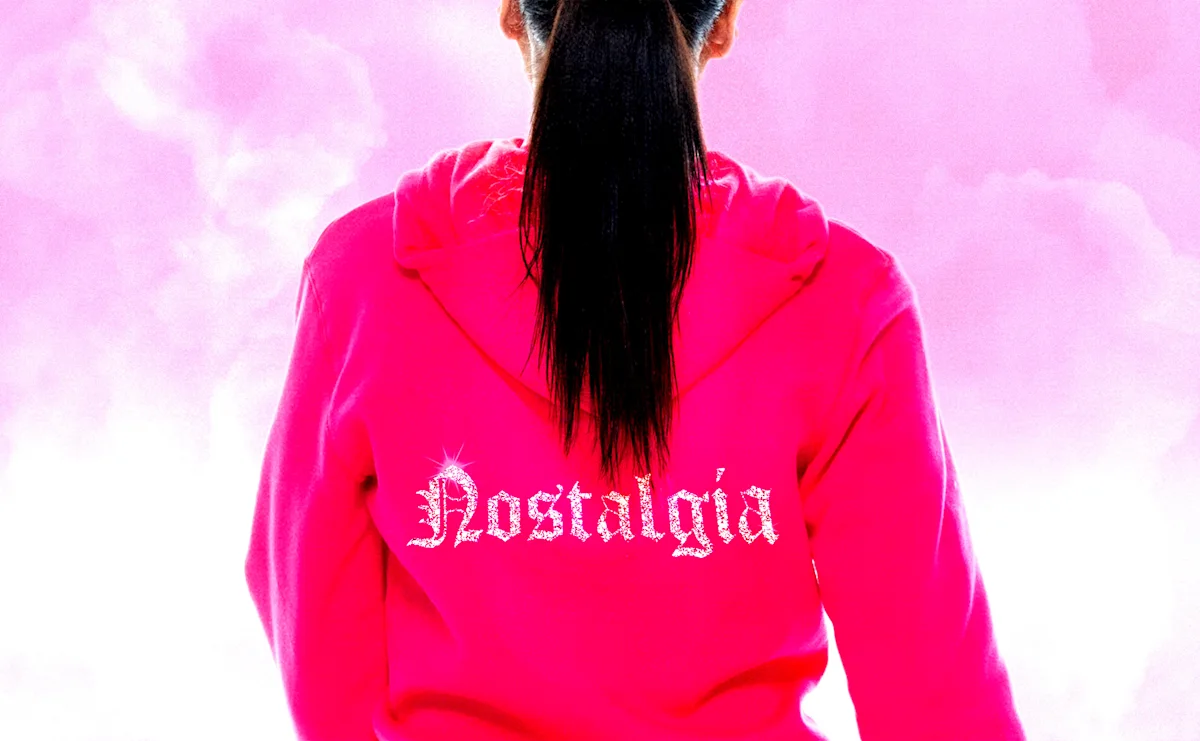
If you're a child of the late '80s or '90s, you may have noticed something peculiar recently: The clothing brands of your childhood, the ones that you used to beg for during trips to the mall and proudly don on school picture day, are suddenly everywhere again.
The deceased tween catalog behemoth Delia's has been revived for a new capsule collection at Target , featuring plaid pants, striped cardigans and butterfly-print skirts that would look at home on the cover of an Olsen twins VHS. Gen Z celebs like Hailey Bieber and Emma Chamberlain are bringing back mall brands like Gap and J. Crew, respectively, with the re-release of low-rise baggy jeans and roll-neck sweaters . Costco is sending both millennial and Gen Z consumers into a frenzy by selling Esprit sweatshirts and K-Swiss sneakers . Meanwhile, at thrift stores, teens are hunting down '90s heritage labels like Victoria's Secret, Juicy Couture and Coach.
Nostalgia, it turns out, is big business. An opinion poll conducted in June by the consumer analytics platform CivicScience found that 68% of U.S. adults now say nostalgia factors at least "a little" into their purchasing. When you shave that audience down to 18-29-year-olds, a full 26% of them say nostalgia impacts their purchases "a lot."
Suddenly, the brands and silhouettes millennials and Gen X consumers once loved but ultimately banished to the donation bin are being revived by a younger generation drunk on nostalgia and looking to the past for sartorial inspiration — and comfort. Another survey from the audience research company GWI found that 55.8% of consumers who have made nostalgic purchases did so because it feels "comforting or familiar."
"When the word 'nostalgia' was first used, it was to describe a kind of sickness," says Chris Beer, a data journalist at GWI. "That's where the word comes from. But for people and consumers, they associate it with positive emotions, happiness and comfort, being and belonging." In a world that feels increasingly uncertain and chaotic, soon to be inherited by a generation overwhelmed by unending global crises, it's no surprise that we'd seek comfort wherever we can get it — particularly when it's as easy as the click of a button.
"I do think that with the amount of social disruption there's been in the last few years, especially with the pandemic, the need for comfort has increased," Beer says. "There's a need for community. A need for stability is also a phrase that would come to mind for me."
'90s nostalgia is evident in recent food trends (who would have thought the Chili's triple dipper would go viral in late 2025?) and beauty product picks (Clinique's black honey lipstick is a cross-generational fave ). It's even infiltrated parenting styles , where young parents brand motherhood aesthetics like "butter mom" and romanticize '90s childhood touchstones like Arthur and Discovery Zone. Some Gen Z and millennial parents are dressing their babies in vintage grails they themselves wore as kids.
Nostalgia for the '90s and early 2000s is a potent shopping elixir for millennials, who yearn for the simpler times of their childhoods, but also for Gen Z consumers, many of whom feel "borrowed nostalgia" for a time before they were even born. "It's entirely possible to be nostalgic for a period you didn't live through," Beer points out. And while '90s nostalgia is partly due to the inevitable marching of time (tick, tick, tick), it's also symbolic of a larger cultural shift marked by the dawning of the internet.
"I think with Gen Z, part of it comes down to being a sort of post-monoculture generation," says Beer. "The '90s is sort of the last bastion of mass media and mass culture, before people's media consumption fragmented into more individual media diets that are being refined through algorithms. So those periods exist as cultural touchpoints that could be recognized at large in a way that might not exist now, and therefore increase the demand for nostalgia because those cultural touchstones are so visible."
That's why the Gen Z and millennial enthusiasm for revived cult favorites is so palpable, and often goes viral on social media. When Hailey Bieber's denim Gap collab dropped last month, it sold out in minutes; when more pairs were restocked a few days later, they also sold out almost instantly. And on TikTok, a video of a teen girl finding 2007 foldover pants from Pink Victoria's Secret at Goodwill received more than 821,000 views. "I'M WRITHING IN JEALOUSY," one user commented.
Of course, not everyone sees the nostalgia boom as harmless comfort-seeking. Some critics see recycled reboots as uninspired , a symptom of marketers' inability to come up with fresh ideas. As former Interbrand CMO Jeff Swystun wrote on Medium in 2023, "To be blunt, it's lazy and brands do not anticipate the risk. The history is poorly interpreted and the marketing a hollow homage that does little to contribute to sustained and meaningful branding. Such short-lived tributes are vacuous memory teases."
But while Gen Z seems less interested in recycled IP in industries like Hollywood (let's be real, The Devil Wears Prada 2 was made entirely for millennials), when it comes to fashion, they're much more game. Take the relatively recent rise of thrift shopping as a young person's hobby. Secondhand apparel is now a $56 billion market, doubling from 2020 to 2025, with 62% of Gen Z shoppers saying they thrifted in 2025. "Thrift shopping is turning into a treasure hunt for never-worn, hard-to-find archival pieces that slipped through the cracks — unsold inventory, old production runs and pristine leftovers from the '90s and early 2000s that feel both rare and brand-new," reads a recent Pinterest piece on a trend it dubbed the "secondhand sidequest."
Longtime thrift shopper Julia Reeves has built a growing community on TikTok and Instagram showcasing her vintage finds. The 32-year-old content creator, who sits firmly on the cusp between Gen Z and millennials, said she's seeing more and more young people getting interested in thrifting, and particularly seeking out '90s and 2000s brands.
"I usually go for brands like J. Crew, Ralph Lauren, Tommy Hilfiger, Nautica — those kind of like '90s brands when they were really peaking," she says. "I posted a video the other day, and there was a Delia's shirt in the video, and I was so surprised how many people were like, 'Oh my God, what a relic! It's so cool to see a real, authentic one in the wild.' So those are definitely, like, standing out to me more."
For many young consumers, Reeves says thrifting helps them access a time period they never got to live through, but wish they did. (It's also likely a symptom of economic anxiety; buying a Coach bag secondhand is a lot cheaper than buying one new.)
"Millennials used to be dropped off at the mall and be able to walk around and buy these clothes in that time period," she says. "And especially with Gen Z, I feel like they kind of didn't really get to have that as much. Now they're finally like, 'Oh well, I have big girl money and if I can find something that's truly from that time period, it's like I get to go back and have that experience that I didn't really get to have.'"
But while "borrowed nostalgia" may be a major 2026 marketing trend , for some Gen Z shoppers, it's less about the brand's heritage and more about what a brand is doing now.
"It doesn't matter to me that it's an older brand," Anna Z., a 14-year-old high school freshman from Pennsylvania, tells me about Gap. "I like their jeans and tops." She adds that the retailer's sizing works for teens like her who are growing out of the kids' section but aren't yet adults. Like two of my sisters, who are 14 and 16, Anna says she gets most of her clothes from the mall, from older stores like Gap and Abercrombie & Fitch as well as newer mall staples like Altar'd State and Edikted. And she's not alone: Traffic to shopping malls is up, and Gen Z is buying the vast majority of their products in person, as opposed to online.
If everything '90s and '00s is cool again, who's to say other areas of life couldn't see a similar shift toward nostalgia?
"I remember when the '90s lip came back with the Kylie lip kit," Reeves says. "And then it kind of went to '90s clothing. I feel like it's just this general lifestyle desire of romanticizing this pre-tainted world."
"It's almost like the next thing is going to be groceries," she adds. "We're no longer going to go to Butterfield Market . We're going to go to the standard grocery store, acting like that's so novel, but it's really just what our parents were doing the whole time."
Topics in this story
Gathered from external sources. Rights to this text belong to whoever originally published it.