In 2019, staff ignored an evacuation order at Australia’s Mogo Wildlife Park, moving vulnerable animals into homes and safe areas; not one animal was lost
The staff at Mogo Wildlife Park stayed behind to protect roughly 200 animals as the Clyde Mountain fire approached on New Year’s Eve 2019.
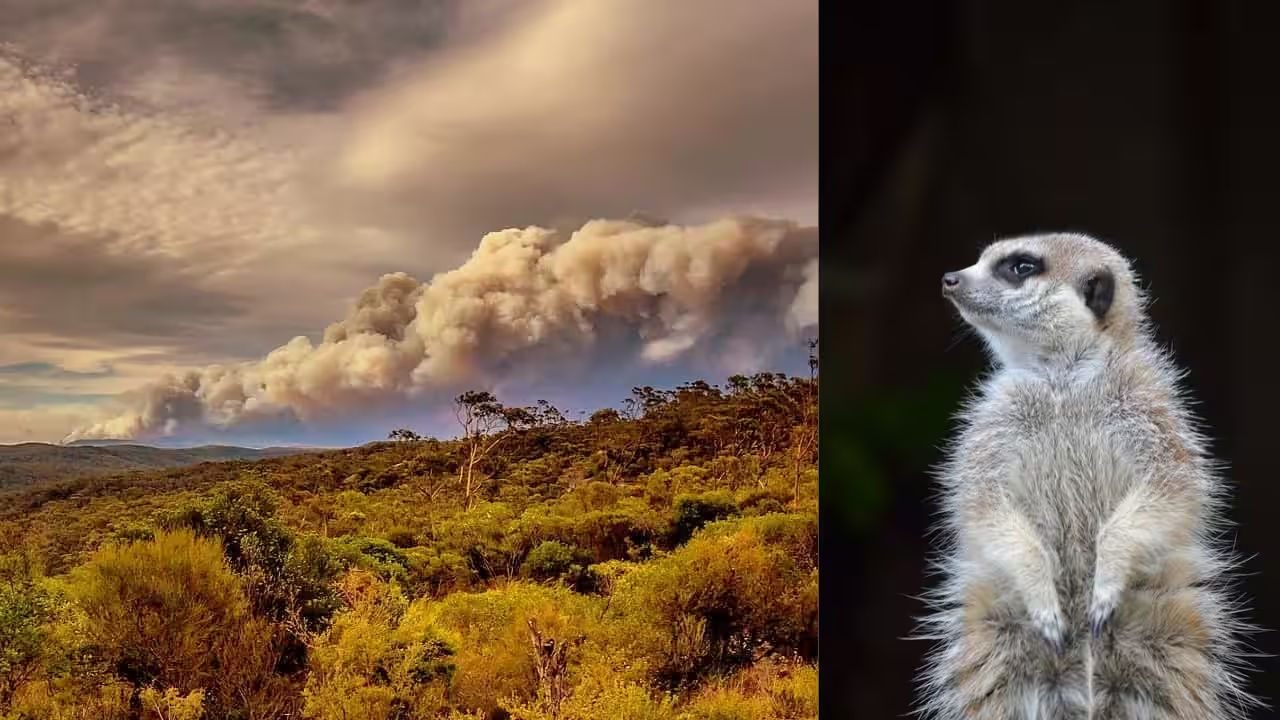
The staff at Mogo Wildlife Park stayed behind to protect roughly 200 animals as the Clyde Mountain fire approached on New Year’s Eve 2019. Smaller animals such as red pandas and monkeys were moved into homes, while lions, tigers, gorillas and orangutans were kept in protected night dens. The park later reported that every animal survived, according to ABC News. The fire reached the Mogo area on December 31 due to extreme conditions that spread across Australia's New South Wales South Coast. An evacuation order was issued for the town at about 6 a.m., but zoo director Chad Staples and his staff decided to activate the park’s fire-defence plan instead of leaving the animals behind.Staples took several red pandas and small monkeys to his own home, where they could be sheltered indoors, and a later report said approximately 25 animals were moved into his house, including pandas and monkeys. The larger animals such as giraffes and zebras were given access to paddocks where staff had reduced the fire risk, while dangerous species such as lions, tigers, gorillas and orangutans were encouraged into their night dens. Staff also used large quantities of water to wet grass and structures that could burn. ABC reported that staff moved vehicles that carried water and pumps around the grounds and attacked smaller fires as they appeared.The zoo had prepared for a fireStaff had already developed a fire-defence plan for the 81-acre wildlife park, and the plan dictated where different animals should go if a bushfire approached. Mogo itself was badly damaged, with businesses and homes destroyed as the fire moved through the area. Staff at the wildlife park therefore had to operate inside a disaster that was affecting the town around them.Staples told ABC that the keepers moved lions, tigers and other dangerous animals into their night dens and tried to maintain normal routines, while larger herbivores were given more freedom within protected areas rather than being forced into unfamiliar transport. The strategy also meant that staff could respond to changing conditions, as spot fires could be attacked quickly, water could be moved where it was needed and animals could remain in familiar surroundings instead of being transported during the worst part of the fire. Mogo Wildlife Park reopened to visitors in February 2020, about two months after the fire, and ABC reported that the park had suffered damage to its perimeter fence but was otherwise largely unscathed and that all of its animals had been kept safe.The animals returned as the park recoveredStaff had to repair parts of the property while also taking care of the animals. The zoo also became involved in the wider aftermath of the bushfires, and there were plans for veterinary support for native wildlife that were injured in the surrounding fires. Some animals had spent the worst hours in buildings or dens, while others remained outside in protected paddocks. The smallest animals were physically removed from the most vulnerable parts of the park and sheltered at staff members’ homes.Mogo Wildlife Park remains open today and operates under Australian Wildlife Parks. Its current collection includes giraffes, zebras, gorillas, rhinoceroses, tigers, red pandas, primates and other species, and the park’s own history describes its survival during the Black Summer bushfires as a defining part of its story.Then-NSW Rural Fire Service Commissioner Shane Fitzsimmons described Mogo as an example of planning for bushfires and other disasters at its 2020 reopening, and pointed specifically to the fact that the animals survived despite the damage around the property.The impressive fact is that the fire plan had been built around the animals that were already at the park, and when the evacuation order came, staff knew which animals could be moved, which needed shelter and which were safer remaining in familiar paddocks. That system was put into use as flames and smoke reached Mogo, and the park emerged with its animal collection intact.You use AI every day. Now get your AI Quotient. Take the AIQ test.
Topics in this story
Gathered from external sources. Rights to this text belong to whoever originally published it.