In 2011, Gary Sinise launched his foundation to support military families; by November 2025, it had dedicated its 100th mortgage-free adapted smart home, giving wounded veteran Joe Bowser a new start
For nearly two decades, wounded Army veteran Joe Bowser had turned down an offer that could have made everyday life much easier for him.
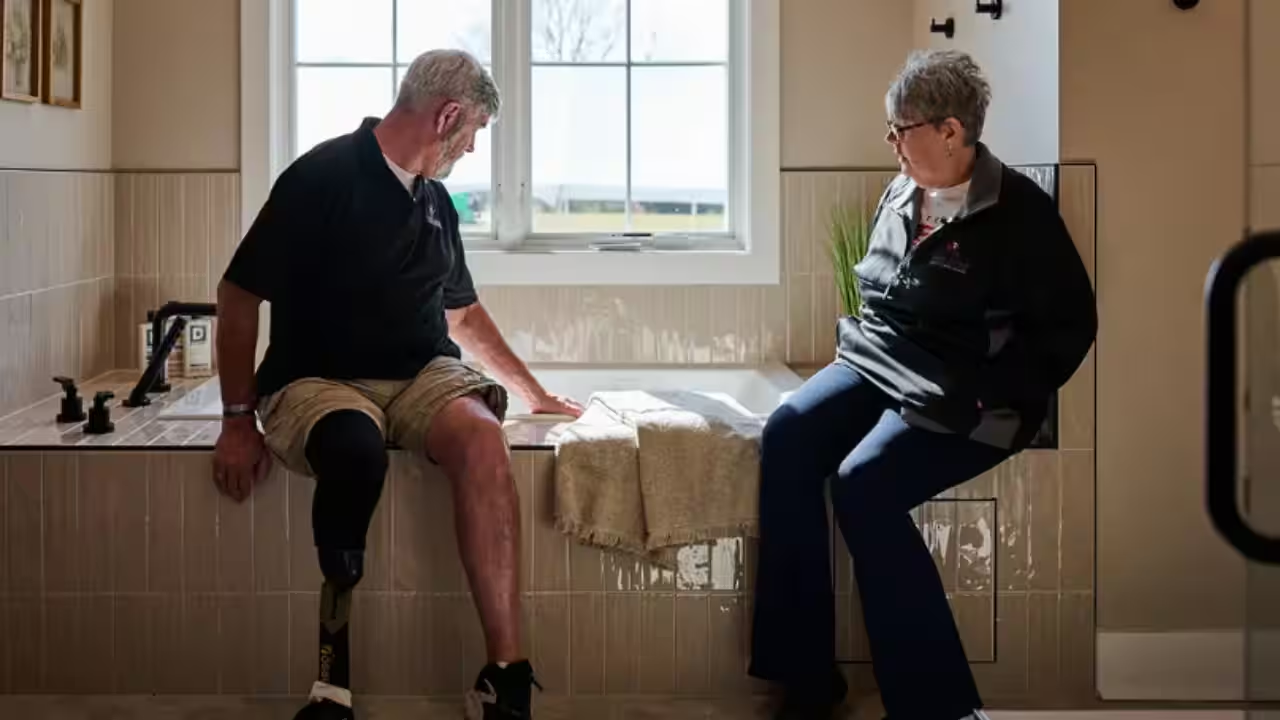
For nearly two decades, wounded Army veteran Joe Bowser had turned down an offer that could have made everyday life much easier for him. That changed in November 2025, when the Gary Sinise Foundation dedicated its 100th mortgage-free, specially adapted smart home to him. According to the Gary Sinise Foundation’s own 2025 year-end campaign page, the milestone home was built around Bowser’s mobility needs, giving him and his wife, Michele, a safer and more accessible place to live. The milestone marked a major moment in the foundation’s work to provide specially adapted homes for severely wounded veterans.The injury that changed Joe Bowser’s lifeBowser’s story goes back to his military service in Iraq. He had served in the Army and later returned to the reserves following the September 11 attacks. In 2004, he was deployed to Iraq, where a rocket attack in April that year left him with serious injuries to his right leg. Doctors initially tried to save the leg, but after several operations, amputation eventually became necessary. Adjusting to life after such a severe injury was not easy, but Bowser found a way to reconnect with something he enjoyed: ice hockey.He later took part in hockey programmes for veterans with service-related injuries. For Bowser, the sport offered more than a chance to play. It helped him regain a sense of normality and reconnect with an activity he enjoyed before his injury. It was in 2006 that he met Sinise, beginning a friendship that would continue for years.Why he kept saying no to a new homeThe offer of a specially adapted home did not immediately appeal to Bowser. In fact, he spent years turning it down. The Gary Sinise Foundation had considered Bowser for its R.I.S.E. programme, which provides custom-built homes for wounded veterans. In an interview with PEOPLE, Sinise said Bowser repeatedly suggested that another veteran should receive the opportunity instead. Sinise told PEOPLE that Bowser was among those veterans who did not necessarily believe their injuries were severe enough to warrant a specially built home. Eventually, however, Bowser agreed.The decision came as the limitations of his existing home became harder to ignore. His previous house in West Virginia was built in 1839 and had narrow hallways and doorways that were difficult to navigate in a wheelchair. The second floor had also become increasingly challenging and unsafe for Bowser. He sometimes uses a wheelchair when he cannot use his prosthetic leg, making the layout of the old house particularly difficult.A home built around the way he livesThe new Tennessee house was designed with those everyday challenges in mind. According to PEOPLE, the approximately 2,991-square-foot, three-bedroom, single-storey ranch near Fort Campbell was built so that Bowser could move throughout the home without having to deal with stairs. The design includes five-foot-wide hallways, lower cabinets that can be reached from a wheelchair and an accessible shower fitted with a heated bench. These may seem like small details, but for someone navigating a home with a prosthetic leg or wheelchair, they can change how easily everyday activities are managed.The idea behind the foundation's specially adapted homes is not simply to provide a veteran with a house. The homes are designed around the individual needs of the person who will live there, with accessibility and independence built into the design. For Bowser, that means being able to move around his home more easily and safely.A milestone for the Gary Sinise FoundationBowser’s house also marked an important moment for the Gary Sinise Foundation. The organisation dedicated its 100th mortgage-free adapted smart home to him in November 2025. Its campaign page describes the homes as specially designed for severely wounded veterans, with accessibility features intended to help recipients regain independence in their daily lives.The house also gives Bowser and Michele more room to spend time with their family. The couple have 10 grandchildren, and the new home provides a setting where family gatherings can happen without the accessibility barriers they faced in their previous house. For the foundation, reaching 100 homes represents more than a numerical milestone. Each project involves creating a home around the specific needs of a veteran whose life has been affected by a serious service-related injury.A friendship that became part of the storyBowser’s connection with Sinise has also become deeply personal over the years. According to PEOPLE, the two men became even closer after each experienced the loss of a son to cancer. Bowser’s son Justin died in November 2023, while Sinise’s son Mac died in January 2024. Sinise launched the Gary Sinise Foundation in 2011 to support service members, veterans, first responders and their families. His interest in supporting veterans was also influenced by his experience playing Lieutenant Dan in Forrest Gump and his desire to help veterans after their service.For Bowser, the new home provides a single-storey layout and accessibility features designed around his mobility needs, while giving him, Michele and their family more room to spend time together.You use AI every day. Now get your AI Quotient. Take the AIQ test.
Topics in this story
Gathered from external sources. Rights to this text belong to whoever originally published it.