In the 1990s, a blind Florida conservationist kept fighting for the Everglades; her organization helped win a $90 million fund to buy and protect endangered land in Miami-Dade County
US News: Marjory Stoneman Douglas was blind and facing health problems in the 1990s, but she was still involved with the environmental campaign that she had he.
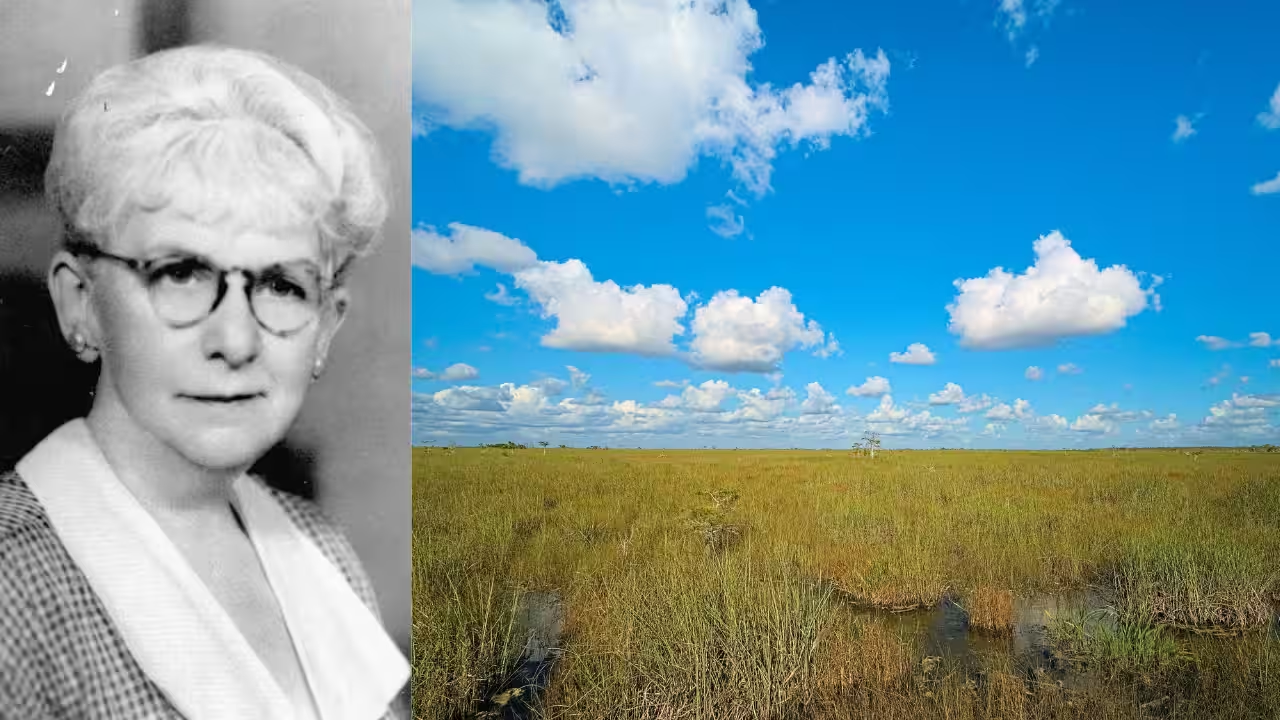
Marjory Stoneman Douglas was blind and facing health problems in the 1990s, but she was still involved with the environmental campaign that she had helped build decades earlier. Her organization was called Friends of the Everglades, and it worked with other conservation groups to support a Dade County environmental preservation plan that established a $90 million fund to buy and protect endangered land. The University of Miami’s digital exhibition on Douglas records the campaign as part of her ongoing work to preserve South Florida’s water and natural areas.The fight that began with the EvergladesDouglas had spent much of her public life arguing that the Everglades was a system that was essential to South Florida. Her 1947 book, The Everglades: River of Grass, helped bring wider attention to the region, and she later became one of the most persistent voices against projects that threatened its water flow. According to the University of Miami account, Douglas and other conservationists opposed plans for an Everglades jet port and argued that development in the area could damage the natural system. Their campaign succeeded and the proposed jet port was never built.Douglas went on to establish Friends of the Everglades and continued working on water-management issues, primarily focused on cleaning up and preserving the Kissimmee-Okeechobee-Everglades basin. Douglas argued that freshwater was directly tied to South Florida’s ability to support its population, rather than being an environmental concern separate from everyday life.She continued pressing that argument through public campaigns, legal challenges and appearances before officials, which kept the Everglades in discussions about South Florida’s growth and water policy. Her work also helped establish conservation as a long-term political issue in the region, rather than a temporary response to individual development projects.She was still involved at 100The University of Miami exhibition says that she supported several environmental initiatives during the 1980s, which included the Coastal Barrier Resources Act and Florida’s efforts to protect the Everglades. Douglas was blind and dealing with health problems by the 1990s, but Friends of the Everglades continued its work. The organization joined other environmental groups in campaigning for the Dade County Referendum Environmental Preservation plan, and the measure established a $90 million fund for acquiring and protecting environmentally endangered land in the county.The county says voters approved a property-tax increase between 1990 and 1992 so that they could fund the acquisition, protection and maintenance of environmentally endangered lands. The county’s current Environmentally Endangered Lands program says that it and its partners have since brought more than 20,700 acres into public ownership, while another 2,800 acres of natural land are managed within Miami-Dade County parks.Her work continued after the referendumDouglas died at her Coconut Grove home on May 14, 1998, aged 108, which is why she did not see the full development of the county’s land-protection program. The Florida Department of State notes that she had remained active in conservation for much of her life and was awarded the Presidential Medal of Freedom by President Bill Clinton in 1993.The $90 million fund came from a county referendum rather than from Douglas or Friends of the Everglades alone, but the University of Miami records the organization’s participation in the campaign while Douglas was still active despite her blindness and declining health. Miami-Dade’s program remains active today, with the county describing its purpose as protecting and conserving environmentally endangered lands across the region.You use AI every day. Now get your AI Quotient. Take the AIQ test.
Topics in this story
Gathered from external sources. Rights to this text belong to whoever originally published it.