Raised in orphanages and foster homes, Tom Monaghan borrowed $900 with his brother to buy a Michigan pizzeria; he later traded a Volkswagen for full control of what became Domino’s
Discover the remarkable life of Tom Monaghan, who overcame a turbulent childhood in foster care to co-found Domino's Pizza. Learn how his entrepreneurial spirit and commitment to quality transformed a struggling pizzeria into a global fast-food empire.
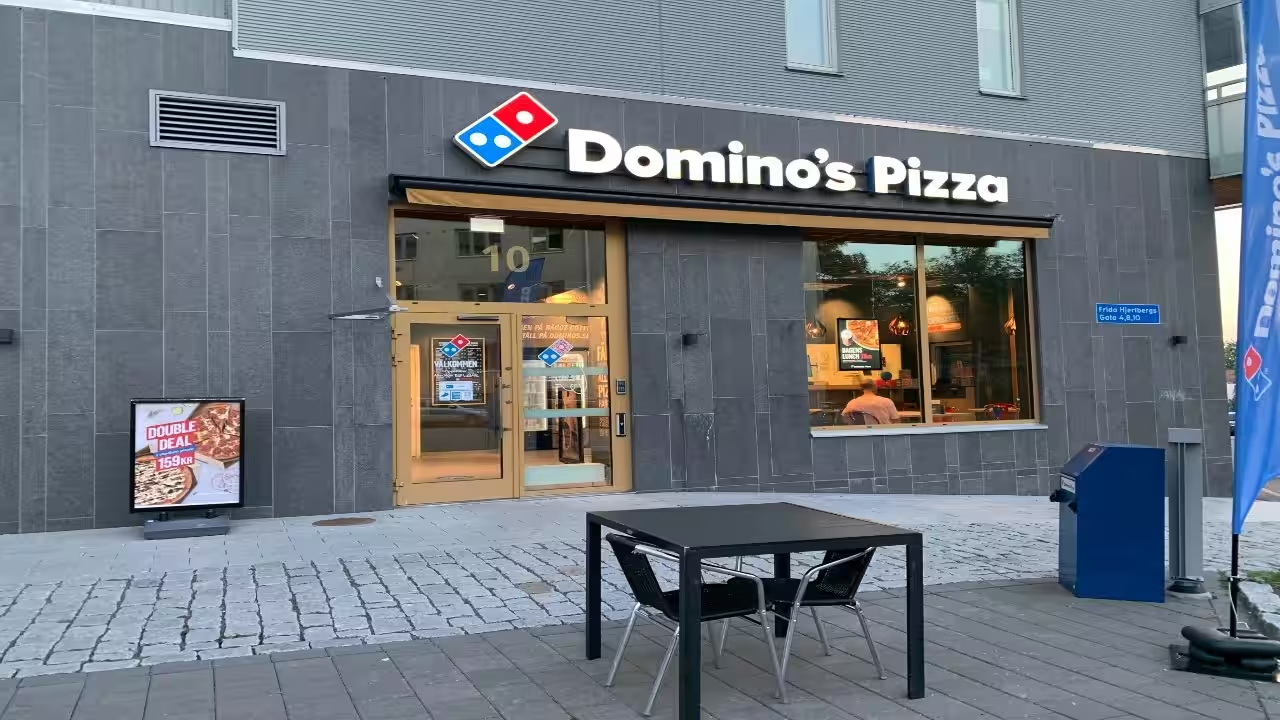
Kneading dough would later turn into an empire for Tom Monaghan, whose story started in the year 1960. Back then, he and his brother Jim borrowed $900 to buy a struggling pizzeria in Ypsilanti, Michigan. They took turns running the shop for eight months until Jim decided to call it quits. The payout for Jim’s share was the Volkswagen Beetle the brothers used for making their deliveries. Tom kept the pizzeria, then called DomiNick’s, as the sole controller of the business, which would come to be known as Domino’s Pizza.Monaghan’s childhood was a turbulent period of changing homes from one place to another. His father died on Christmas Eve 1941, when Tom was four. According to the Michigan profile, his mother was preparing to train as a nurse and, struggling to support two sons, placed Tom and his brother in foster care. At six, Tom went with Jim to St. Joseph’s Home for Boys in Jackson, run by the Felician Sisters. There he would grow under the care of Sister Berada, whom he described as a surrogate mother in his biography, Pizza Tiger.Building the pizza business Monaghan wanted to study architecture at the University of Michigan, but his grades and financial situation made that difficult. He served for three years in the Marine Corps until his brother Jim presented him with the idea of purchasing a pizzeria for sale in Ypsilanti. According toEntrepreneur, the brothers paid a $75 deposit and borrowed the remaining $900 from a post office union credit.After Jim left, Monaghan worked tirelessly in the shop, registering more than 100 hours a week. He reduced the menu, limited sizes and toppings, set ingredient standards and focused solely on delivery. The reasoning, recounted in Pizza Tiger, was that a carefully made Pizza would disappoint if it arrived cold. His operating instruction was simple and concise: “Always keep your eye on the operation”.In 1965, he changed the name of his pizzerias to Domino’s Pizza; the business would later grow into a global fast-food chain. But similar to any success story, his journey was mixed with hits and misses. He began franchising in 1967, and the chain found customers in college towns and military bases. The expansion continued, but the early push was poorly managed by Tom, who was still a rookie in this business. Per Entrepreneur, 32 new stores opened in the first 10 months of 1969, and almost all of them failed. Monaghan was left with a debt of $1.5 million in debt and relinquished control to a local businessperson to avoid bankruptcy.After the setback, he altered his expansion plans. He stopped opening stores for the sake of increasing the count, lowered his annual target and paid closer attention to site selection. As a result, the business then skyrocketed. The Michigan profile records an increase from 290 stores in 1980 to more than 5,000 by 1990.Selling the company and turning to education The success of Domino’s gave Monaghan the financial leeway to expand his portfolio outside the restaurant business. In 1983, he bought the Detroit Tigers baseball team for $53 million. This proved to be a sound decision; in the following year, the team won the World Series.Monaghan became deeply involved in public work; his charity work was guided by a staunch Catholic faith. Ave Marie University’s biography says he founded Legatus in 1987, an organisation dedicated to Catholic business leaders, and established the St. Thomas More Law Centre. He even gave up the Domino’s presidency in 1989 to invest more time in Catholic charities, while serving the company as Chairman and chief executive until 1998.The same year, he sold Domino’s to Bain Capital, keeping a minority stake, for an estimated $1 billion, according to Entrepreneur. Ave Maria University traces his educational project to Ave Maria Institute, which later became Ave Maria College and shifted its location to Florida, far from the original Ypsilanti pizzeria. Monaghan became the University’s founder and chancellor. He remained active there and went on to receive honorary degrees from 13 universities. You use AI every day. Now get your AI Quotient. Take the AIQ test.
Topics in this story
Gathered from external sources. Rights to this text belong to whoever originally published it.