Khamenei is dead, long live the Ayatollah! How Trump's Iran war triggered 'regime change' at home
Donald Trump appeared to have discovered a formula for changing regimes.
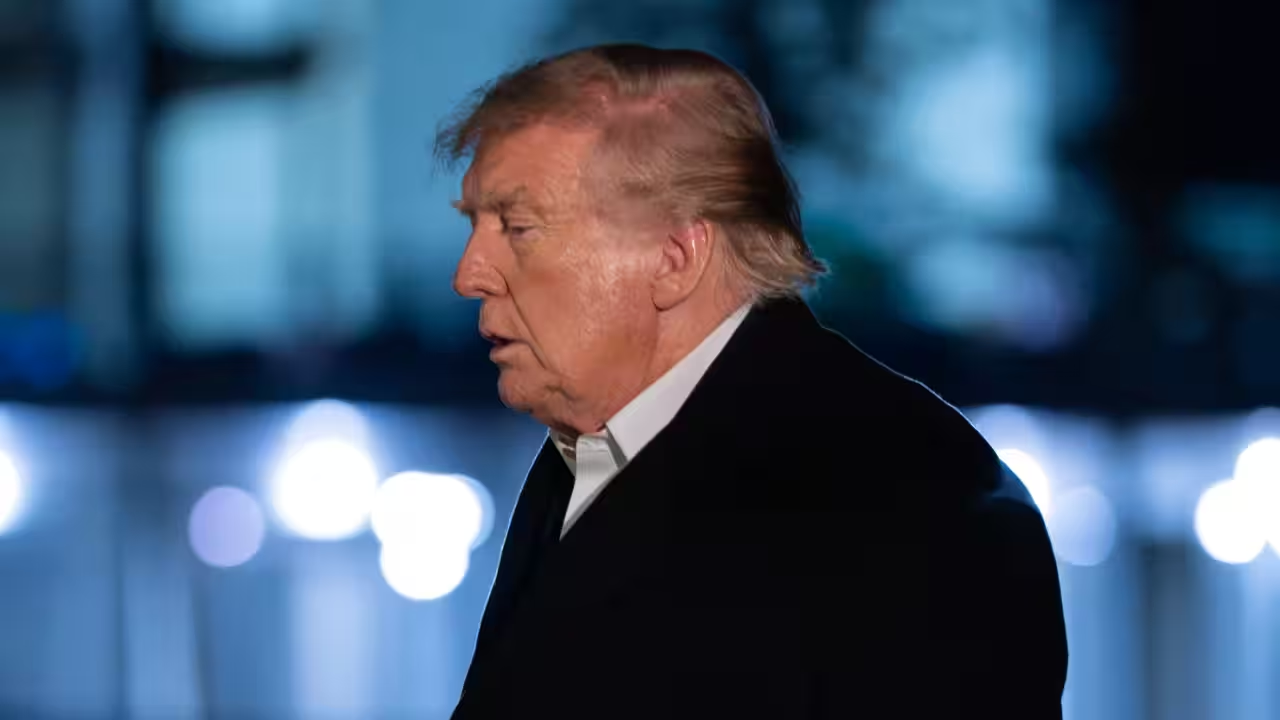
Donald Trump appeared to have discovered a formula for changing regimes. In January, US forces captured Venezuelan president Nicolás Maduro, leaving Washington with extraordinary leverage over Caracas and its vast oil reserves. The message from Trump: The US is willing to use force and expects results.Iran seemed next in line. On February 28, the US and Israel launched their military operation against the Islamic Republic, killing Supreme Leader Ayatollah Ali Khamenei. Trump asked Iranians to "take over your government", describing it as their "only chance for generations".But Tehran did not oblige. The Islamic Republic survived, Khamenei's son Mojtaba was named his successor, and the country's security establishment emerged with even greater influence. The promised revolution did not arrive. Instead, the old order has adapted, hardened and is carrying on.The more consequential political upheaval, however, has now come thousands of miles away. In the midterm elections, Democrats have captured both the House of Representatives and the Senate, delivering a sweeping rebuke to Trump. The president who wanted to change the political order in Tehran has found the "regime changing" in his own United States.The illusionTrump's first miscalculation was to treat the Islamic Republic as a one-man system. The assumption behind leadership decapitation is that removing the person at the top can destabilise the entire structure beneath him. But Iran's political order is not held together by the supreme leader alone. It rests on a network of clerical institutions, security agencies, political patrons and, crucially, the Islamic Revolutionary Guard Corps (IRGC).The warning signs were there. Danny Citrinowicz of the Atlantic Council told Reuters: "The Iranian system is bigger than one man. Removing Khamenei could harden the regime rather than weaken it." Ali Hashem, a research affiliate at Royal Holloway, University of London, made the point even more directly: "Iran was built to survive the loss of a leader."That is precisely what happened. Khamenei's killing did not produce the mass defections or immediate popular uprising that could have turned a military operation into regime collapse. Instead, the system moved towards institutional survival. The IRGC and other security institutions gained greater influence as Iran entered a wartime leadership transition. The result was not the collapse of the Islamic Republic but its hardening into a more security-dominated state.The decapitation strategy removed the regime's most powerful individual, but not the institutions capable of reproducing its power. The external attack also gave competing centres of authority a common reason to close ranks.There was an economic miscalculation too. After Maduro's capture, Washington appeared to have gained considerable leverage over Venezuela's oil sector. The implicit hope was that Venezuelan production could provide a buffer if the Iran confrontation disrupted supplies from the Gulf. But oil is not interchangeable simply because it comes from another country.Much of Venezuela's oil is extra-heavy crude, requiring specialised processing and blending. Its ageing infrastructure and limited production capacity also make a rapid increase in output difficult. More importantly, Venezuelan crude cannot simply replace the lighter and medium grades disrupted by the closure or restriction of flows through the Strait of Hormuz."Venezuela cannot replace that, also partly because it is a different grade, namely, heavy, sour crude," Frederic Schneider of the Middle East Council on Global Affairs told Al Jazeera.The US gained leverage over Venezuelan barrels, but it has not been able to conjure an immediate substitute for Gulf supplies.The real battlefield in USFor American voters, the consequences of the Iran war were not measured in military briefings or geopolitical maps. They were measured at petrol stations and supermarket checkouts.The national average price of gasoline reached around $4.17 a gallon on November 2, the day before the midterms, according to figures cited by The Washington Post. That was 37 cents above the previous election day record set in 2022. Another report put the average at $4.22 on October 29, compared with about $3.03 a year earlier.Trump did little to soften the political impact. At a campaign stop in North Carolina in September, he described higher fuel prices as "a very inexpensive price to pay for what we've done". At a rally in Georgia in October, he was even more blunt: "I don't give a damn. I'm going to say it. We're making a freaking fortune."ALSO READ | Iran war, inflation or Trump fatigue: What drove Democrats' midterm surge?These remarks were meant to underline the gains Trump believed US was making from higher oil prices. But they also exposed the gap between the administration's economic argument and the experience of households paying more to fill their tanks. For voters, the distinction between profits for the oil industry and rising household expenses offered little comfort.The squeeze extended beyond fuel. Inflation remained stubborn, consumer confidence was near historic lows and voters were increasingly concerned about the cost of everyday essentials. The Iran conflict added to an already difficult economic picture, making it harder for the White House to sell its foreign-policy ambitions as evidence of national strength.The financial cost of the war added another layer to the argument. An Associated Press report put the estimated cost to American taxpayers at $47.1 billion as of October 16. Around $29 billion was attributed to replacing munitions, $11.9 billion to operations and $6 billion to equipment losses. The estimate did not include damage to US bases from Iranian attacks.America first or America at war?The political damage was not confined to voters worried about prices. The Iran escalation also threatened to fracture Trump's own coalition. His appeal in 2016, and again in 2024, rested partly on his promise to end America's endless wars and put domestic interests ahead of foreign entanglements.The confrontation with Iran put that promise under strain. It gave progressives and independent voters another reason to oppose the administration, while creating unease among anti-interventionist conservatives who had backed Trump's rejection of the Washington foreign-policy establishment. For them, the escalation looked less like America First and more like a return to the neoconservative playbook.The wider geopolitical consequences were also far from the picture of unchallenged American dominance. China remained a major buyer of Iranian oil, much of it transported through shadow-fleet networks designed to evade sanctions. Beijing has helped Tehran sustain oil revenues, although it has stopped short of a formal defence commitment. Russia, meanwhile, has maintained its strategic relationship with Iran.The conflict may have increased pressure on both countries to coordinate, but it would be premature to describe them as a unified military bloc. The larger point is that coercive pressure has not isolated Tehran as completely as Washington might have hoped. It has also given US rivals opportunities to exploit the gaps in sanctions enforcement and the costs of a prolonged confrontation.Check on imperial presidencyThe Democratic victory in the midterms was sweeping. The party captured both the House of Representatives and the Senate, making gains in states and constituencies that had long been difficult terrain. Republicans lost ground in places including Kansas, South Carolina and Texas, while Democrats made inroads across the Rust Belt and Great Plains.Control of Congress gives Democrats more than a platform to criticise Trump. Committee gavels bring subpoena power, investigative hearings and the ability to demand documents and testimony from administration officials. Congressional committees can examine the intelligence behind the Iran operation, the legal basis for the strikes, the administration's assessment of the risks to shipping and energy supplies, and the arrangements made with Venezuela over oil and political transition.The War Powers Resolution of 1973 is another potential instrument. Democrats can use it to force votes on the continuation of hostilities and challenge the president's authority to sustain military operations without congressional approval. Congress can also use its control over funding and authorisations to put pressure on the administration, although any binding legislative measure could face a presidential veto.The result is a president who remains commander-in-chief but now faces a more hostile legislature, greater scrutiny and a potentially difficult fight over the resources required to continue the conflict. The midterms have not ended the Iran war, but they have made its domestic political management considerably harder.The irony was not lost even on Trump. After the Democratic sweep, he acknowledged that "a part of it was Iran". But he stood by the decision, telling The Wall Street Journal: "I did the right thing. I would have done it again."The Islamic Republic of Iran has survived its supreme leader's death, with power passing to his son and the security establishment gaining influence. Meanwhile, the American president who projected strength overseas has been handed a powerful reality check in his own country.ALSO READ |'Trump hasn’t done anything to help': Republicans blame MAGA chief for midterm routYou use AI every day. Now get your AI Quotient. Take the AIQ test.
Topics in this story
Gathered from external sources. Rights to this text belong to whoever originally published it.