'Deep sense of insecurity': Sheikh Hasina flags minority safety in Bangladesh
Ousted Bangladesh prime minister Sheikh Hasina on Thursday expressed “deep concern” over a growing sense of insecurity among religious and ethnic
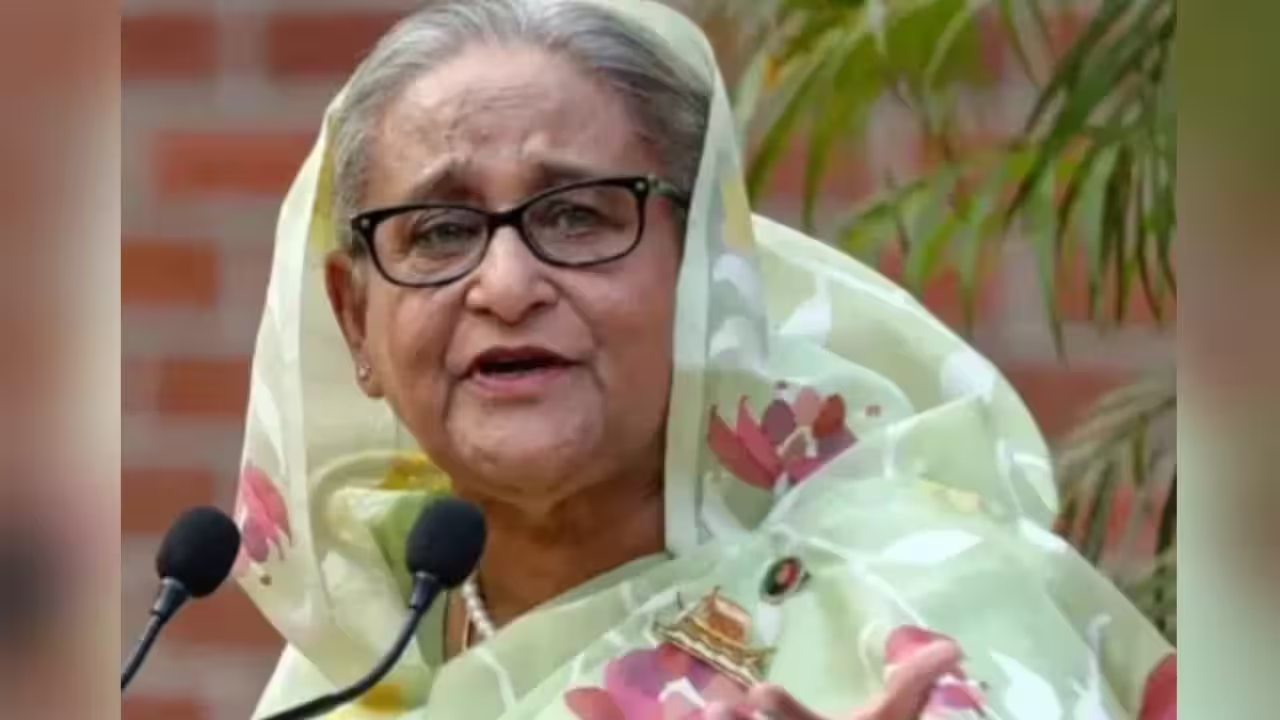
Ousted Bangladesh prime minister Sheikh Hasina on Thursday expressed “deep concern” over a growing sense of insecurity among religious and ethnic minorities in the country, alleging continued attacks on minority communities, temples and homes since her ouster in August 2024.In her message on Sharadiya Durgotsav, Hasina, who is also the president of the Awami League, said this year's Durga Puja celebrations were taking place amid concerns over the safety of Hindus and other minority communities.She cited reports of killings, vandalism of idols, attacks on temples and homes, property seizures, extortion, violence against women and intimidation."But it is with deep sorrow and pain that I must say that this year's Durgotsav has come at a time when a deep sense of insecurity prevails among the religious and ethnic minorities of Bangladesh, including the followers of the Sanatan faith," Hasina said, according to news agency ANI."Since 5 August 2024, one incident after another of killings, persecution, vandalism of idols, attacks on temples and homes, seizure of property, extortion, violence against women and intimidation has continued to take place against minority communities across the country. This situation has become a cause of grave concern not only within the country but also internationally," she added.Her remarks come amid reports of attacks on Hindu places of worship and vandalism of idols and Durga Puja pandals during last year's festival, as well as wider concerns over reported violence against Hindus and other minorities since her government was ousted following a student-led uprising.Emphasising Bangladesh's history of communal harmony, Hasina said the country's founding ideals envisaged equal rights, dignity and security for people of all religious communities."Bangladesh is a land of communal harmony. The Father of the Nation, Bangabandhu Sheikh Mujibur Rahman, dreamt of a Bangladesh where people of all religions and communities, including Hindus, Muslims, Buddhists and Christians, would live with equal rights, dignity and security," she said."Through the great Liberation War, we established Bangladesh on the basis of that very ideal. Our Constitution recognises secularism, equality, human dignity and the right of every citizen to practise their religion freely," she added.Reiterating her position on religious coexistence, Hasina said, "I have always said: religion belongs to each individual, but festivals belong to all. This country belongs to all of us."Hasina also accused the interim administration led by Muhammad Yunus of allowing an environment of impunity that, she alleged, had emboldened those responsible for violence against minorities, political opponents and ordinary citizens."By protecting the perpetrators instead of ensuring justice for the victims, the rule of law has been weakened and the perpetrators of violence have been emboldened. As a result, minorities, political opponents and even ordinary citizens have been plunged into fear and insecurity," she said.She further alleged that attacks on Awami League offices, businesses and properties had continued alongside arrests, politically motivated cases and the persecution of party leaders and supporters since August 2024.Raising concerns over the handling of cases involving alleged attacks on minority community members, Hasina questioned the lack of accountability and the treatment of those seeking protection for their communities."What kind of state system is this, where those accused of murder walk free, yet a religious leader remains in prison year after year for speaking about the rights and security of his own community?" she asked.She alleged that the lack of accountability had weakened public confidence in state institutions and added to the insecurity felt by minority communities.In her message, Hasina reiterated the Awami League's stated commitment to religious freedom and equal rights for minorities. She recalled that the party's 2024 election manifesto had promised to establish a National Minority Commission and enact a Minority Protection Act.She urged Awami League leaders, activists and supporters, along with citizens who believe in communal harmony, to stand with Hindu communities and avoid provocations."To my Sanatan brothers and sisters, I want to say: you are not alone. This country is yours too. Despite a hundred adversities, the people of Bangladesh have stood beside one another in each other's festivals for ages. No communal force will be able to sever that thousand-year-old bond or take away your right to this soil," she said.Hasina also said the message of good triumphing over evil, central to Durga Puja, remained relevant amid concerns over minority safety."Come, let us rebuild a Bangladesh where no one will be deprived because of their religious identity, where puja will not have to be performed with temples under guard, where a mother will not have to worry about her child's safety because of their religious identity, and where the state will give every citizen equal dignity and security," she said.She concluded by extending greetings to those celebrating Sharadiya Durgotsav and calling for a Bangladesh founded on peace, communal harmony, human dignity and equal rights.Separately, the Bangladesh Hindu Buddhist Christian Unity Council (BHBCUC) described the arrangements for this year's Durga Puja celebrations as “saddening and unfortunate”.In a statement, the council said the celebrations were taking place under tight security involving police, drones and political party leaders and activists.It said such arrangements were increasingly restricting the religious freedom of minority worshippers and damaging Bangladesh's image internationally, an outcome it said was undesirable.You use AI every day. Now get your AI Quotient. Take the AIQ test.
Topics in this story
Gathered from external sources. Rights to this text belong to whoever originally published it.