Iran retaliates after US strikes, defying Trump’s warning it could be hit ‘much harder’
The US military carried out additional strikes on Iran on Tuesday, prompting Tehran to attack Jordan, Bahrain and Kuwait in defiance of a warning from Presid...
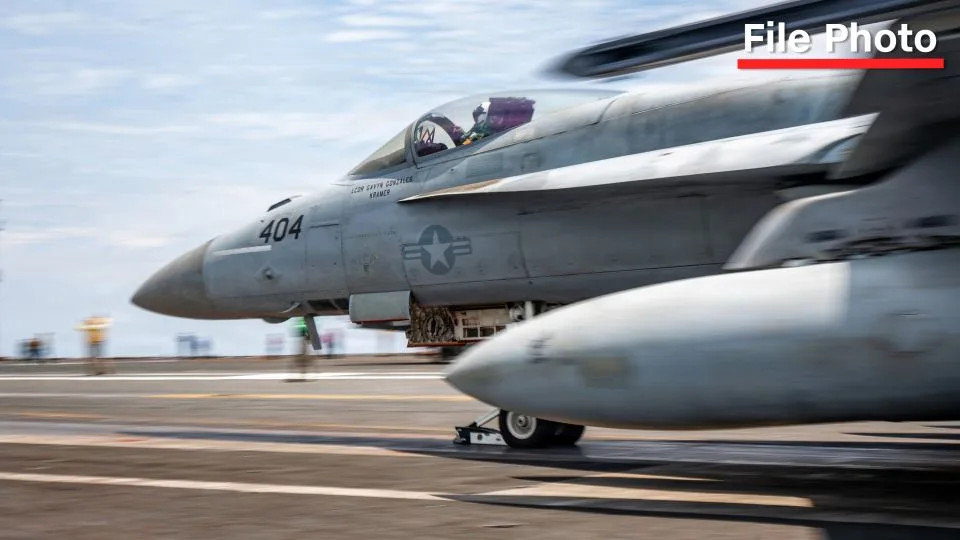
The US military carried out additional strikes on Iran on Tuesday, prompting Tehran to attack Jordan, Bahrain and Kuwait in defiance of a warning from President Donald Trump that any retaliation would see Iran "hit much harder."
The latest round of tit-for-tat strikes comes after the US and Iran traded attacks overnight into Monday for the first time in over a month, in exchanges that risked reigniting the damaging conflict after weeks of relative military calm.
After the fresh US strikes were announced, Trump warned Iran would face more severe military action if it retaliated against what he called a "very justified attack."
"They will be hit again at a much harder and higher level, but it will not be the biggest attack of them all, that is waiting in the wings and, when it is over, there will be very little left of the Islamic Republic of Iran!" he wrote on Truth Social on Tuesday.
Iran, however, vowed a "crushing" response and launched ballistic missiles toward Jordan and drones toward Bahrain and Kuwait, saying it was targeting US military assets.
Tehran claimed shrapnel from one of the US strikes had hit a wedding celebration in the country's south, killing at least four people, including a toddler. CNN has reached out to US Central Command (CENTCOM) for comment on Iran's claim.
The US strikes were in response to recent attempted Iranian attacks "against commercial shipping in the Strait of Hormuz and American troops deployed to the region," CENTCOM said in a post on X.
Since the US strikes on Sunday, two tankers have been struck by projectiles, according to maritime intelligence group Marisks and traffic monitoring agency the United Kingdom Maritime Trade Operations (UKMTO). Iran and the US are in a protracted battle over the narrow waterway, which is critical to global energy supplies.
CENTCOM said Tuesday's strikes targeted "air defense sites, radar systems, maritime assets and facilities, mine laying capabilities, and communications sites" associated with Iran's Islamic Revolutionary Guard Corps. The strikes began at 12 p.m. ET, and CENTCOM announced they were complete more than six hours later.
The flare-up in fighting comes despite Trump previously telegraphing plans to shift away from a military campaign and toward a strategy focused on ramping up economic pressure.
"I'm not trying to force Iran to the bargaining table," Trump wrote on Truth Social on Tuesday night, after Iran retaliated. "I like our position now much better, with almost total control of the Hormuz Strait, and their economy totally collapsing."
After the US announced the new strikes, oil futures climbed above $94 a barrel.
Jordanian authorities said they had intercepted 10 missiles from Iran, while another three fell in remote locations far from populated areas. No casualties were reported, Jordan's military said .
Kuwait and Bahrain also activated air defense systems intercepting drones from Iran, according to respective authorities. Iran also claimed to have launched a combined missile and drone attack on Erbil in Iraq's autonomous Kurdistan region.
The US attacks, meantime, struck multiple locations across Iran – including the neighboring port cities of Chabahar and Konarak on the Gulf of Oman, which host key commercial, maritime and military infrastructure.
Explosions were also heard east of Bandar Abbas and around Qeshm Island, according to Iran's state-run broadcaster IRIB – which both sit on the northern side of the Strait of Hormuz.
Iran's state-run Press TV said the strikes hit the small regional Jiroft Airport in southeastern Iran and a fishmeal factory on Qeshm Island in the strait.
Separately, an explosion was heard in Iran's southern county of Asaluyeh, a key gas and petrochemical hub on the Gulf coast, according to Iran's semi-official Fars News Agency.
Iran authorities have claimed the deaths of several people, including a four-year-old child, and the wounding of at least 68 others, after shrapnel fell on a building hosting a wedding celebration in the coastal village of Kouhestak in southern Iran's Sirik county, according to Press TV.
In footage released by Iran's semi-official Tasnim news agency, purporting to show the aftermath of a US strike, heavy smoke can be seen hanging in the air above rubble on the ground. All around, people can be heard shouting. CNN geolocated the imagery to a residential neighborhood in Kouhestak.
Iran's foreign ministry spokesperson, Esmaeil Baqaei, condemned the attack as part of a "catalogue of atrocities" committed by the US, and criticized the global community's "normalization of bombing."
The attack was covered widely across Iranian state media, prompting outrage on Iranian social media and the quick publication of a Lego-style animated video –– the kind which has become a mainstay of Iranian propaganda throughout the war.
CNN has been unable to independently verify the details of the alleged strike.
Kouhestak is just 37 kilometers (about 22 miles) from the city of Minab – where a US strike hit an elementary school in February, killing at least 168 children and 14 teachers according to Iran.
Strait of Hormuz will be 'worthless piece of water'
The resumption of fighting comes as the US and Iran are locked in an arm wrestle over the Strait of Hormuz – which Tehran claims the right to control, but the US says is international waters.
The waterway has been a chokepoint for global energy supplies since the war broke out, but in recent week more oil has been flowing through it.
The US claimed that it launched its strikes on Sunday because Iran was trying to launch new sea mines into the strait with rocket launchers. Tehran responded by firing at what it called US military targets in the Middle East.
Trump told Fox News on Tuesday that the US gave Gulf allies a heads-up before its latest strikes, and criticized Iran's leadership. "I think an agreement with them isn't worth the paper it's written on," the president said, later adding: "They don't stop: They're crazy and they're stupid."
Trump told Fox that the US went after radar systems that Tehran had tried to rebuild. "They tried to rebuild their radar because they can't see anything," he said. "We waited until it was almost built and then we hit it."
The Trump administration has repeatedly dismissed concerns about Iran's long-term hold on the strait.
"In two years, the Strait of Hormuz will be like a worthless piece of water — the oil will be going on pipelines across land," Treasury Secretary Scott Bessent told Larry Kudlow on Tuesday during an interview at a G20 meeting. He was referring to plans by Gulf states to build infrastructure that bypasses the strait completely.
Bessent also claimed that the Treasury Department's new push to cut off Iran's economy from the rest of the world would eventually force the regime to surrender, characterizing his job as to "make sure that they want to have a deal."
"We are going to economically asphyxiate this regime," Bessent said. "The world is tired of this pariah state, or this rogue state, and they are willing to make it a pariah."
He added that after initially targeting a bank in Dubai for its alleged ties to Iran, the Treasury Department is likely to sanction two more banks in the next couple weeks.
This story has been updated with additional details.
CNN's Alejandra Jaramillo, Matt Egan, Aida Karimi, Hira Humayun and Eyad Kourdi contributed reporting.
For more CNN news and newsletters create an account at CNN.com
Topics in this story
Gathered from external sources. Rights to this text belong to whoever originally published it.