A 5,000-year-old Polish burial held a necklace made from 42 animal teeth and two human skulls
Rest of World News: Archaeologists in south-western Poland have discovered a burial that appears to date back roughly 5,000 years, containing an adult man, a striking nec.
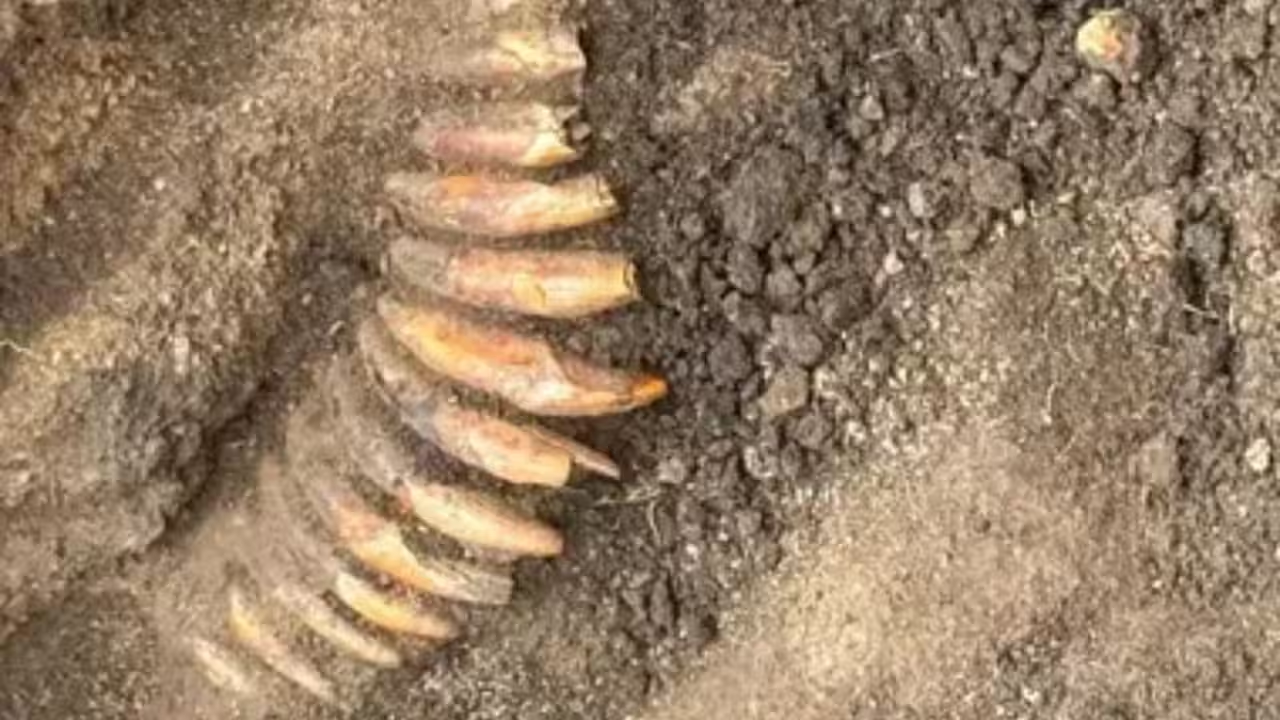
Archaeologists in south-western Poland have discovered a burial that appears to date back roughly 5,000 years, containing an adult man, a striking necklace made from 42 drilled animal teeth and fragments of two human skulls. The grave was found near Żórawina, south of Wrocław, at a site previously known for much later burials. According to Polish Radio, the prehistoric mound was discovered as archaeologists were approaching the end of their summer excavation, revealing evidence of a far older community beneath the soil. Researchers have provisionally dated the burial to shortly before 2900 BCE, although radiocarbon testing is still underway. The unique collection of objects, which also includes amber and bone ornaments, flint tools and a stone battle axe, has raised difficult questions about the identity of the buried man and the meaning of the grave in this part of Europe.5,000-year-old Polish burial preserving a necklace made from 42 animal teethThe discovery came as a surprise to archaeologists working at the Żórawina site. According to Wrocław Medical University, the team had already begun wrapping up its work when they noticed a circular shape in the ground, about 4 metres across, resembling the outline of a burial mound. Excavation of the central chamber revealed a remarkable arrangement of teeth. There were 42 of them, carefully positioned in a pattern that immediately suggested they had once formed a necklace. Each tooth had been drilled through the root, meaning they were deliberately prepared to be threaded onto a cord or string.The material connecting them had disappeared, but their precise arrangement left little doubt about their original purpose. Paweł Dąbrowski, an anthropologist and anatomist at Wrocław Medical University, said the find was clearly a human-made ornament rather than a random collection of animal remains. Researchers believe the teeth came from large mammals. Early observations suggest that they may include teeth from members of the dog family, bears and hoofed animals, while Polish Radio reported that wolves, deer and a young bear are among the possibilities being considered. Scientists have not yet ruled out the presence of human teeth, and DNA testing is expected to provide a clearer answer.The grave revealed an adult man beneath the ancient jewelleryDeeper inside the burial chamber, archaeologists discovered the almost complete skeleton of an adult man, who may have been the original wearer or owner of the extraordinary necklace. The grave also contained bone discs, amber beads, a flint blade or projectile point and a stone battle axe made from serpentinite. The axe has played an important role in the initial dating of the burial. Its shape suggests a date of around 2900 BCE, placing the grave in the Neolithic period and making it thousands of years older than the burials previously excavated at the same location.The wider context makes the discovery particularly significant. The Żórawina site had been known as a cemetery dating mainly to the end of the Roman period and the beginning of the Migration Period, roughly 1,600 years ago. This newly discovered mound therefore pushed the known history of human activity at the site much further into the past. The researchers have suggested that the burial may be connected to communities associated with the ‘Corded Ware cultural circle,’ whose presence and movements across Europe remain important subjects of archaeological research.Why were fragments of two human skulls placed in the graveOne of the most unsettling features of the burial was the presence of remains from two additional human skulls. The fragments were damaged and incomplete, and archaeologists are now investigating why they were placed alongside the buried man. According to Wrocław Medical University, one possibility is that they came from deliberately decapitated individuals and were deposited in the grave as offerings or votive objects. Researchers will closely examine the bones for marks caused by sharp-edged tools, which could either support or challenge that theory. The researchers are treating the discovery cautiously because the condition and incomplete nature of the skull remains make it impossible to determine their story without further analysis.The objects suggest that the buried man may have held an important positionThe combination of a large tooth necklace, weapons and other carefully placed objects has led researchers to wonder whether the man occupied a special position within his community. Dąbrowski has suggested that he may have been a hunter, a warrior or another important figure, while excavation leader Tomasz Gralak proposed that he could have been a patriarch within a family group. The battle axe itself showed signs of use, including slight damage to its blade. This has encouraged the idea that it may have served in combat or hunting rather than simply being a symbolic object. Still, the artefacts cannot provide a definite biography of the man.The Żórawina findings will be compared with similar burial mounds recently discovered at nearby Iwiny. According to both Polish Radio and Wrocław Medical University, bringing together evidence from the two sites could improve understanding of the movements of prehistoric communities in what is now Lower Silesia. Only after the archaeological, genetic and scientific studies are completed may the strange combination of teeth, skulls and weapons begin to reveal the fuller story behind this 5,000-year-old burial.Catch the latest World News and Live updates. Download the TOI app.
Topics in this story
Gathered from external sources. Rights to this text belong to whoever originally published it.