These people built utopic communes in the 1960s. Here’s what they look like now
Through the Back-to-the-Land movement, communes sprung up around rural parts of the US. Decades later, their aging members have dwindled, and the homes are returning to nature.
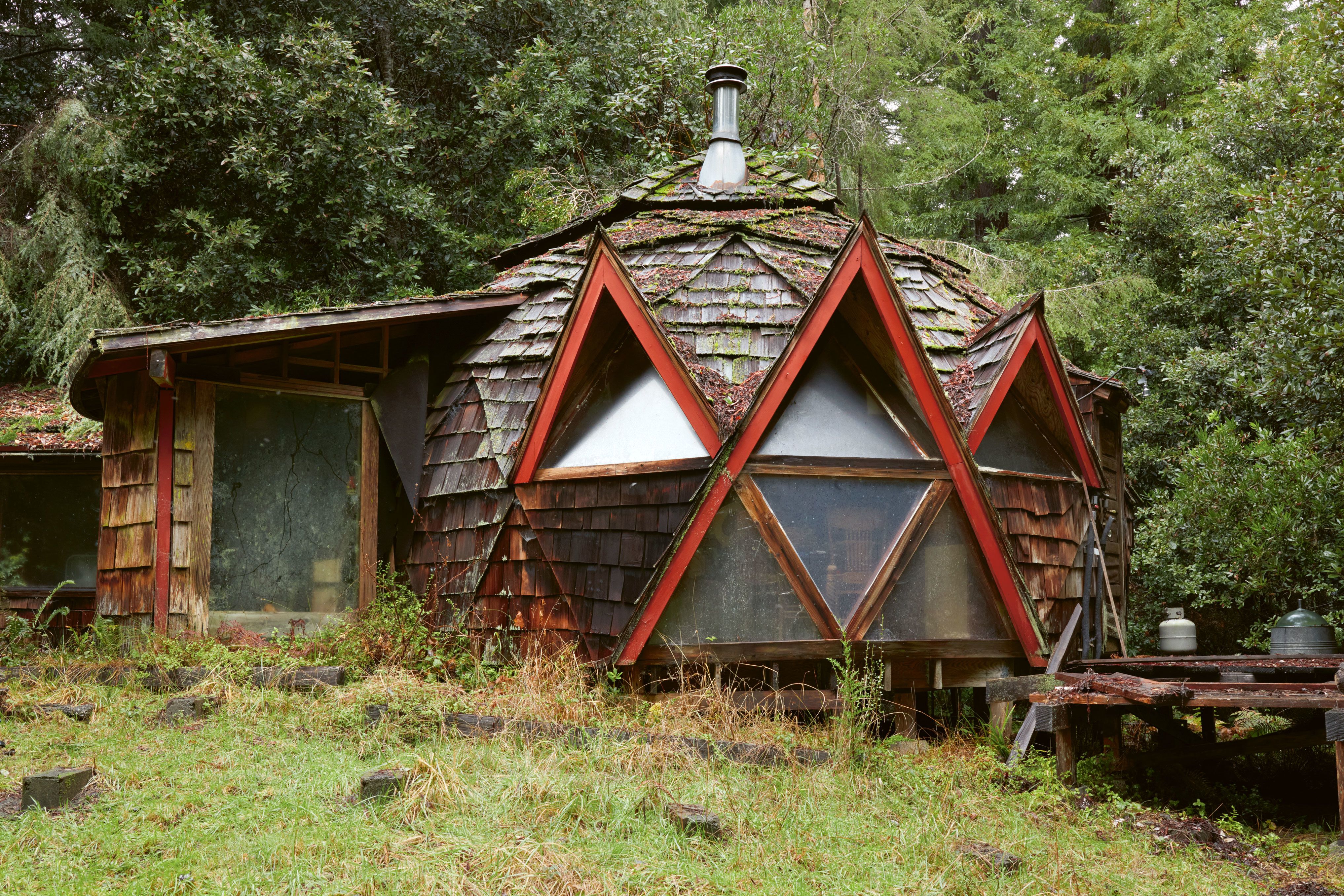
From the 1960s to ’70s, some one million Americans, disillusioned with modern life, left their comfortable homes in cities and suburbs for a totally new way of living. Through the Back-to-the-Land movement, communes sprung up around rural parts of the country, with a large concentration in Northern California, on land that was cheap and easy to buy. People built dwellings from salvaged materials, grew their own food, and relied on alternative energy sources. These actions greatly influenced how we think about sustainability today, and laid the groundwork for more modern homesteading lifestyles. It is largely thought about as a movement that happened, not one still happening. But around five years ago, the writer David Jacob Kramer and photographer Michael Schmelling set out to find the homes still standing in NorCal, and the people still occupying them, half a century on. What they discovered ranged from weathered sheds to beautiful gems of vernacular architecture that are slowly being reclaimed by nature. The groups involved once flourished in numbers, publishing and taking instruction from a proliferation of DIY books and guides that celebrated self-building and self-sufficiency, such as the 1973 ‘bible’ of the genre, “Shelter.” The back-to-the-landers who have remained in their homes are now in their 70s and 80s. They have stayed through generational shifts, governmental conflict, wildfires, and now, face the realities of aging in shrinking communities that require laborious upkeep. In the new book, “Handmade Utopia,” Kramer and Schmelling collect more than 40 oral histories that are accompanied by photographs. “It was really important to show exactly what it looks like now for the people that really stuck it out. There were tons of people that went up there and did it for a summer or two,” said Schmelling in a Zoom call with Kramer. “Our initial impression was that this is really hard living. It’s hard when you’re 22, and it’s even harder when you’re 80.” Kramer asked Schmelling to join the project after meeting a former back-to-the-lander who showed him the house he built and lived in, which was in extreme disrepair. He was thinking of burning it down, according to Kramer, who asked if he could photograph it before he did. As the writer sought out more of the communes, he realized they were rapidly vanishing, as their occupants aged, left or passed away, and the homes abandoned or torn down. Even as the pair worked, there was loss, with a few subjects dying before the project was completed. “It motivated us to keep going, and with a sense of urgency as well,” Kramer said. Many of the structures had never been photographed, and residents were wary of visitors. Some of the longest-standing communes still exist because they didn’t have names, were hard to access, and evaded public awareness. But Kramer and Schmelling found them from word of mouth and collected their stories. One woman, Diana Wiedemann joined a lesbian commune, Trillium, in 1973, co-founding the Heartwood Women Construction company, a rare women-led carpentry group. In a different community, Dan Borghi spoke about running a portable sawmill for 30 years while his daughters grew up, attended a local high school and left for “super expensive” universities. “This place isn’t going to last. Eventually it’ll leak through the shake roof that’s on here. I probably won’t be here to see it. My daughters, I don’t know if they’ll even want this place. Maybe they’ll want to sell it,” he says in the book. “Why am I worried about it anyway? I’m going to be dead.” Hidden works of art Schmelling said that they approached each home as a work of art in its own right. During the height of the movement, there was international interest in the architecture, but as Kramer details in the book, the builders never thought of themselves as architects. Some simple homes were built primarily for function, while others converted sheds or tacked on mismatched extensions to existing spaces. More elaborate homes took inspiration from Buckminster Fuller-like domes, or flowing Art Nouveau-inspired lines. The builder Bob McKee was responsible for many of these grander spaces; he parceled out land to hundreds of people and helped owners design their residences with a distinct visual language. “I call it hippie architecture and think it’s humorous. It’s so impractical,” one anonymous resident said in his oral account. “On the other hand, some of it is really beautiful, you know?” The Back-to-the-Land movement’s design legacy isn’t just limited to architecture, as the book documents, but furniture design and other artisan crafts, and the infrastructures that supported their way of life, such as land planning, recycling and compost systems. The communities were early proponents of solar power, too, for their homes and greenhouses, as well as cannabis farming. It’s not a movement that could be easily replicated today, Kramer said, but he sees its impact everywhere, from organic farming to sustainable design. While many of the people who gave their testimonies reflected on what it meant to live in their communities, they also spoke to the realities of getting older, with lifestyles that are hard to maintain, in homes that seem to have something new broken every day. Some have had to compromise on their strict non-consumerist attitudes. According to Kramer, some joke as they’ve gotten older that Back-to-the-Land has become “more like ‘Back to Costco,’” he said. Still, the pair believe the project presents a “different view of aging,” Kramer said. “They still had a lot of conviction… they are very empowered.” One person they met left only a recipe for his burial as his story. “Ten pounds of rinsed peat moss. Ten pounds of Golden Bi Luo tea. Ten pounds of moist black earth. Ten pounds of duckweed or liverwort. Two pounds of finely ground cooked fire-pit bones and oyster shells. One pound of finely ground charcoal.” The accounts Kramer and Schmelling collected are often frank about the reality of living in the communes. And as they completed the work, Kramer said their purpose wasn’t to prove whether the movement was successful or not. “For me especially, it was the impulse that was most exciting. Is there another way to live that is more meaningful, better for the earth, more equitable, more pure, maybe more joyful?” he asked. “I think everyone has those thoughts, but the willingness or the audacity to implement an experiment was far more interesting to me.”
Topics in this story
Gathered from external sources. Rights to this text belong to whoever originally published it.