A London air-raid shelter built for wartime protection now grows salad leaves underground, using LED lights instead of sunlight
US News: Thirty-three metres beneath Clapham High Street in south London, rows of green plants once grew inside tunnels that were originally built as a World W.
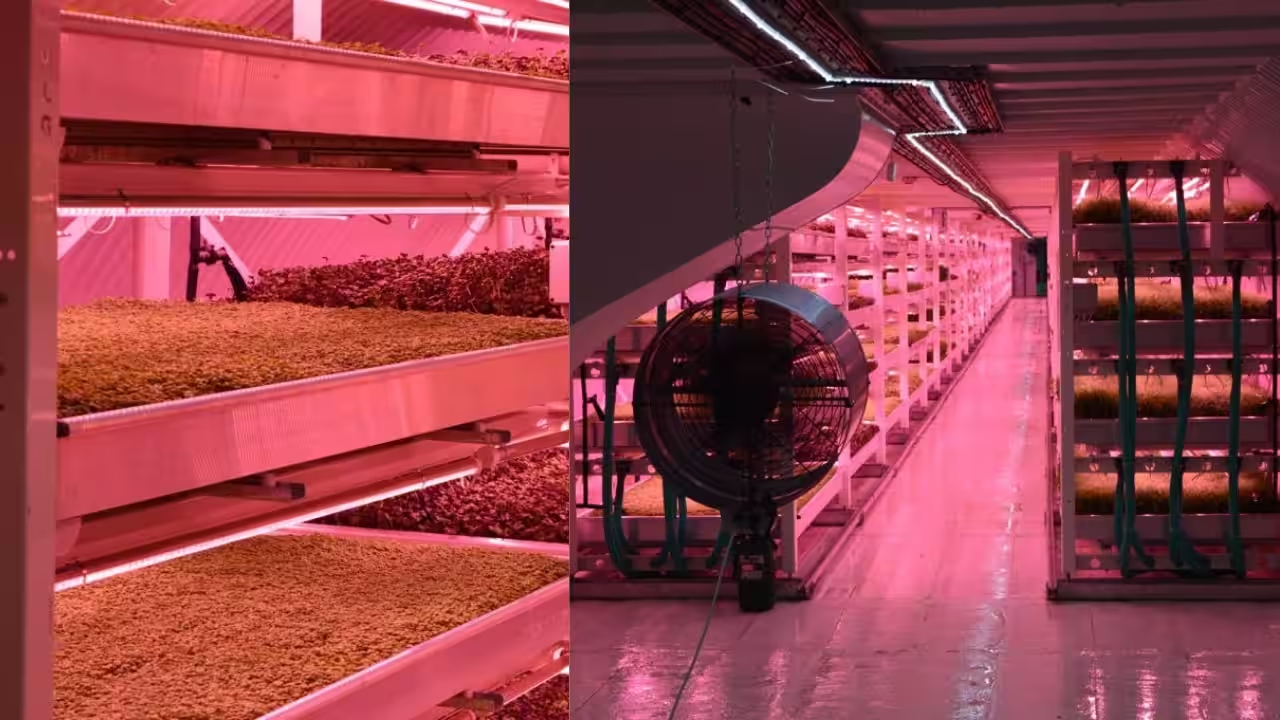
Thirty-three metres beneath Clapham High Street in south London, rows of green plants once grew inside tunnels that were originally built as a World War II air-raid shelter. The Growing Underground project used hydroponics, artificial lighting and tightly controlled conditions to produce salad leaves and herbs without natural sunlight. The farm was developed in the former shelter by entrepreneurs Richard Ballard and Steven Dring and began operating commercially in the mid-2010s.From wartime shelter to underground farmThe tunnels were built during World War II as part of London’s network of deep-level air-raid shelters, and the Clapham site was large enough to accommodate thousands of people during bombing raids, but it later remained largely unused. Ballard encountered the tunnels while working on a film project and began considering whether the underground space could be used for food production. He and Dring eventually developed the Growing Underground concept and began testing the idea.Underground, the temperature and growing conditions could be managed without the daily changes in weather, sunlight and outdoor pests. By 2015, the former shelter had been converted into a working farm, and the University of Cambridge described it as the world’s first underground farm, with stacked racks of crops growing under banks of LED lights.No soil and no sunlightThe plants were grown hydroponically rather than in soil, and nutrients were delivered through water, while LED lights supplied the light required for photosynthesis. The farm produced crops including pea shoots, basil, coriander, parsley, salad rocket, radish and mustard plants. Cambridge researchers later worked with the farm to monitor conditions including temperature, humidity, carbon dioxide, water use and light levels.Cambridge reported that some crops could be harvested roughly every 10 days, while the system used less water and space than conventional greenhouse production. The farm’s hydroponic setup used recycled materials, including wool carpet offcuts as growing mats.Cambridge researchers developed a digital twin of the farm to study the relationship between lighting, temperature, humidity, carbon dioxide and plant growth. Their work found that optimisation reduced the time needed to grow some crops by as much as 50%, while average growing time fell by 7% and yields increased by 24%.The farm’s unusual location was part of the pointGrowing Underground was designed around the idea that food could be produced close to the people who would eat it. The Clapham tunnels were within London rather than on agricultural land outside the city, and the produce could be sent to nearby markets and restaurants after harvesting.A 2016 report by The Guardian described the tunnels as being about 120 feet underground and said the farm could produce up to 2,000 packs of herbs a day at that stage, which included pea shoots, rocket, red basil, radish, fennel and coriander. The project eventually became a case study in controlled-environment agriculture, particularly because it used infrastructure that had already existed rather than constructing a purpose-built underground facility.The University of Cambridge notes that the private company Growing Underground was dissolved in November 2023, and the farm therefore should not be described as an operating underground farm today. Its Clapham tunnels remain an example of how a wartime shelter was once repurposed for commercial food production under LED lighting.You use AI every day. Now get your AI Quotient. Take the AIQ test.
Topics in this story
Gathered from external sources. Rights to this text belong to whoever originally published it.