Trump, China and the question of selling arms to Beijing
Questions about whether the U.S. could change its posture toward China are on the rise after David Perdue, the U.S. ambassador to China, made waves by saying President Trump had asked Chinese President Xi Jinping if he would “like to buy some.” The president on Monday denied making the offer to Xi, while close observers…
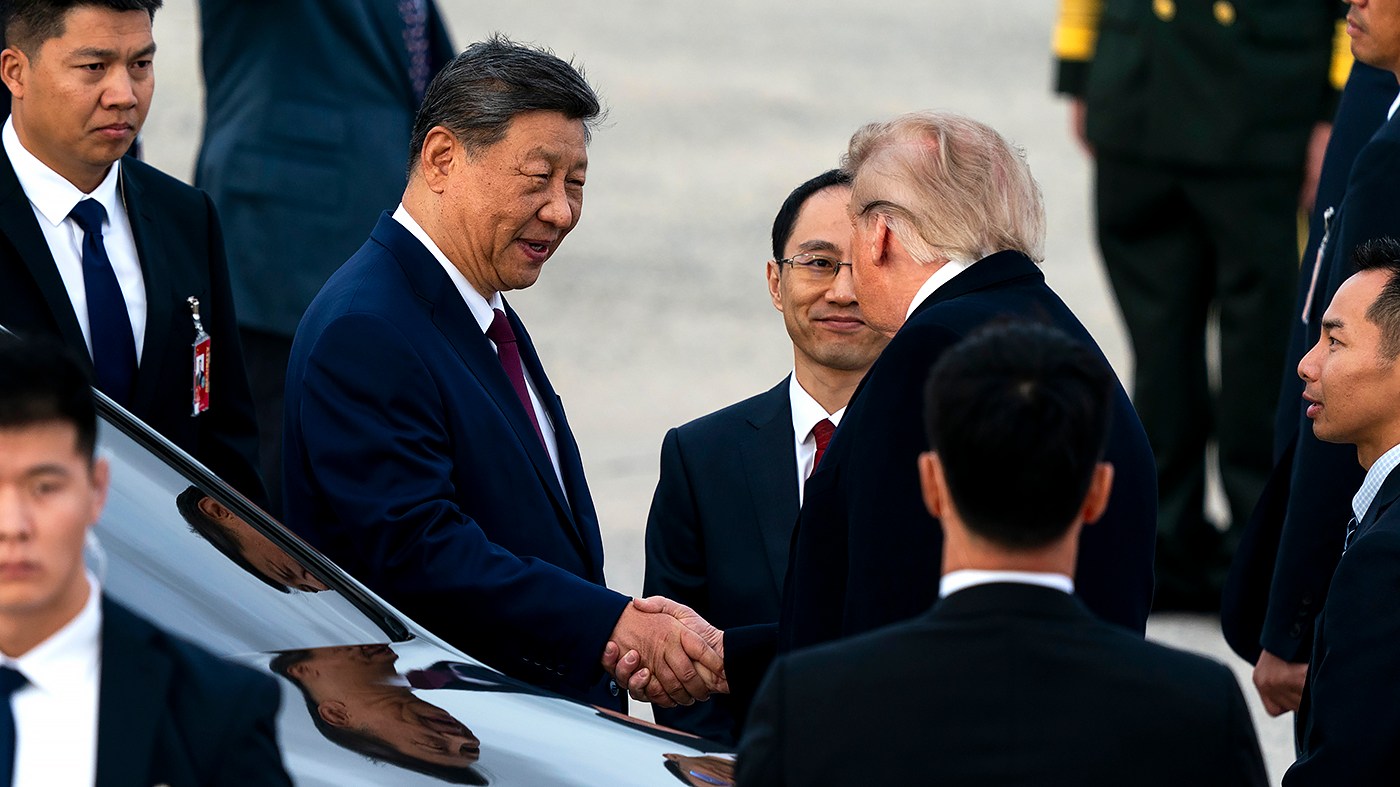
Questions about whether the U.S. could change its posture toward China are on the rise after David Perdue, the U.S. ambassador to China, made waves by saying President Trump had asked Chinese President Xi Jinping if he would “like to buy some.”
The president on Monday denied making the offer to Xi, while close observers of the U.S.-China security competition warned the proposal would mark an extraordinary break with decades of American policy.
Many lawmakers and experts in Washington see China as Washington’s greatest diplomatic and economic adversary. Arms sales to China currently are illegal and a U.S. official told The Hill that the U.S. government has no plans to sell weapons to Beijing.
“It would require overcoming existing legal restrictions, raise obvious concerns about transferring sensitive U.S. military technology to America’s principal strategic competitor and scramble longstanding assumptions about U.S. security policy in the Indo-Pacific,” Craig Singleton, senior fellow at the Foundation for Defense of Democracies (FDD), told The Hill on Monday.
“But given the State Department’s clarification that there is no offer or plan to sell weapons to China, I think the remark is more revealing as a window into Trump’s worldview than as an executable policy proposal,” he added.
Lyle Goldstein, the director of the Asia Program at Defense Priorities, said Trump might have misspoken or made an offer “without thinking it through,” but logically many would be concerned about U.S. military technology going to Beijing. He noted that in the 1980s, China was considered an emerging market for U.S. weapons as Washington sold Blackhawk helicopters and lightweight torpedoes.
“These are both important weapons systems. In both cases, they helped the PLA make major advances. The huge role of the Blackhawk sale back then is reflected in the fact that the contemporary Z-20 that China is building in large numbers is derivative of the original American design,” he told The Hill on Monday, referring to the Harbin Z-20 medium-lift utility helicopter.
Goldstein said even if it’s impossible for the U.S. to sell high-end exquisite weapons systems, such as PAC-3 interceptors or Tomahawk missiles, it might be possible to sell Beijing “lower-end items.”
“If one takes the position that the U.S. and China are unlikely to go to war for many reasons, such as nuclear weapons and economic interdependence, then it becomes conceivable that they might actually offer mutual assistance and even engage in some trade in weapons for mutual benefit,” Goldstein said.
The Hill has reached out to the State Department for comment.
Trump seemed surprised when asked about his ambassador to China’s comments Monday.
“I never heard of that one,” he told reporters . “I’ll have to ask him.”
“They probably like to buy it because we do make better equipment than them,” the president continued. “So maybe it’s a good idea. But we didn’t discuss it.”
Trump said he thinks Perdue was talking about Taiwan in his comments.
The potential sale would unsettle U.S. allies in the region, including Japan, Taiwan and the Philippines, which all have boosted their defense spending as regional tensions have increased.
The U.S. announced a more than $11 billion arms sale to Taiwan last December. But a current $14 billion arms sale to Taiwan has been on hold for months and cannot move forward until the commander in chief formally transmits it to Congress.
Acting Navy Secretary Hung Cao said earlier this year that the pause is because of the U.S. war with Iran.
“There are many questions about this that only the President can answer. But there’s one potential arms sale that’s actually worth his support and also good for U.S. interests and that’s the $14 billion package for Taiwan that has been stalled for almost a year,” Chris Estep, a former U.S. official and an Indo-Pacific security expert with the Foreign Policy Research Institute, told The Hill on Monday.
“As China continues with the largest military buildup since World War II, U.S. allies and partners across the Indo-Pacific are stepping up by spending more on their own ability to defend themselves,” he said. “Washington should be focused on supporting their efforts instead.”
Trump said in May that he discussed the $14 billion Taiwan weapons package with Xi and called the arms deal a “very good negotiating chip” with Beijing.
Purdue did say in his interview that Trump “is as strong on Taiwan as I’ve ever seen anybody.”
“He’s made it very clear that we have not changed the one China policy,” he said. “We support the Taiwan Relations Act.”
Prior to Xi’s visit to Washington, Republican senators pressed the Trump administration to advance the massive arms package, along with other national security assistance to Taiwan.
“It is difficult to imagine how the United States might credibly project influence in the Indo-Pacific if the price of keeping up diplomatic appearances is denying our partners key deterrent capabilities,” the senators wrote in a two-page letter.
Secretary of State Marco Rubio said that U.S. arms sales to Taiwan are in part limited by Washington’s potential defense needs in other corners of the world and the industrial base.
“People think … we view arm sales through the limited vacuum of the one particular place. A lot of this also involves balancing our industrial capacity and our military industrial base,” Rubio, who is also Trump’s national security adviser, told reporters last week.
Singleton, of FDD, said Perdue’s comments capture the president’s “highly transactional approach,” viewing tariffs, markets and weapons as instruments of leverage and dealmaking, “sometimes compressing the traditional distinction between allies and adversaries into the same negotiating frame.”
“In Perdue’s telling, Trump appears to have been trying to normalize U.S. arms sales by essentially saying: America sells weapons around the world, so why should this particular transaction be treated differently,” he said.
Normalizing arms sales matters because China views U.S. arms sales to Taiwan as a redline and a constraint on future U.S. behavior in the region, according to Singleton, a former U.S. diplomat.
“Trump may believe keeping the issue fluid preserves maximum flexibility. Beijing may interpret that fluidity as an opening to negotiate limits on future sales. That gap in expectations is potentially more consequential than the weapons remark itself.”
Andrew Harding, who served as special assistant for Asia on the National Security Council last year, said he thought Perdue’s comment was “interesting” but said he viewed it as a “nothing burger.”
“I don’t think this is a serious proposal because if it were, I would have expected to see more of it come out during the summit or as part of the White House deliverables,” Harding, currently a policy analyst for national security and Indo-Pacific affairs at the Heritage Foundation, told The Hill.
“I don’t expect to see any serious movement on that proposal … I think I’m more focused on the tangible issues in the relationship that China is not fully following through on, whether it’s on rare earth trade and watching to see how the White House preserves American leverage on these issues while holding China accountable.”
Goldstein, who is also a senior fellow at the Watson Institute for International and Public Affairs at Brown University, said it is possible that Trump is making an effort to lower the “level of mutual suspicion” between the countries and slash the trade deficit by selling older weaponry.
“Remember, it’s clear that Trump prioritizes the success of American companies and especially exports. His singular achievement in the Russia-Ukraine War has been to reduce America’s role, while continuing the process of U.S. weapons exports by getting the Europeans to fund these outlays,” he said. “It’s hard to imagine, but he could attempt to reduce the yawning trade deficit with China by selling them old American weapons.”
“I think the national security establishment would strongly oppose that approach, but Trump has questioned many orthodoxies in Washington,” Goldstein said.
Topics in this story
Gathered from external sources. Rights to this text belong to whoever originally published it.