In 1968, millions of grey squirrels moved across America in a puzzling wildlife event, and scientists traced a possible clue to the acorn crop of 1967
In the autumn of 1968, reports of eastern grey squirrels moving in unusual numbers across parts of the northeastern United States drew attention to a
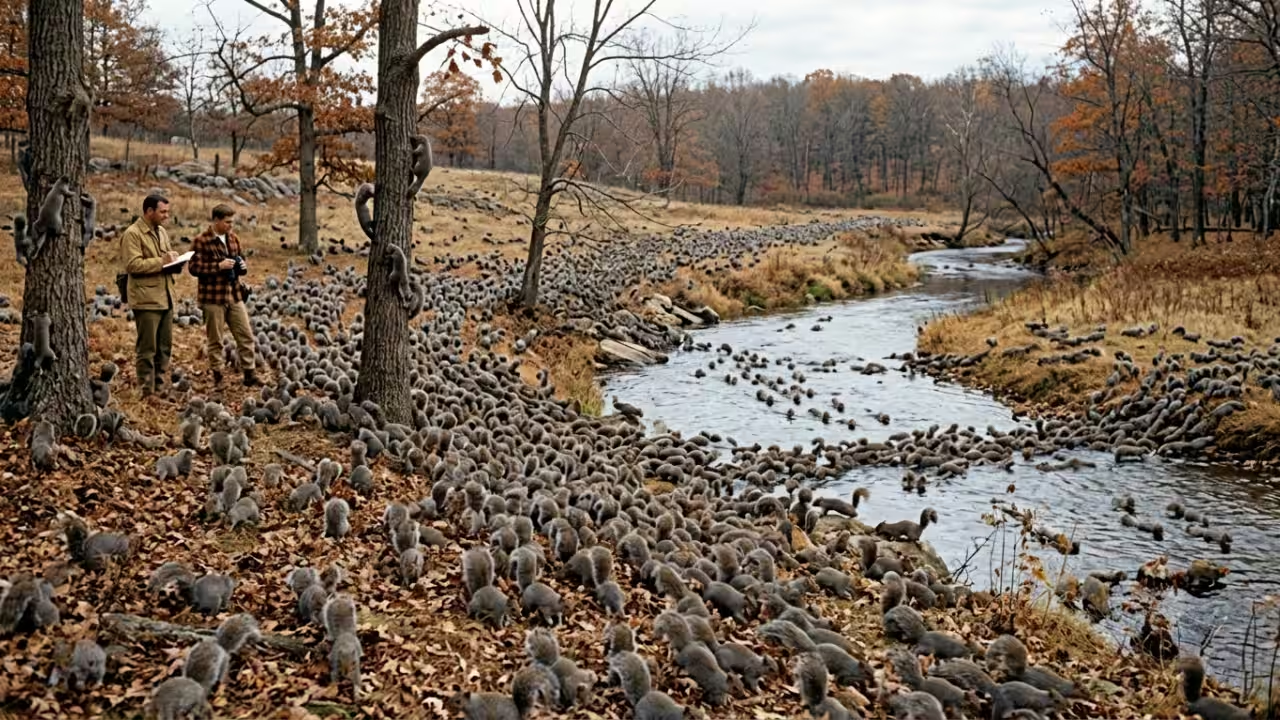
In the autumn of 1968, reports of eastern grey squirrels moving in unusual numbers across parts of the northeastern United States drew attention to a puzzling wildlife event. The scale of the movement was striking, but the animals had not necessarily begun travelling without reason. Their behaviour may have reflected changes in the food supply that had taken place over several seasons. Acorns, a major source of food for squirrels, vary considerably in abundance from one year to the next. When a good harvest is followed by a poor one, animals that have benefited from plentiful food can suddenly face a very different landscape. The weather in the preceding year may help explain how that imbalance developed.The mystery behind the 1968 eastern grey squirrel migrationEastern grey squirrels (Sciurus carolinensis) depend on a varied diet, but acorns are an important part of their food supply in oak woodland. The number of acorns produced by trees can fluctuate sharply between years. A forest that provides abundant food one autumn may offer much less the next, leaving squirrels with fewer resources just as their numbers may have increased.Some estimates put the number of squirrels involved in the 1968 irruption at 20 million, according to Smithsonian magazine. The unusual movement occurred across parts of the eastern United States, particularly the Appalachian region, where squirrels were reported crossing highways, entering buildings and attempting to swim across lakes and reservoirs.What happened to the acorn crop before the migrationThe study published in Forest Ecology and Management, titled ‘A perfect storm: Weather variability, mast failure, and the 1968 gray squirrel irruption in the eastern US’, investigate the possible causes, scientists examined oak seed production in the Asheville region of North Carolina, an area associated with the 1968 squirrel irruption. Their analysis covered 12 years, from 1962 to 1973, and included five oak species. They compared annual acorn production with temperature and rainfall during the growing season, looking for weather patterns that might help explain why some years produced plentiful crops while others did not.The findings pointed towards a complicated relationship between weather and tree reproduction. Warmer spring and summer conditions were associated with reduced acorn production in several of the species examined. The effects varied according to the type of oak and the stage of development, meaning that a single weather pattern did not affect every tree in the same way.Why the weather in 1967 attracted attentionThe scientists also examined whether the unusual weather associated with the North Carolina records could be detected across the wider northeastern United States. This helped establish whether the conditions affecting local oak production were part of a broader regional pattern rather than something confined to a small area.Some of the weather variables fell towards the extremes of the standard 1961–1990 climate reference period. Summer 1967 temperatures, in particular, stood out as the lowest in that record. This offered a possible clue to the unusual sequence of acorn harvests that preceded the following year's squirrel movement.The relationship was not as simple as saying that one cold summer caused millions of animals to migrate. Tree reproduction responds to conditions over different stages of development, and the effects of weather can carry over from one growing season to another. The study also found evidence that a large crop in one year could be followed by a smaller crop in the next, supporting the idea that trees may need time to replenish resources used during heavy seed production.How a plentiful harvest can contribute to a wildlife irruptionA large crop of acorns does more than feed the squirrels already living in a forest. Abundant food can improve survival and breeding opportunities, allowing more animals to persist in an area. Squirrels also store food for later use, but their caches cannot always compensate for a major shortfall in the following season.If food becomes scarce after a period of abundance, competition increases. Animals may travel further in search of suitable feeding grounds, move into unfamiliar habitats or appear in places where they are not normally seen in large numbers. When many individuals respond to the same shortage, their movements can become conspicuous across a broad area.You use AI every day. Now get your AI Quotient. Take the AIQ test.
Topics in this story
Gathered from external sources. Rights to this text belong to whoever originally published it.