Woman doesn’t reply to colleague on social media—days later, she’s let go
Fired for being "unprofessional" online, TikTok creator Charlotte Blandford Tagg says many share her confusion.
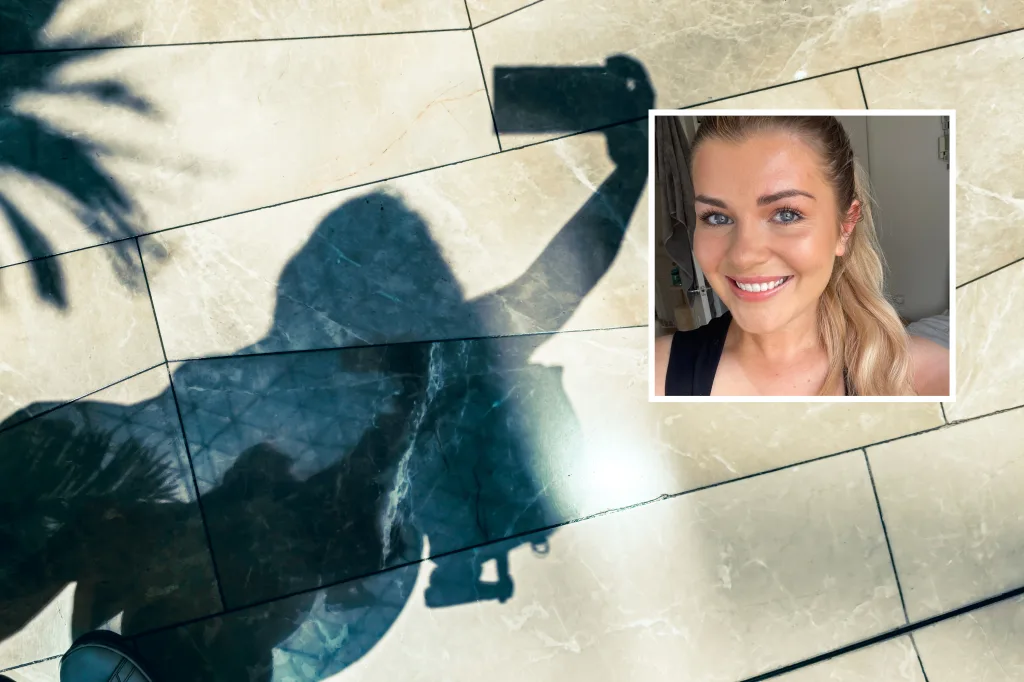
A content creator who says she was fired from her job for being "unprofessional online" has told Newsweek she believes her experience is becoming increasingly common, as more employees find their off-the-clock social media presence colliding with their employer's expectations.
Charlotte Blandford Tagg, who has amassed more than 46,000 followers on TikTok , was let go from her position at a small magazine on August 27, after failing her probationary period. The reason given, she said, was straightforward. Former bosses told her she had been "unprofessional online."
"I was working as a content creator for the magazine, and I've been creating content and posting online for around four years," Blandford Tagg, from England, told Newsweek . "I was specifically dismissed for failing my probation, with the reason given being that I had been 'unprofessional online.'"
Her case has sparked upset among her followers, resonating with a wider swath of the workforce navigating the blurred line between personal expression and professional obligation.
"I think this is becoming increasingly common because people want—and often need—to earn more money than their wages allow," she said. "Single mothers in particular have huge pressures on them, and those pressures are only increasing."
Blandford Tagg's TikTok bio declares that she "likes to overshare," though her content is largely in line with the confessional, slice-of-life style that has become ubiquitous on such platforms.
Her most viral video , posted May 13, has racked up more than 1.3 million views. In it, she speaks candidly about an incident of racism connected to her son's primary school, describing how she plans to teach him that people of all ethnic backgrounds deserve equal treatment, in hopes his outlook might ripple outward to other children.
The comments section is overwhelmingly supportive, with viewers on TikTok praising her openness.
Still, Blandford Tagg acknowledged that her public account—and the attention it draws—has, at times, created friction. She said the situation leading up to her redundancy was compounded when someone who had been lined up to work for the company for free complained to her manager that Blandford Tagg had failed to respond to them, while apparently still finding time to post TikToks.
"I don't think people should have to give up their lives outside of work simply because they have a job," she said. "People should be allowed to do what they want outside of their 9–5."
The backlash to her firing, she said, reflects how deeply social media is now woven into everyday life.
"It's fun, it's community, it's a source of income and, in a world where we're constantly getting glimpses into other people's homes and minds, I think we should be entering an era where the person you are at work and the person you are online can be different," she said, adding: "However, I did work for a small-town, small-minded company, so perhaps it shouldn't have come as a huge surprise!
Blandford Tagg kept the name of her former employer private and has since joined No Shame, a PR agency start-up geared toward women who do not necessarily fit conventional notions of professionalism.
"I think the word 'professional' has sometimes become another word for 'robot,'" she said. "I don't think you should have to hide your personality or your life to be taken seriously at work."
Her situation is playing out against a backdrop of staggering platform reach. TikTok counts roughly 26.8 million users in the U.K., where Blandford Tagg is based, and 1.99 billion monthly active users worldwide, according to software company Sprout Social, while DemandSage puts the worldwide figure at 2.21 billion.
Newsweek spoke to several career experts about why conflicts like Blandford Tagg's appear to be multiplying.
Sam Wright, head of career strategy at Huntr.co, framed it as a question of control.
"Many businesses see the strong social following of an employee as an asset in today's age where attention is difficult to come by but they want it on their terms," Wright said, predicting that as audiences become currency, "more and more employees will be expected to have an audience… and this issue of who controls social media will grow."
Lacey Kaelani, CEO of job search engine Metaintro, argued that the content itself often matters less than its traceability.
"A joke told to a friend is perfectly fine whereas a joke on camera is a problem," she said, describing employees with large followings as "a channel that the company can associate themselves with but has absolutely no control of."
She likened firms' attempts to police off-hours behavior to the erosion of non-compete clauses, adding that fired workers "can now reach audiences much broader than previously" by explaining why they lost their jobs .
Career strategist Michelle Enjoli said the underlying issue is one of blurred identity.
"Your online presence has become an extension of your professional reputation," she said.
Her proposed fix? Clearer, written boundaries.
"The solution is a clearer conversation that defines what's off-limits versus what's just personality," she said.
Blandford Tagg's former employer could not be reached for comment because she chose to keep their identity private.
Update 9/8/26, 11:54 a.m. ET: This article was updated with additional information.
Contact Newsweek editors on this story: Charlotte Nisbet and Emma Lee-Sang
Topics in this story
Gathered from external sources. Rights to this text belong to whoever originally published it.