A Norfolk farmer’s doorstop was a 68 cm Bronze Age dagger, bent for ritual burial; one of just six known in Europe, it sold to a museum for £40,970
A farmer in Norfolk unknowingly used a rare Bronze Age ceremonial dagger as a doorstop for nearly a decade. Now identified as one of only six in Europe, the Rudham Dirk was sold to Norwich Castle Museum for £40,970, with help from a significant grant.
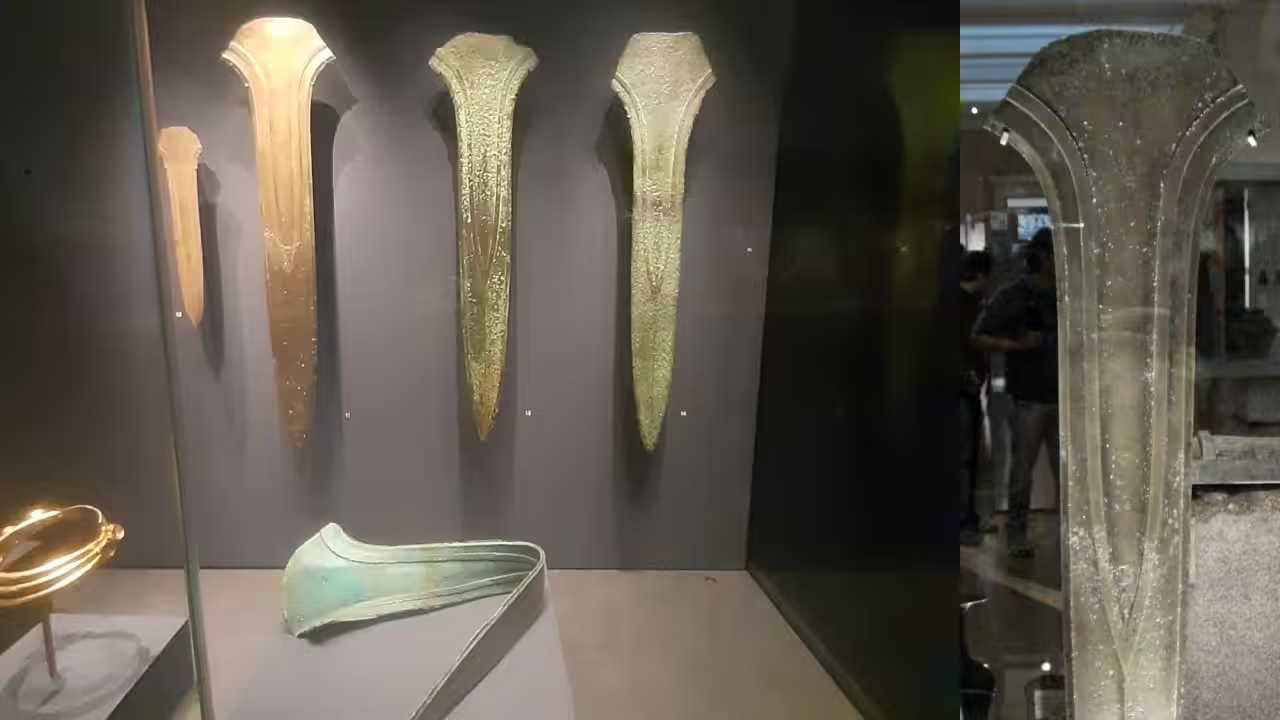
If farmers work the land long enough, they become used to the plough throwing up strange metal objects. It hardly merits a second glance and is mostly made up of rusting machinery or the parts of a long-forgotten gate. But now and then, something far stranger and older emerges, and whether or not anyone notices depends solely on who happens to be standing close by. Before anyone realised what it was, a bent green piece of metal that appeared in a field in North Norfolk held a door open for around ten years. The fact that it was eventually acknowledged and placed in a museum serves as a helpful reminder of how much history can be found in plain sight.The object is a ceremonial dagger known as the Rudham Dirk, and it is one of only six of its kind known in Europe. Norwich Castle Museum bought it from the landowner for £40,970, helped by a grant of almost £39,000 from the National Heritage Memorial Fund, which stepped in so the weapon could go on public display in Norfolk.A find nobody recognisedThe dagger was found during ploughing at East Rudham in 2002 or 2003. The farmer who discovered it did not recognise its archaeological importance and took it to his farm office, where he used it as a doorstop. It remained there until 2013, when he finally showed it to specialists from Norfolk's Identification and Recording Service. They recognised it as an exceptionally rare Middle Bronze Age ceremonial object.That changed in 2013 when it was shown to the Identification and Recording Service in Norfolk, which administers the county's branch of the Portable Antiquities Scheme. The initiative is in place to record archaeological finds made by members of the public and its staff dated the dagger and classified it as a significant artefact. At the time, reports said the owner had considered throwing it out, but a friend advised an expert should take a look at it first.Why it was so unusualWhen straightened out, the Rudham Dirk would have been about 68 cm long: roughly three times the size of a standard Bronze Age dirk. It dates back to the Middle Bronze Age, about 1500 BC. It was so big and hefty that it would have been useless in a fight. The blade was never sharpened, and there are no rivet holes to attach a handle; thus, it was clearly made as a ceremonial piece and not as a practical weapon. Curators are almost positive that is why it was found folded in half. It was deliberately bent, part of the ritual destruction of metalwork before burial, a process well known from the Bronze Age.There are only six dirks of this type known in Europe, two from France, two from the Netherlands and two from Britain. The other British case was likewise in Norfolk. The British Museum believes that it had been placed vertically into soft peaty earth approximately 3,500 years earlier and that a man wandering in woodlands near Oxborough tripped over it in 1988. Such a dirk would have weighed 2.37 kilogrammes (5.2 pounds) and measured 70.9 centimetres (27.9 inches) long, too unwieldy to be of practical use. Museum curators suggest that it may have been manufactured for ceremonial purposes or as a store of riches. Its catalogue article adds that the Oxborough dirk and its four continental parallels are so similar that they may all have been made in a single workshop, though nobody can say whether that workshop stood in Britain or across the water.Keeping it in NorfolkA lone bronze dirk did not fall under England's Treasure Act, which requires finds to have two or more bronze pieces or at least one thing composed of precious metal, according to a research chapter released by Sidestone. The owner has no legal duty to pass it over and any acquisition would be a matter of negotiation.Norwich Castle Museum and Art Gallery negotiated with the landowner and agreed to purchase the dirk for £40,970. The National Heritage Memorial Fund contributed a grant of £38,970, while the Norfolk and Norwich Archaeological Society provided an additional £2,000. Together, these contributions covered the full purchase price. The National Heritage Memorial Fund said its trustees wanted to secure the object for public display and ensure it remained in Norfolk. Unlike the earlier Oxborough dirk, which is held by the British Museum in London, the Rudham Dirk would stay in the county where it was discovered. Norwich Castle Museum planned to display it permanently in its archaeology galleries.Dr Tim Pestell, the museum's senior curator of archaeology, said the discovery offered insight into the beliefs and contacts of people during the Middle Bronze Age. He also hoped that displaying the object would help residents and visitors understand the region's ancient history. The Rudham Dirk is significant not only because of its unusual size but also because of what its deliberate bending reveals about Bronze Age ritual practices. Its blunt blade and lack of handle fittings suggest it was never intended for ordinary combat. Its acquisition by Norwich Castle Museum also ensured that an exceptionally rare archaeological find remained in the region where it was discovered.You use AI every day. Now get your AI Quotient. Take the AIQ test.
Topics in this story
Gathered from external sources. Rights to this text belong to whoever originally published it.