Why billions spent on defense haven’t shielded Saudi Arabia from Houthi attacks
Saudi Arabia spends tens of billions of dollars on defense every year, but is struggling to protect key assets such as airports, refineries and pipelines from missiles and drones fired by Houthi militants from Yemen.
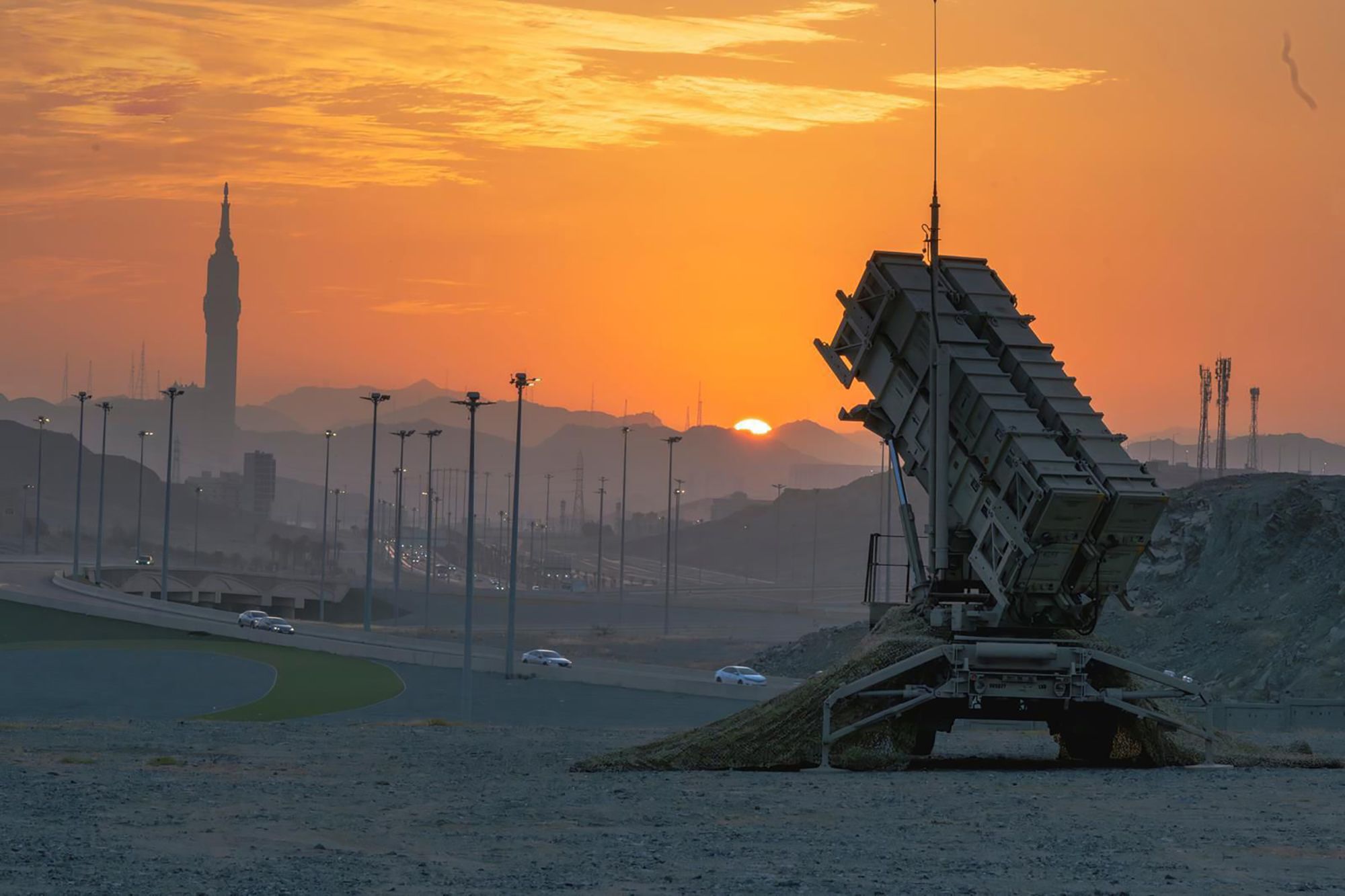
Saudi Arabia spends tens of billions of dollars on defense every year, but is struggling to protect key assets such as airports, refineries and pipelines from missiles and drones fired by Houthi militants from Yemen. Despite acquiring state-of-the-art weapons systems from the United States and Europe and possessing multi-layered air defenses, the kingdom has seen deadly attacks on the main airport serving the capital, Riyadh, over the past week. Saudi Arabia spent $83 billion on defense last year, according to the Stockholm International Peace Research Institute, putting it firmly among the top ten military spenders worldwide. It has acquired US fighter jets as well as Patriot and THAAD air defense systems, and a range of advanced weaponry from France and the United Kingdom. But the Saudis have a lot to defend: a country roughly one-fifth the size of the US, with threats on three sides. From the east, Iran fired about 1,000 missiles and drones at Saudi targets during the most intense part of the conflict this year. From the north, Iranian-backed militias in Iraq have sent drones to attack the country’s critical East-West oil pipeline. And from the south, the Iran-backed Houthi rebels fire missiles at the kingdom from shelters and mobile launchers in the mountains of Yemen. Defending Saudi Arabia means protecting a vast network of targets, not just Riyadh or a single refinery. Its defenses must detect incoming threats, decide which to intercept and warn civilians, all within moments, according to Vision2030.ai, an independent website analyzing the kingdom’s economic transformation. The Saudis are intercepting many of the missiles and drones fired by the Houthis. But some get through. The defense ministry faces difficult choices in distributing the existing systems with so many installations vulnerable to attack, according to a Saudi source. Houthi capabilities The Houthis have learned to combine ballistic and cruise missiles with long-range drones to overwhelm Saudi defenses. The approach resembles Russia’s playbook: Moscow has frequently used a mass of drones along with cruise and ballistic missiles in barrages against Ukraine. Cruise missiles fly at lower altitudes, making them harder to identify and track. The Houthis have also introduced a new generation of ballistic missiles that they claim are maneuverable. No single air defense system can guarantee that every incoming threat will be intercepted. But the Houthis have not done this alone. Eight years ago, UN experts “identified missile remnants, related military equipment and military unmanned aerial vehicles that are of Iranian origin and were introduced into Yemen” despite an international arms embargo. That same panel said two years ago that “the scale, nature and extent of transfers of diverse military material and technology provided to the Houthis from external sources, including financial support and training of its combatants, is unprecedented.” Experts note that the latest Houthi missiles, such as the Hatem-2 and the Palestine-2, are very similar in design to Iranian weapons. They are fast and accurate. Last year, a Houthi missile evaded Israel’s vaunted air defenses and impacted near Ben Gurion airport. Analyst Amir Bar Shalom told CNN at the time: “They were very accurate, and to be very accurate if you’re launching from 2,000 kilometers, it’s impressive.” The Houthis have also modified Iranian air defense weapons to strike aircraft and cruise missiles, according to Brigadier General Majed al-Nazili, spokesperson for the Yemeni government forces. “These missiles move around for a period of up to 25 minutes per missile and operate using a thermal-tracking system,” he said last month. Will they listen to Tehran? The Houthis have long been part of Iran’s ‘axis of resistance.’ While other allied groups such as Hezbollah, Hamas and militias in Iraq have been significantly degraded, the Houthis have gone from strength to strength. They continue to have a strong relationship with Tehran and sent a delegation to the funeral of former Supreme Leader Ali Khamenei. But they also have their own agenda. Seven years of conflict with Saudi Arabia between 2015 and 2022 caused immense suffering in Houthi-controlled parts of Yemen, and an economic and transport embargo has continued since. Ultimately, that led the Houthis in July to declare they would attack Saudi shipping in the Red Sea – and the campaign of missile strikes began soon afterwards, initially targeting an Aramco oil refinery on the Red Sea coast and Saudi airbases. The Houthis are demanding an end to Saudi airstrikes in support of government forces in Yemen, as well as billions of dollars in compensation from Saudi Arabia. Whether in good faith or not, Iran has offered to mediate between Riyadh and the Houthis. On Monday, Iranian Foreign Minister Abbas Araghchi said Tehran was ready to provide “any assistance necessary to facilitate the start of talks between Saudi Arabia and Yemen,” meaning the Houthis. Mohammed al-Bukhaiti, a member of the Houthis’ political bureau, claimed Monday that Riyadh had accepted mediation but the group had rejected truce proposals of two weeks and of one month. “The battle this time is not like its predecessors; the arena is no longer the same arena,” al-Bukhaiti said. “Every day that passes in this battle will expand its scope and deepen its losses, and the settlement that is possible today may become difficult or impossible tomorrow.” Kingdom faces tough choices Saudi Arabia has tried to project an image of “business as usual” even as the conflict with the Houthis intensified. Its civil defense authority stopped issuing public alerts by phone of incoming missiles and drones last week – before the series of deadly strikes on Riyadh airport. Alerts have since resumed, according to several residents of Riyadh who spoke with CNN. Saudi authorities say three ballistic missiles were intercepted on Monday. An expatriate resident of Riyadh told CNN their children were being schooled at home this week. The resident was upset on Saturday by the lack of automatic alerts for incoming missiles in the preceding days but said phone alerts were working effectively by Monday. They also expressed frustration at the Saudi authorities’ silence over the weekend about the strikes on Riyadh airport. CNN has asked the Saudi authorities for a response on the absence of alerts. Going forward, the kingdom faces tough choices. Accommodation with the Houthis after more than a dozen civilians were killed in the airport attacks would be unpalatable. Escalation, through even more intense airstrikes, would bring the risk of further missile attacks that would undermine the goal of Crown Prince Mohammed bin Salman to make Saudi Arabia a world-class destination for investment, technology and tourism. The stakes extend beyond the oil industry. Data centers, desalination plants and airports underpin the kingdom’s technology ambitions, water supply and tourism economy. The crown prince’s marquee investment event in Riyadh later this month will put his pitch to international investors in the spotlight. But major corporations shied away this week from the World Petroleum Congress in Riyadh. Defeating the Houthi rebels through a ground offensive involving Yemeni government forces seems highly unlikely. The Houthis are entrenched, battle-hardened and know the mountainous terrain. They have inflicted heavy losses on government forces in the last month. Last year, the US spent more than $1 billion on a seven-week campaign of air-strikes against the Houthis. The Houthis eventually agreed not to attack US shipping in the Red Sea but remained very much in place – and in the meantime shot down a number of highly advanced US Reaper drones. Neither US nor Israeli strikes eliminated members of the Houthi leadership, even if commanders and technocrats were killed. If anything, the Houthis, who may have as many as 350,000 men under arms, are on the front foot. They have now encircled the government-held city of Taiz, Yemen’s third largest and a vital logistical hub, the Institute for the Study of War said on Monday. Saudi Arabia seeks support The Saudis are seeking to mobilize an international coalition against the Houthis. Regional allies have offered help in the way of defensive systems. Pakistan has sent thousands of troops to help defend the kingdom. Egypt has offered whatever support is asked for. The Saudis may also be able to procure more air defense systems from Europe and the US, after running down shipments delivered at the start of the conflict with Iran. But the US itself is short of such systems. A report by the US Defense Department’s Inspector-General said the campaign against Iran had “resulted in strategic inventory shortfalls and revealed industrial base bottlenecks for munitions resupply.” And with mid-term elections three weeks away, US President Donald Trump is wary of yet another entanglement in the Middle East. He has been non-committal about direct US strikes against the Houthis, while not ruling them out. “US reluctance to get involved stokes the perception that the United States has abandoned a partner at its moment of greatest need,” according to Michael Ratney at the Center for Strategic and International Studies in Washington. Writing before the airport strikes, Ratney – a former US ambassador in Riyadh – added: “The kingdom is under attack, and as a political matter, it has to retaliate. But ultimately, we should expect a return to diplomacy – imperfect, unsatisfying diplomacy that nonetheless deescalates the conflict.” That may leave the Houthis in place, and in a stronger position inside Yemen. CNN’s Nic Robertson contributed to this article.
Topics in this story
Gathered from external sources. Rights to this text belong to whoever originally published it.