8 common passport mistakes that can derail an international trip
Don't let an untimely expiration date or a name change foil your long-awaited travel plans.
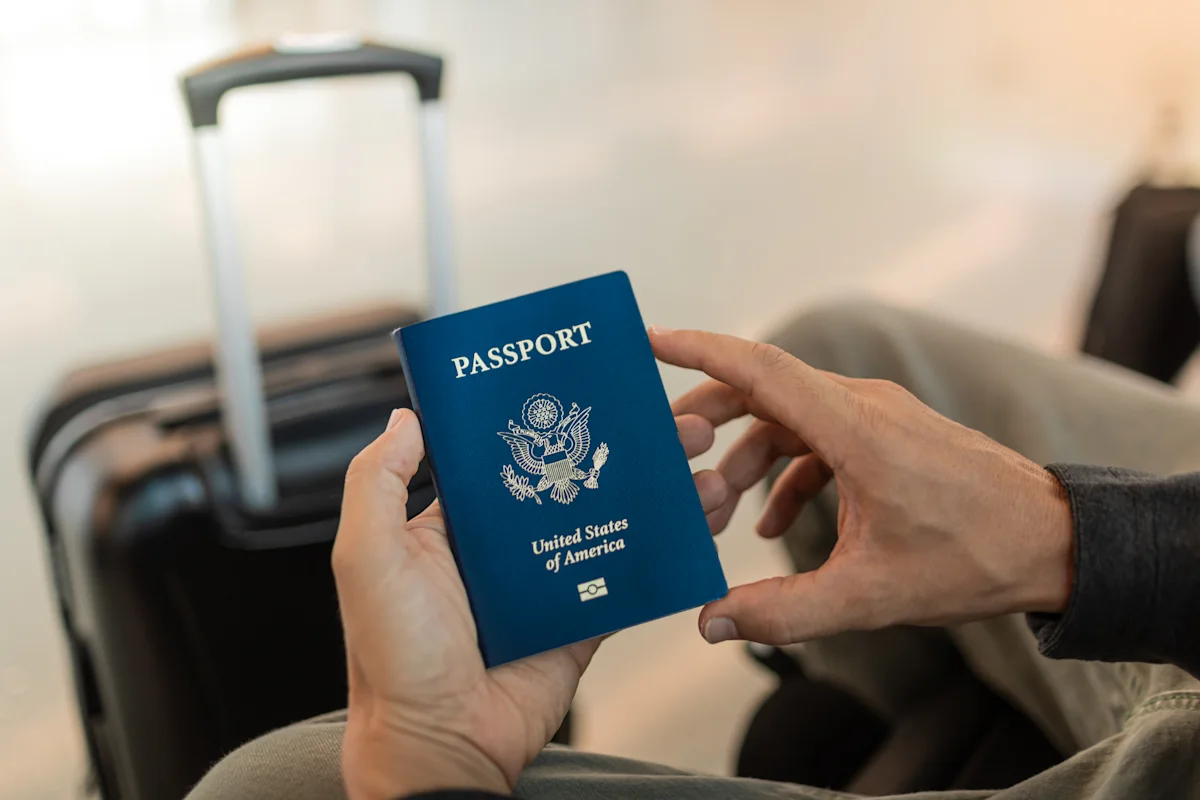
Several years ago, I lost my passport weeks before a work trip to Croatia. Finding it at my father-in-law's house should have been a relief, except that I'd already reported it lost, rendering it invalid even though it hadn't expired.
"Once it's reported, it's canceled in the system, permanently, regardless of whether the physical document turns up," says Victor Gimenez, director of customer experience at the travel document facilitation service iVisa .
As a travel writer, I've learned the hard way how a passport that seems perfectly valid can still totally derail an international trip. Water damage, incorrect biographical information and mismatched documents are all issues that can cause problems at check-in or the border.
Thankfully, I knew better than to travel with my canceled passport. Here are other common U.S. passport mistakes that could bring an international trip to a halt before it even starts.
1. You didn't confirm the destination's entry requirements
It's a common misconception that a passport is valid as long as the expiration date hasn't yet passed. But whether your passport will be accepted depends on the destination: Some countries require passports to be valid for a set period starting on arrival, while others base validity on the intended departure date. It's important to know the rules your destination uses if you're cutting your trip close to the expiration date.
For most non-EU travelers entering the Schengen Area, immigration lawyer Marco Permunian (who specializes in immigration law, plus Italian citizenship and real estate matters) says "there are two tests, and they are independent of each other."
"The passport must be valid for at least three months beyond the date you intend to leave the Schengen Area, and it must have been issued within the last 10 years on the day you enter."
Some destinations even require your passport to be valid for at least six months beyond your arrival or intended departure date. That's why it's critical you check the requirements of each destination you visit — and transit through.
2. Your passport doesn't have enough blank pages
There are other reasons a traveler with a seemingly valid passport can be denied boarding or entry to a destination.
Certain countries require one blank page for immigration stamps or visas, Gimenez says, while others, including China and India , require two pages. It's not always just a matter of having enough space, either — the arrangement can make a difference too. South Africa , for example, requires two consecutive, entirely blank passport pages for entry (not including endorsement pages).
In addition to confirming a destination's specific requirements, be sure to count the completely blank pages in your passport, not just the pages that have room remaining.
3. You overlooked the requirements for a kid's passport
If your child is under 16 and has a U.S. passport, don't assume their passport follows the same rules.
"Children's passports expire in five years, not 10, and parents forget," says Sébastien Couix, founder and CEO of travel-document agency Visamundi .
Remember, children under 16 must submit a new in-person application (they can't use the online or mail-in renewal process). And they generally must apply with both parents or guardians present. If one or both parents or guardians can't attend the appointment, additional documentation is required. Depending on the circumstances, that might be a notarized consent form, proof of legal authority or other documentation.
"And if your child doesn't have your surname, take their birth certificate with you. Nobody will ask for it, until someone does, at the worst moment," adds Couix.
In fact, the State Department recommends travelers with children always bring with them a copy of a child's birth certificate or proof of a legal relationship, even if you share the same surname.
4. Your travel documents don't match your passport
It's a reasonable mistake: A newlywed books a flight under their married name, forgetting their passport still shows their birth surname. When they show up at the airport ready for their honeymoon, they face delays or are even denied boarding — because the name on their ticket and passport don't match.
"I know people who flew with a misspelled ticket and had no problem," says Couix. "I also know people who missed a wedding because of one letter. It's not a lottery you want to play."
Policies vary from one travel provider to the next, but if you notice your travel documents don't match your passport, request a correction with the airline as quickly as possible.
Permunian also says that dual citizens, particularly those with passports showing different names, may want to travel with both passports. He suggests contacting the airline prior to booking to find out which name should be entered on the reservation. Travelers should also consult official government or embassy guidance.
For example, U.S. dual citizens must use a U.S. passport to enter and leave the country. They may also need their other passport to enter or leave their other country of citizenship, depending on that country's regulations.
Stuck-together pages or ripped binding may seem harmless, but border officials and airline gate agents have the authority to refuse entry or deny boarding, respectively, if the damage to your passport is deemed problematic.
Machine-readable passport books feature a data page that contains your photo, personal details, passport number and date of issue and expiration. It's a crucial part of the identification process used by border control and immigration officers to verify who you are, so it's arguably the most important component of the passport.
"If the laminate is lifting or the page has water damage, expect trouble," Couix says. Water damage, stains and mold are explicitly cited by the State Department as damage that requires a passport replacement.
Even a sticker or a note written on the biographical page, adds Gimenez, can mean trouble: Any unofficial markings, even a child's scribble or a souvenir stamp, might be categorized as damage severe enough to render a passport unacceptable.
Don't panic if your passport shows signs of normal wear and tear, like minor cover scuffs or slight bends in the pages. Unless they affect readability or electronic scanning, that type of damage probably doesn't require a replacement.
6. You didn't get authorization to travel
"Travelers see 'visa-free' and assume that means no action is required at all," explains Gimenez.
But "visa-free" doesn't necessarily mean you can arrive without submitting any advance paperwork. Some visa-free destinations still require an electronic travel authorization, a form of pre-travel screening.
For example, U.S. passport holders planning a short, eligible trip to the United Kingdom or New Zealand typically won't need a visa, but they will need an ETA or an NZeTA, respectively.
Note that an ETA offers permission to travel to the destination, but it doesn't guarantee admission at the border.
7. Your travel documents didn't get updated
If you recently renewed your passport, your existing visas or visa-waiver authorizations may not automatically transfer. That's because your new passport will have a different number, and some authorizations are linked to the passport you listed when you first applied.
The U.K.'s ETA , for example, is linked to the passport you applied with, and cannot be transferred to a new one. So, even though the ETA is valid for two years, it is invalidated if the passport expires. You'll need to apply (and pay) for a new authorization before traveling.
Depending on the program, you may need to either update your passport information or submit a new application when you get a new passport.
If you have a valid physical visa inside an expired passport, the issuing country might allow you to travel, provided you can present both your old and new passports, says immigration lawyer Michelle Abeckjerr , Esq.
Some countries, however, require the visa to be in the current passport, meaning you'd need to apply for a new one before your departure. Rules vary by country, so be sure to check if a new visa application is needed.
Couix recommends checking the passport requirements for a destination at least twice: Once before making any reservations and again a few weeks before flying. That way, you're giving yourself time to gather any newly required documentation.
"Rules shift fast these days," Couix says. "We've watched eligibility lists change with a few weeks' notice."
Start by looking at the U.S. Department of State's travel hub for country-specific information, and then confirm the rules listed on the destination's official government or consulate site. Check any additional countries you're transiting through too.
While you're at it, Gimenez also advises checking the airline's document requirements.
"Government requirements and airline systems do not always update in perfect sync, so it is worth checking both rather than assuming one guarantees the other," he adds.
How long does it take to correct a mistake on a passport?
The timeline for correcting a passport error depends on the issue. Standard passport renewals usually take four to six weeks , though they can be expedited for an additional fee. You can apply to renew your passport online through the State Department.
If you're dealing with a name or photo change or you need to have a data or printing error resolved, the State Department has detailed information on how to proceed. Depending on the request, additional forms or fees may be required.
Other issues, like having the wrong visa for your destination country, may be more complicated to resolve.
Can I still travel with an error on my passport?
In most cases, traveling with an error on your passport is unwise. You can experience delays at the airport or be denied boarding, or even be denied entry to your destination country, which can lead to a host of more serious issues.
If you notice an issue with your passport, do what you can to correct it before traveling. For tricky timelines, consider booking refundable tickets or waiting to nail down your itinerary until after you've sorted out your passport woes. You can also opt for expedited passport processing by paying an added fee.
How long is a passport valid after expiration?
U.S. passports are not valid after their expiration date. In fact, it's considered risky to travel with a passport that expires three to six months before your anticipated return date. Be sure to check the entry requirements for your destination country and any additional countries you're transiting through. To renew an expired passport, visit the State Department website .
How long does it take to get a passport?
Applying for a new U.S. passport usually takes the same amount of time as renewing an expired passport (about four to six weeks, not including mailing time). With expedited processing, you can receive your passport within two to three weeks, according to the State Department. There's also an option for urgent renewal if you're traveling internationally within 14 days, but you'll need to make an appointment at a passport agency to request this service. If you recently ordered a new passport, you can check your passport renewal status online. Additional reporting by Dana Yewbank.
Topics in this story
Gathered from external sources. Rights to this text belong to whoever originally published it.