A ship that sank in the Baltic Sea in the 1850s may have been carrying luxury gifts for a Russian king, including champagne bottles and mineral water
Rest of World News: A 19th-century shipwreck lying beneath the Baltic Sea may have been carrying a lavish cargo intended for the Russian imperial court, including more th.
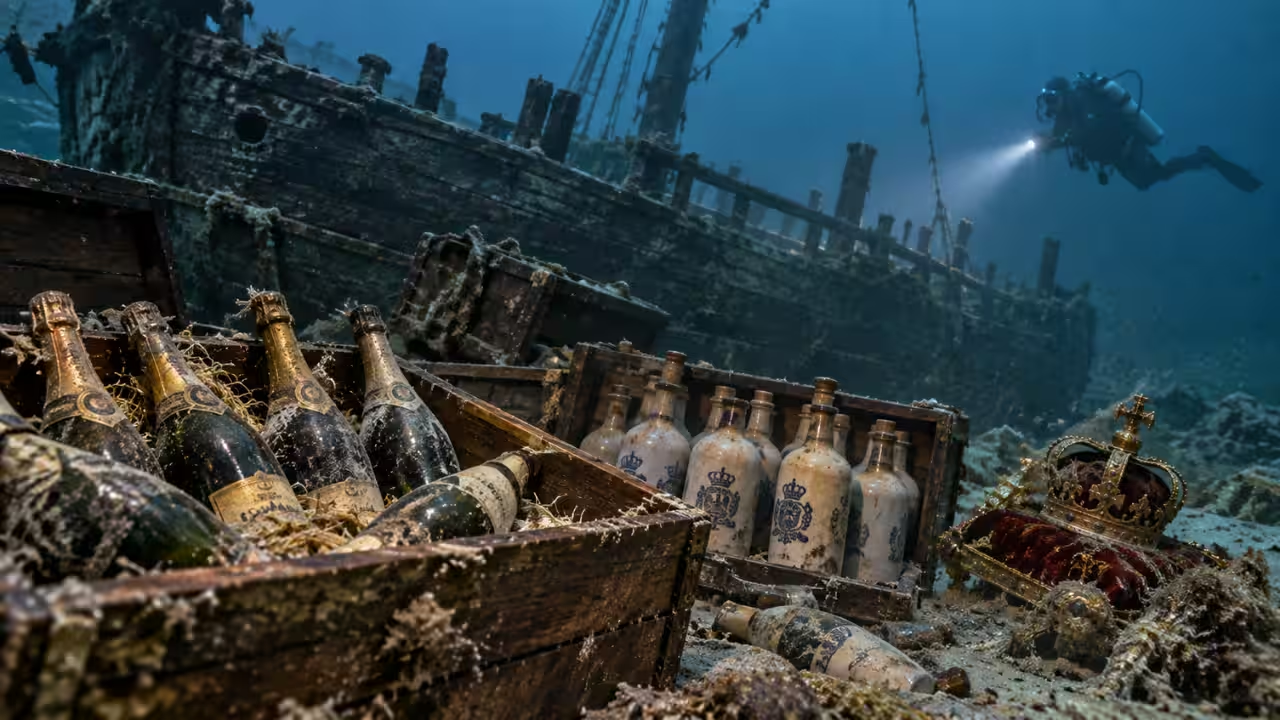
A 19th-century shipwreck lying beneath the Baltic Sea may have been carrying a lavish cargo intended for the Russian imperial court, including more than 100 bottles of champagne, wine, mineral water and porcelain. Divers from the Polish group Baltictech discovered the wreck off Sweden’s Öland island after initially mistaking it for a fishing boat. The clay bottles of Selters mineral water helped date the vessel to between 1850 and 1867, while the nature of the cargo has raised the possibility that it was bound for Tsar Nicholas I. Baltictech leader Tomasz Stachura said the mineral water was once an exclusive product associated with royal tables and suggested the ship may have been travelling towards Stockholm or St Petersburg. The theory remains unconfirmed, but it gains historical context from research into other Baltic shipwreck champagne, which found that Russian customers preferred particularly sweet wines.Luxury cargo points to a Russian kingOne of the clues behind the theory is the presence of Selters mineral-water bottles. The clay bottles carried the name of the German company Selters and helped researchers date the wreck to between 1850 and 1867. As reported by the BBC, mineral water was not an ordinary drink at the time but an expensive product “treated almost like medicine” that reached royal tables. He also said its value was so high that some transports were escorted by police.The combination of mineral water, champagne, wine and porcelain therefore makes the wreck different from the cheaper commercial cargoes divers commonly encounter. Stachura said: “Usually, when we find wrecks, the cargo is very cheap.” He believes the ship may have been travelling across the Baltic towards Stockholm or St Petersburg; a route would fit the possibility of an imperial destination, although there is currently no definitive evidence of the intended recipient.Why did Russian customers prefer sweeter champagneHistorical research into champagne recovered from another Baltic Sea shipwreck shows just how important the Russian market was to champagne producers during the 19th century. According to the study published in Proceedings of the National Academy of Sciences, titled ‘Chemical messages in 170-year-old champagne bottles from the Baltic Sea: Revealing tastes from the past’, 170-year-old bottles were recovered from a wreck near Finland’s Åland archipelago. Researchers found 168 bottles, with cork markings identifying champagne from Veuve Clicquot Ponsardin, Heidsieck and Juglar.The study found that Russian customers had developed a particularly strong preference for sweet champagne. According to historical correspondence, Russian customers could request a sugar dosage approaching 300 grams per litre. They always have some sugar on any table close to their wine glass. However, the researchers noted that the Baltic wreck bottles contained less than 150 grams of sugar per litre, meaning that particular shipment may instead have been intended for customers in the Germanic Confederation.How underwater wrecks kept champagne well preservedThe earlier Baltic champagne discovery also demonstrates why bottles that spent more than a century underwater can remain remarkably well preserved. The bottles were found at about 50 metres below the surface, where darkness, temperatures of roughly 2–4°C, low salinity and high pressure created what researchers described as nearly ideal conditions for slow ageing. The PNAS study said the champagne samples provided an unprecedented opportunity to examine how wine changed over 170 years.The more recently discovered wreck lies even deeper, at around 58 metres. Wine writer Henry Jeffreys told the BBC that the cold and darkness provide long-term storage, saying: “If you're going to leave champagne for 150 plus years, the bottom of the sea is a really good place.” He cautioned that the champagne may have lost most of its fizz, but depending on the condition of the corks, it could still be “palatable”.Researchers continue to investigate the wreckFor now, the idea that the cargo was destined for Tsar Nicholas I remains a theory rather than a confirmed historical fact. The available evidence the wreck’s date, its location, the prestigious mineral water and the unusually luxurious cargo provides intriguing clues, but researchers still need archival evidence to establish where the vessel was travelling and who was meant to receive its goods. Stachura himself acknowledged that the historical investigation could take longer than the diving itself, saying: “But then diving into the archives is what can be more interesting.”The cargo also was not immediately brought to the surface. Underwater archaeologists have been called in, Swedish authorities have been notified, and administrative procedures must be completed before any recovery can take place. Stachura believes there is no need to rush, noting that the wreck has already remained underwater for around 170 years. As he put it: “It had been lying there for 170 years, so let it lie there one more year.”Catch the latest World News and Live updates. Download the TOI app.
Topics in this story
Gathered from external sources. Rights to this text belong to whoever originally published it.