In 2004, a three-person Canadian team set out to travel the world by human power alone; nearly two years later, Colin Angus and Julie Wafaei returned after 43,000 km
Rest of World News: In 2004, Colin Angus and Julie Wafaei embarked on a remarkable 720-day global adventure powered solely by human strength, covering 43,000 km across land and sea, pushing the boundaries of exploration without motors or sails.
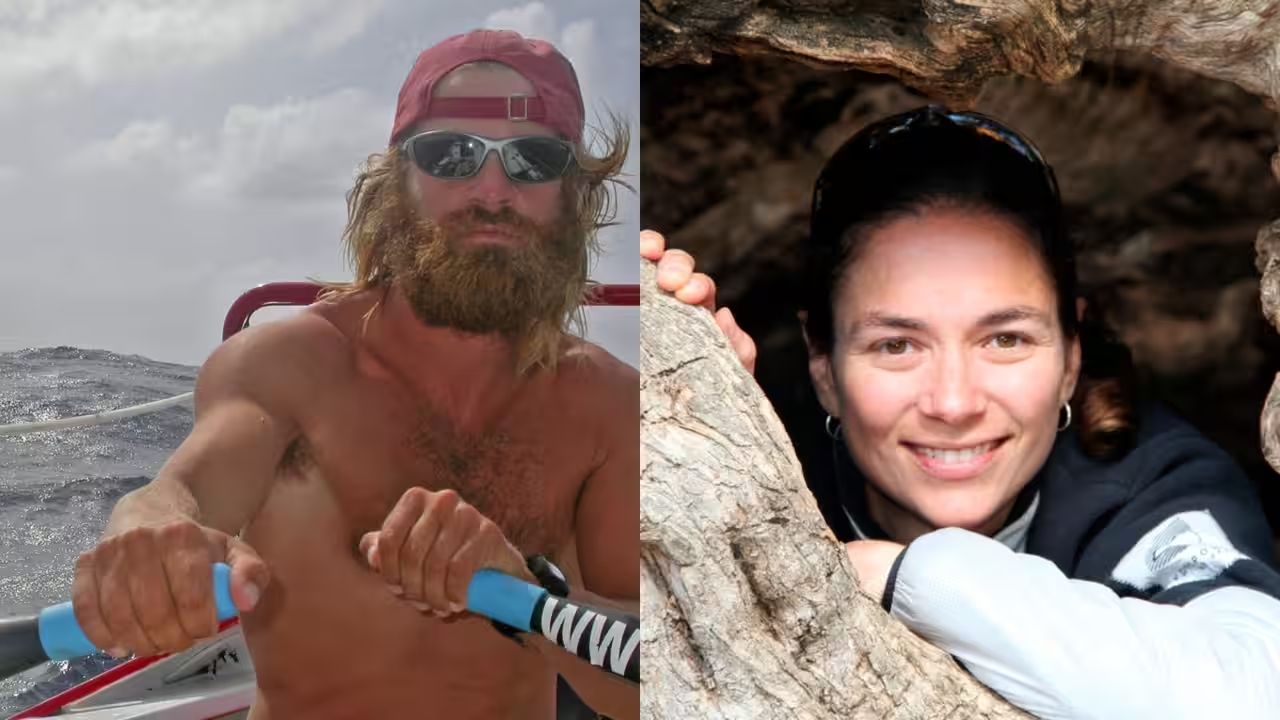
By the early 2000s, explorers powered by motor, sail, or wing had already conquered nearly every imaginable path around the earth. Canadian explorer Colin Angus, who had already rowed the Pacific and paddled the length of the Amazon, felt that the only available option was a circumnavigation done solely under human power, no motor, no wind help, and no support crew.In June 2004, Colin Angus, his fiancée Julie Wafaei and a third partner left Vancouver by bicycle, aiming to walk, cycle, ski and row their way around the world and back to the same spot. The whole route, and the equipment tally of chocolate bars, inner tubes and bicycles the trip consumed, is detailed in the expedition’s own record of the adventure, Angus Adventures.Departing from VancouverTheir course led northward through Canada and Alaska, in a rowboat over the Bering Sea, and into the Siberian winter, one of the coldest inhabited places on earth. From there they cycled and skied across Russia and into Europe, through seventeen nations in all until arriving in Portugal on the Atlantic coast. The original team’s third member quit halfway through the trek, leaving Angus and Wafaei to traverse the rest of the distance as a pair.Crossing countries by foot, bike & skisTo link Europe and the Americas required crossing an ocean with no engine to support them. So Angus and Wafaei set off from Lisbon in October 2005 in a specially designed rowboat heading for Miami. Caught by Hurricane Vince, one of the more unusual storms of that Atlantic season, four weeks into the crossing, they were sealed inside the tiny cabin of their boat for three and a half days while waves the height of a house rolled over them, an ordeal Angus later recounted in detail in an account written from the road. The storm pushed them so far off course that Miami was out of reach, and they eventually landed in Costa Rica, having completed the first rowboat crossing of the Atlantic from mainland Europe to mainland North America.The couple had subsisted on rationed freeze-dried food and any fish they could catch along the way, and Wafaei, an experienced marathon runner and skier before the trip, later stated that the psychological toll of weeks alone at sea was harder than any physical challenge the voyage threw at her.Hurricane in a rowboat and the drive homeAfter crossing overland to Costa Rica's Pacific side, the last leg was a straightforward 8,300 km ride back to Vancouver along the Pacific coast, pedalling north through Central America, Mexico and the United States. They burnt through almost 4,000 chocolate bars, wore down 72 inner tubes and four bicycles, and caught dozens of dorado fish from the sea to supplement their food. Wafaei rowed practically the entire route with Angus, including the Atlantic row that made her the first Canadian woman to row across any ocean.In his last dispatch from the road, Angus reported himself as arriving back in Vancouver in May 2006, 720 days and 43,000 km after he had started off. Some competing adventurers have since cast doubt on whether the path fulfilled the strictest technical definition of a circumnavigation, as it did not pass through two antipodal points on the globe, a discussion that has gone on in exploration circles ever since. Angus later wrote a famous account of the voyage called Beyond the Horizon, and their journey stands as one of the last remarkable achievements of old-fashioned discovery, achieved largely through raw physical effort rather than any mechanised shortcut, powered by two bicycles, a rowboat and an amazing amount of persistence.Catch the latest World News and Live updates. Download the TOI app.
Topics in this story
Gathered from external sources. Rights to this text belong to whoever originally published it.