Barbara Palvin returned to the Victoria's Secret runway 6 weeks after giving birth. Moms have a lot to say about what that means
From the pressure to look a certain way to the realities of returning to work, the reactions reflect the complicated expectations facing new mothers.
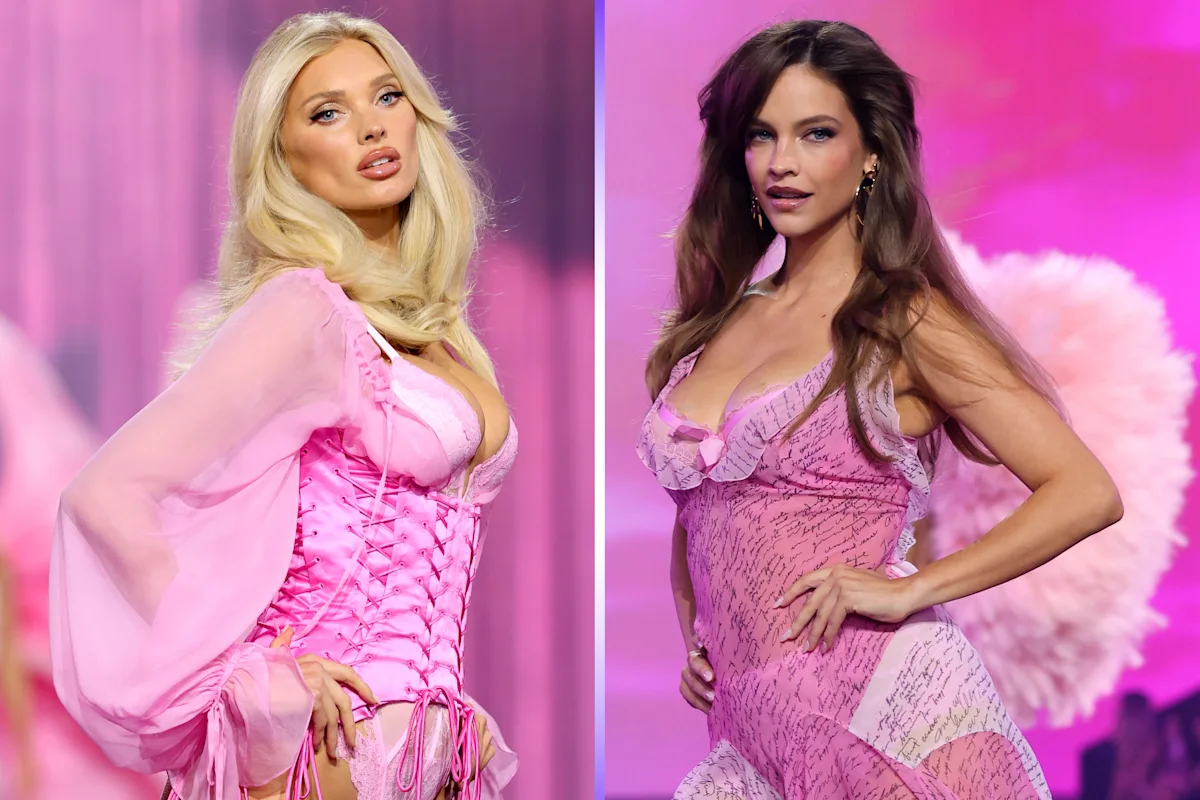
Six weeks ago, Barbara Palvin welcomed her first child, a daughter named Sylvie. On Sunday, the 33-year-old returned to work as a model during the Victoria's Secret Fashion Show.
Palvin, who is married to actor Dylan Sprouse, strutted first in a '90s-inspired nightie, then made a quick change into an embellished white corset with matching underwear and a flowing sheer train, topped off with oversize snowflake wings.
When asked backstage about her first job as a working mom, Palvin, who has been working with the lingerie brand for more than a decade, downplayed and contextualized her experience, telling People , "I'm going to be six weeks postpartum tomorrow, which is, I think in the U.S., most people have to go back after six weeks." She separately told Page Six: "And I only have to walk down a runway."
Palvin's point reflects a reality many new moms face. There is currently no federal paid maternity leave mandate in the U.S. Under the Family and Medical Leave Act, eligible employees are entitled to up to 12 weeks of unpaid, job-protected leave.
Palvin, who also spoke with Good Morning America , credited her family and friends for helping her prepare, while acknowledging that she is still recovering and that "everyone's journey is different."
Elsa Hosk, 37, is also postpartum, having welcomed her second daughter, Flora Blue, with fiancé Tom Daly in July.
Hosk posted an Instagram video documenting her 6-week progress toward getting runway-ready. The caption read, "I'm so excited to return to the @victoriassecret fashion show for my 9th show!!! See you on the runway Angels!!!👼🏻❤️🪽💝✨"
Hosk, who also has a 5-year-old, sported massive metallic gold wings on the runway.
The pair's bookings by Victoria's Secret — on such a public stage, with so many eyeballs — have sparked conversations about the realities of being postpartum, "bounceback culture," whether it's right or wrong to work with as many reactions heaping praise on the models as critiquing them.
"The only thing I was doing at 6 weeks was crying and putting lanolin on my nips," Molly Bailey wrote on Instagram , noting that it took her two years to "bounce back," but also added that everyone's postpartum experience looks different.
Having the time, resources, and help also makes a difference in returning to the runway in lingerie, as Yahoo journalist Fortesa Latifi pointed out . "Obviously, this is not what most women look like at 6 weeks postpartum," she said. Connectedly, Hosk's workout regiment to get runway ready struck a nerve, with a comment saying "this kind of video, perpetuates the idea that a woman should be like this even when it's not even 'normal' to exercise that much after having a baby!!," the user commented.
Others think the focus shouldn't be on what the models look like, but rather what they have achieved through motherhood. One Instagram user said Palvin shouldn't be celebrated for how she looks postpartum, but for everything that her body endured during pregnancy and childbirth.
"We need to stop attacking women who recover easily after childbirth, too," one user commented on Hosk's workout video. "It's their body, their work, and their own process, and that's valid too. If we're asking for respect for women who have a harder time, let's make sure that respect is for all women 💖"
Another Instagram creator urged mothers to celebrate one another rather than make comparisons.
"As a mom, I know how much our bodies go through to bring our babies into this world. Watching another mom show up, own her moment and absolutely SLAY deserves to be celebrated," she wrote in the caption.
Topics in this story
Gathered from external sources. Rights to this text belong to whoever originally published it.