Florida wildlife officials confirm an established Burmese python population in Charlotte County, beyond the snakes’ historic Everglades stronghold
Florida's invasive Burmese pythons have moved into new territory, and state wildlife officials have now confirmed the move.
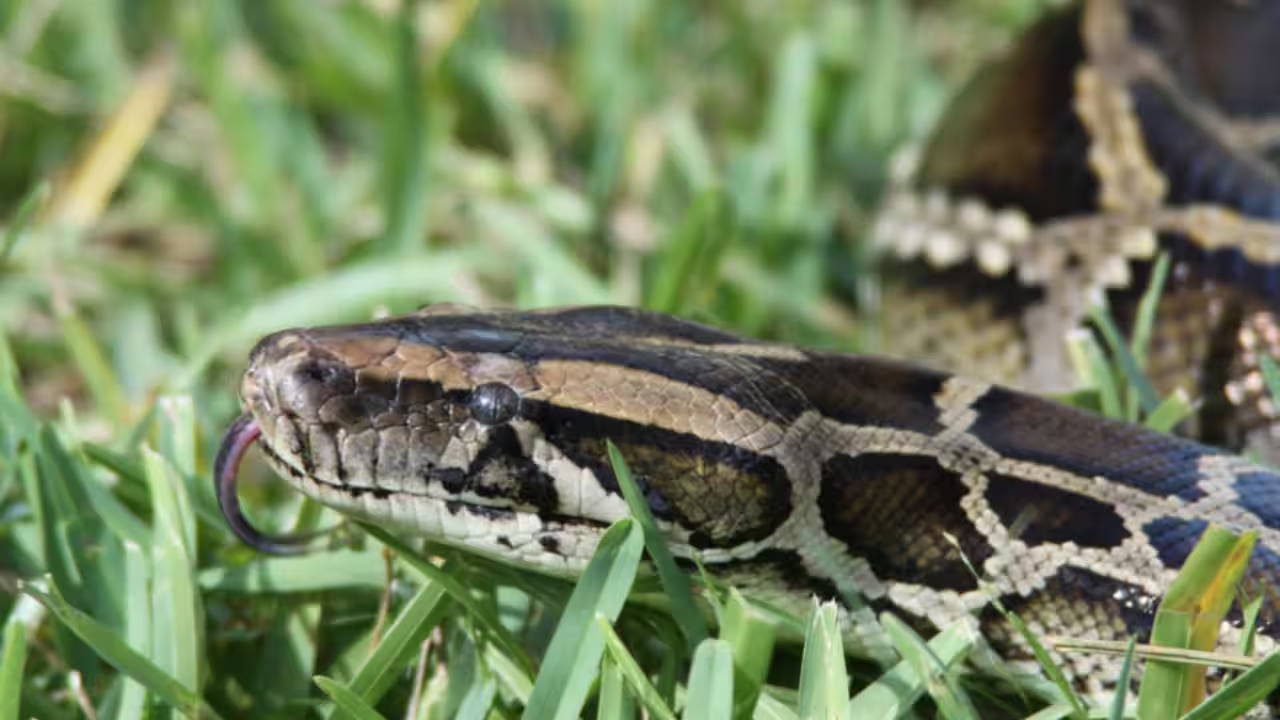
Florida's invasive Burmese pythons have moved into new territory, and state wildlife officials have now confirmed the move. The snakes are considered established in Charlotte County, in south-west Florida, well outside the Everglades region that has long been the centre of the problem. The finding matters beyond one county, because it shows these giant constrictors can form breeding colonies far from their historic stronghold. Conservationists and wildlife managers are weighing what the discovery means for native animals, for nearby communities and for the costly, decades-long effort to limit a species that has proved extremely hard to find, let alone remove.Wildlife officials confirm an established Burmese python population in western Charlotte CountyThe Florida Fish and Wildlife Conservation Commission says Burmese pythons were historically centred in Everglades National Park in Miami-Dade County. They later became established from Lake Okeechobee to Key Largo, and from western Broward County west to Collier County. A new satellite population has since emerged. A commission spokesperson told ABC that the snakes are considered established in a portion of western Charlotte County, north of Naples and Fort Myers on the Gulf Coast. The agency began receiving more python reports in 2020, mostly from the townships of Rotonda West, Placida, Englewood East and South Gulf Cove.Escaped or released captive snakes, not natural migration, are the likely source of the new colonyThe commission says there is no indication that the pythons reached Charlotte County through natural migration. It believes they were most likely captive animals that escaped or were released. The wider history points the same way. The United States Fish and Wildlife Service estimates that about 180,000 Burmese pythons were brought into the country between 1975 and 2018, and many entered the ecosystem through accidental or deliberate release. By 2000, the species had a self-sustaining breeding population in South Florida.Burmese pythons are apex predators whose appetite leaves native wildlife and ecosystems at riskBurmese pythons feed on opossums, alligators, birds and other animals, including prey larger than themselves. Ian Bartoszek, a wildlife biologist at the Conservancy of Southwest Florida in Naples, and Robert McCleery, a wildlife ecologist at the University of Florida, both told ABC News why the spread worries them. Bartoszek said the snake is a generalist apex predator, which is why there is such interest in removing it from the ecosystem. McCleery said that once pythons move in, most mammal populations are decimated, leaving a "simplified ecosystem" dominated by rodents and other invasive species. He added that nobody has yet found a way to stop or reverse that pattern at the scale needed. Newsweek reported that, according to the commission, observations of some mammals, such as raccoons and bobcats, fell by 95 per cent in Everglades National Park after the snakes became established.Low detection rates mean experts cannot estimate how many Burmese pythons live in Florida todayCounting the snakes is a challenge in itself. The commission says wildlife experts have been unable to put a figure on the total because the animals are so hard to detect. Research puts the chance of spotting one at between 1 per cent and 3 per cent, meaning a survey area holding 100 snakes might turn up only one to three. In Everglades National Park, the United States Fish and Wildlife Service says searchers find roughly one python for every eight hours of looking.Surveys continue in Charlotte and Lee counties while Florida's Python Challenge offers cash prizesThe commission and its partner agencies are continuing to monitor and survey for Burmese pythons in Charlotte and Lee counties. Removal remains the main tool. Newsweek reported that more than 27,000 pythons have been taken out of the Florida environment since 2000, and that a single female can lay more than 100 eggs, which makes control difficult once a population takes hold. This year's Florida Python Challenge, which ran from 10 to 19 July, offered a $25,000 prize pool across designated South Florida public lands, with a $10,000 grand prize for the participant who removed the most snakes. The 2025 challenge removed a record 294 pythons from the Everglades ecosystem.You use AI every day. Now get your AI Quotient. Take the AIQ test.
Topics in this story
Gathered from external sources. Rights to this text belong to whoever originally published it.