Archaeologists uncover Celtic sacred site near Cirencester with over 150 coins, broken miniature shields and spears buried as offerings
UK News: Archaeologists working near Cirencester in the Cotswolds have uncovered a Celtic sacred site dating to the late Iron Age, containing coins, spearheads.
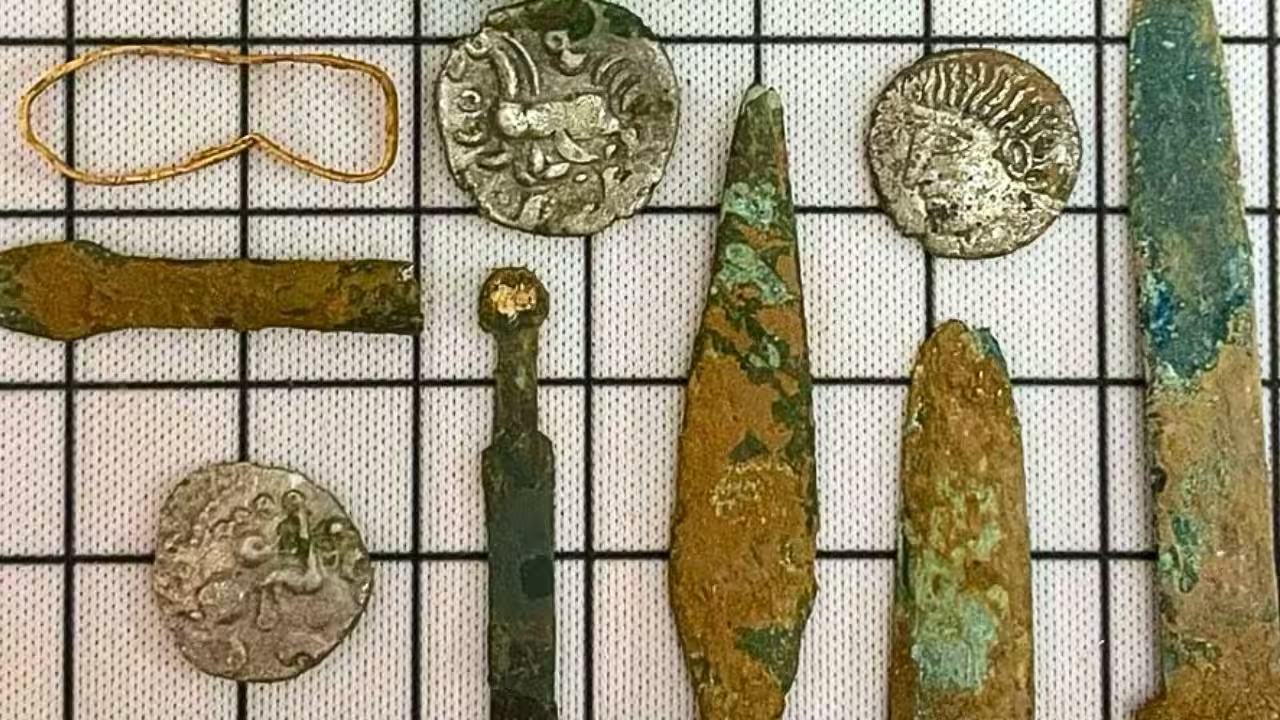
Archaeologists working near Cirencester in the Cotswolds have uncovered a Celtic sacred site dating to the late Iron Age, containing coins, spearheads, miniature shields linked to ritual activity before the Roman invasion. A metal detectorist first found the site in 2020. A Royal Agricultural University training excavation for MSc students has now revealed its scale.Researchers later relocated the original hoard pit and found that it had been placed within a sacred area marked by a pavement. Nearby, spears had been pushed into the ground, while deliberately broken miniature shields appear to have been left as offerings to Celtic gods.What archaeologists found inside the Celtic sacred siteThe site lies near Cirencester in the Cotswolds and likely dates to the late Iron Age, roughly 100 BC to AD 43. Archaeologists found a cobbled area that marked a sacred space. The stones had been worn flat, suggesting that people repeatedly moved around the area during ceremonies. The excavation also located the pit where the original coin hoard had been buried. Several spears had been placed in the soil, often vertically.Others were miniature bronze spears, and some were less than an inch long. Together, these findings indicate a ritual space where people made offerings. The worn pavement suggests, according to Horton, some form of mass processional activity around the central area. The spears and the deliberately broken miniature weapons point to a place where offerings were made.What do the miniature shields reveal about the ancient siteArchaeologists found model swords and scabbards, daggers and shields made from bronze. Many of these objects had been deliberately broken. Researchers interpret them as votives, or offerings to the gods. Their broken condition indicates they were not meant to be used again. The excavation also uncovered iron spears and miniature bronze spears, some less than an inch long.The spears had been pushed into the soil, according to Horton, to 'protect' the central area. Beneath them there were small pits cut into the Cotswold limestone. The pits contained fine soil but no artefacts. They may have been made for planting trees or bushes, suggesting the presence of a sacred grove.Ancient coins reveal the site’s connection to the DobunniThe coins provide clues about the people who used the sacred site. Many carry a distinctive three-tailed horse motif linked to the Dobunni, a tribe that lived across Gloucestershire, North Somerset, southern Worcestershire and western Oxfordshire. According to Horton (The RAU's Pro Vice-Chancellor for Research and Director of its Cultural Heritage Institute), their capital was at Bagendon, just a few miles from the excavation.The hoard contained more than 150 silver and bronze coins and metalwork. Dobunni coinage was likely issued by tribal leaders between about 50 BC and AD 20. Some of the coins are linked to Bodvic, a Dobunni leader. Researchers believe the site was probably a natural place or grove where people made offerings to Celtic gods. Its location and finds connect it to the religious landscape of the Dobunni and the nearby tribal centre at Bagendon.Why the discovery matters for understanding Celtic religionThe excavation gives archaeologists direct evidence of religious activity at the end of the Iron Age, a period when archaeologists have limited evidence about Celtic beliefs. Written accounts by classical writers provide some information about Iron Age and Celtic religion, but the remains at this site offer physical clues about how people used the space. The remains show how people used the space.They created a sacred area, moved around it, placed spears in the ground, and left offerings such as miniature shields. Broken bronze objects and possible tree-planting pits provide further clues about the site's use. The excavation area has now been refilled to protect it, while the Royal Agricultural University hopes to return for another excavation next year. At the same time, the Corinium Museum is raising funds to conserve and display the objects.Catch the latest World News and Live updates. Download the TOI app.
Topics in this story
Gathered from external sources. Rights to this text belong to whoever originally published it.