California’s Panamint City had 2,000 residents at its silver boom’s peak in 1874; a flash flood destroyed most of the town two years later
Panamint City in California’s Panamint Mountains had a population of 2,000 at the height of its silver mining boom in 1874.
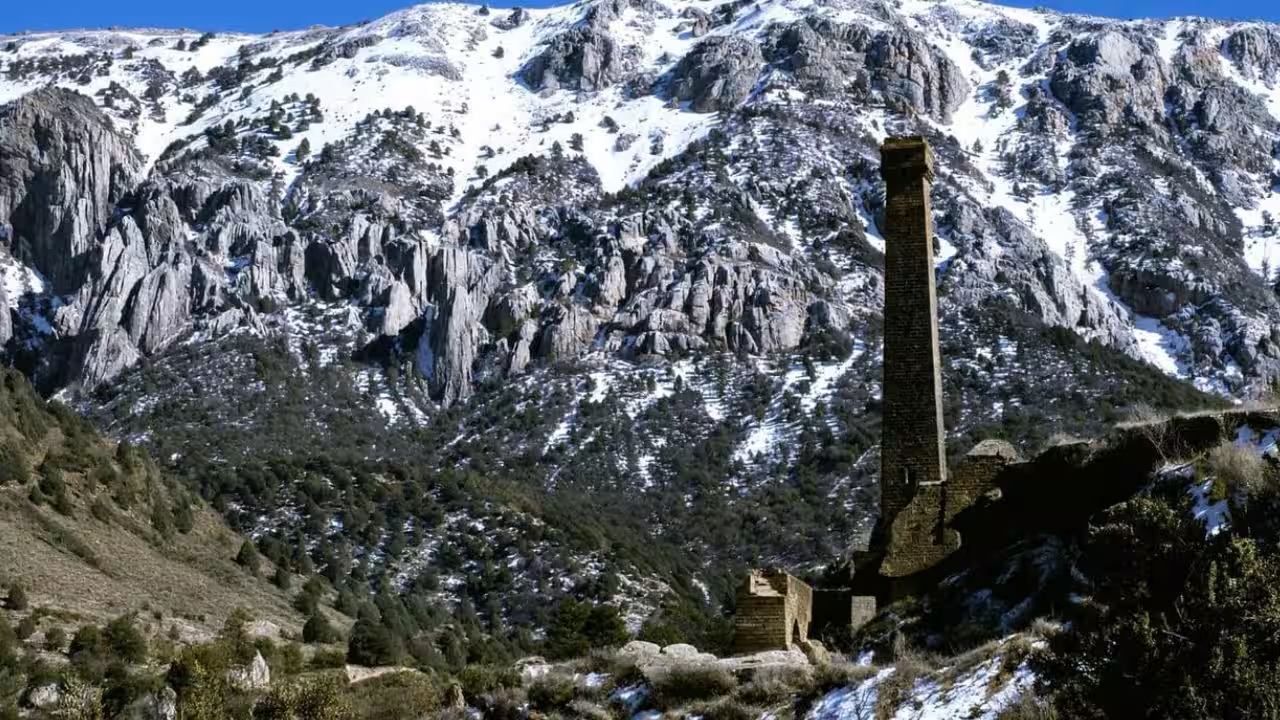
Panamint City in California’s Panamint Mountains had a population of 2,000 at the height of its silver mining boom in 1874. The settlement began when outlaws hiding from the law discovered silver in Surprise Canyon and gave up their life of crime. According to the National Park Service (NPS), the boom was over by the fall of 1875, and a flash flood in 1876 destroyed most of the settlement, leaving only remnants of its former life. The ruins of old Panamint City were added to the park in October 1994. Its old smelter chimney remained as the most prominent reminder of the town that once drew 2,000 people to the mountains.Panamint City grew after outlaws discovered silver in Surprise CanyonPanamint City began with a silver discovery in Surprise Canyon in the Panamint Mountains. Its founders were outlaws who had taken refuge in the mountains while hiding from the law. After finding silver, they gave up their life of crime and established the mining settlement. The discovery attracted people to the area, and the town grew rapidly.By 1874, Panamint City had reached the height of its boom, with a population of 2,000 citizens. The settlement developed a reputation for its rough character and was described as the toughest, rawest place to have passed for a civilised town. The boom did not last long, and by the fall of 1875, the boom was over, bringing Panamint City’s rapid growth to an end.A flash flood destroyed most of Panamint City after its boom had endedBy 1876, a flash flood had destroyed most of Panamint City, which had reached a population of 2,000 at the height of its mining boom in 1874. As reported by NPS, the disaster left few prominent remains of the former settlement. The chimney of the old smelter is the most recognisable reminder of the town’s mining past.In October 1994, the ruins of old Panamint City were added to Death Valley National Park. The surviving chimney and other remains preserve the history of a settlement that grew rapidly after silver was discovered in the remote Panamint Mountains before a natural disaster destroyed much of it.How did mining discoveries lead to the rise of Death Valley’s ghost townsPanamint City was not the only settlement in the Death Valley area to rise and fall with mining activity. Ballarat emerged in 1897 after gold strikes in the Panamint Mountains and had 400 residents in 1898. Greenwater developed around a copper strike in 1905 and grew to a population of 2,000. However, mining collapsed by 1909 without ever showing a profit, and residents left for other areas.Harrisburg grew after a gold strike in 1905 and became a tent city with 300 residents. Skidoo was founded in 1906 after two prospectors discovered gold and eventually reached a population of 700. Like Panamint City, these settlements experienced periods of growth linked to mineral discoveries, although the remains of each town differ.Old smelter, bank building and mines preserve the region’s pastThe former mining settlements around Death Valley contain different traces of their past. Ballarat, which is privately owned, has the ruins of several adobe buildings. Leadfield, heavily mined in 1926, retains wooden and tin building remains, a dugout and cement foundations of a mill, along with mines, tunnels and prospect holes.Rhyolite, the largest town in the Death Valley area, had between 5,000 and 10,000 residents during its heyday from 1905 to 1911. Its surviving structures include the Bottle House, the remains of a three-storey bank building, a jail, and Senator W. A. Clark’s train depot.You use AI every day. Now get your AI Quotient. Take the AIQ test.
Topics in this story
Gathered from external sources. Rights to this text belong to whoever originally published it.