A California farming couple kept the development rights to their 624-acre ranch; in 2004, they took $1 million well below market to permanently block development
US News: Discover how Greg and Amanda Jones thwarted development on their 624-acre Redgate Ranch in California by selling a conservation easement for $1 million, ensuring its protection for future generations while maintaining ownership.
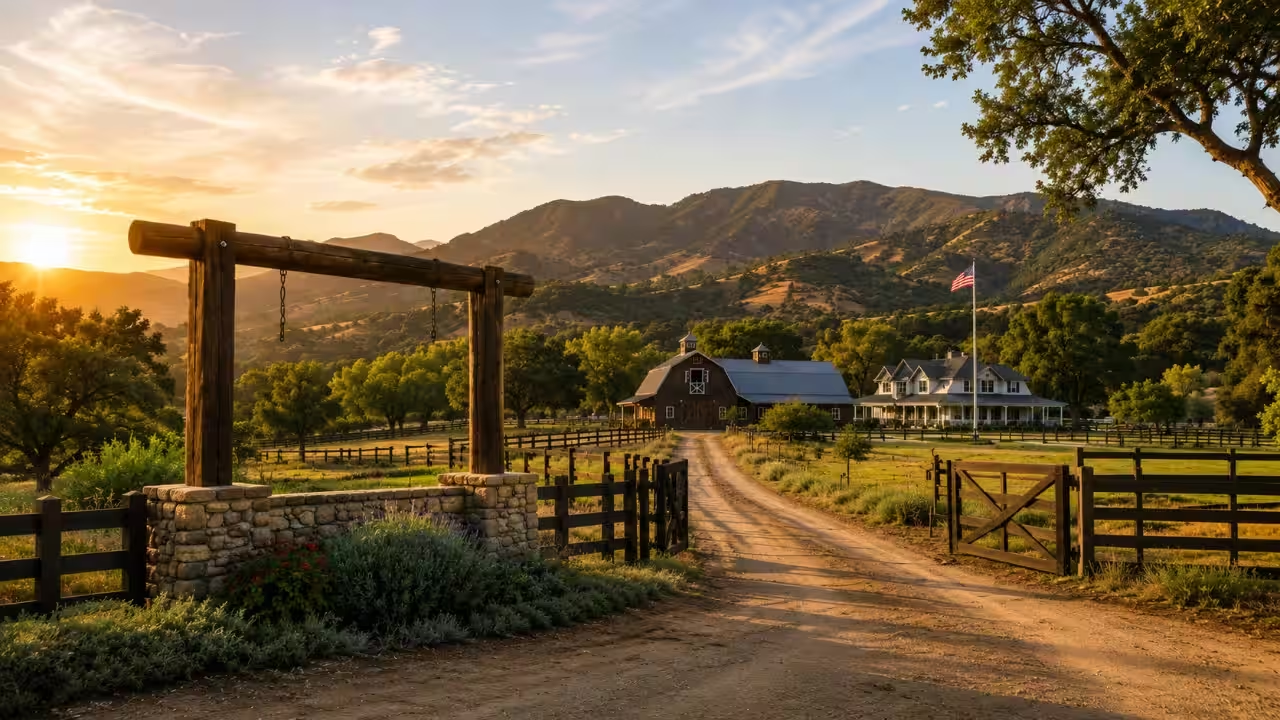
In 2004, Greg and Amanda Jones chose to protect their property through a conservation easement, accepting far less than the land's potential development value in exchange for keeping the ranch intact. According to the Peninsula Open Space Trust, Redgate Ranch is a 624-acre property in San Gregorio, California, where Greg and Amanda Jones made a bargain sale of a conservation easement in 2004. POST paid $1 million for the easement, an amount well below market value, allowing the Joneses to retain ownership while permanently protecting the ranch from development. The agreement protected the property's scenic and natural values and ensured that the land would remain open, while the family continued to use it primarily as a working farm and weekend retreat.A ranch caught between farming and developmentRedgate Ranch is located in San Gregorio, situated along Highway 84, in California's coastal area. In the year 2000, the Jones family purchased the property, which was originally part of Souza Ranch. Instead of viewing the 624 acres as an investment in real estate, the couple operated it as a farm and used it as their getaway place. At the time the conservation plan was put into effect, approximately 150 acres were cultivated for growing red oats for hay purposes. The remainder of the ranch includes open grassland, coastal scrub, and coastal oak and mixed coniferous forest. Furthermore, there are two streams feeding into San Gregorio Creek that border the ranch property.However, the location of the ranch made it susceptible to the pressures of development. As the San Gregorio Valley became increasingly valuable for housing and other kinds of development due to its closeness to Silicon Valley and to the coast, the owners of Redgate Ranch had to face a choice that is all too common for farmers whose land borders expanding urban development zones. The choice was between retaining the land and living with the financial limitations that come with it or developing it by constructing buildings.They sold the development rights, not the ranchIn November 2004, Greg and Amanda Jones entered into a bargain sale with the Peninsula Open Space Trust (POST), offering a conservation easement over Redgate Ranch along with a pledge to donate a corridor for a future public trail. POST paid $1 million for the easement, an amount well below market value. The arrangement allowed the Joneses to retain ownership of the 624-acre ranch while permanently restricting development. The family continued to use the property as a working farm and weekend retreat, raising red oats for hay on about 150 acres and restoring grassland elsewhere to improve wildlife habitat.According to POST, without the agreement, at least four estate houses could have been built on the ranch. The additional trail easement also helped connect the property with surrounding protected lands and preserve a route for future public recreation. The arrangement demonstrates why conservation easements can be attractive to farmers and ranchers who do not want to give up their land. The owner retains the title and can continue agricultural activities, while the conservation organisation receives the legal right to enforce restrictions on future development. A study in Land Use Policy examining 157 agricultural conservation easements in the San Francisco Bay Area found that such easements can serve as a farmland-preservation and growth-management tool by permanently retiring development rights. The researchers also noted that farmland on the rural-urban fringe faces persistent pressure from development.Protection that outlasts ownershipThe significance of the ruling in 2004 is more apparent when one looks at the history of Redgate Ranch after that period. Indeed, the Joneses ended up selling the actual land. According to public records, a 624-acre Redgate Ranch was sold in January 2022 for $9.65 million. However, the conservation easement was still in place and, therefore, the sale did not undo the loss of the development rights.For the Jones family, this solution enabled them to disconnect the future of their ranch from the economic realities of the California coast real estate market. They were free to continue with their farming operations on the ranch and forfeited their right to benefit economically from the development of their land. This case demonstrates the fact that farmland is not always valued based on the market price of its sale. A ranch can serve as an agricultural area, habitat for wildlife, open land, and scenic landscape. Once the right of development is sold, this value remains intact despite any changes in ownership. Over 18 years later, the Redgate Ranch becomes an example of a unique form of land conservation. No transfer of land ownership is necessary to preserve land from development. It is possible for a farmer or rancher to keep their land and still make a permanent choice regarding future developments on their property.Catch the latest World News and Live updates. Download the TOI app.
Topics in this story
Gathered from external sources. Rights to this text belong to whoever originally published it.