She started streaming animals, then changed thousands of lives: Maya Higa’s journey from Twitch creator to conservation trailblazer
US Streamers News: Maya Higa did not set out to become one of the internet’s most distinctive conservation voices. Her path began with animals, moved through zookeeping .
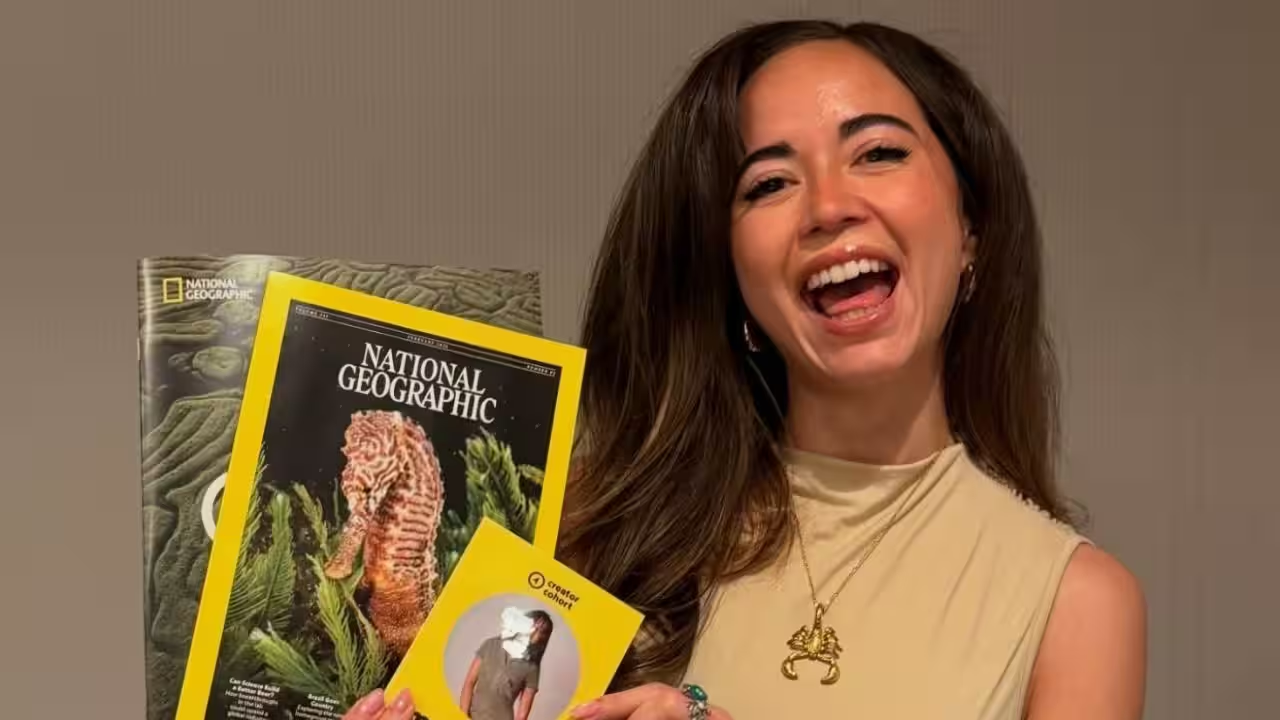
Maya Higa did not set out to become one of the internet’s most distinctive conservation voices. Her path began with animals, moved through zookeeping and Twitch, and eventually led to Alveus Sanctuary, a nonprofit built around rescued animals and online education. Today, her work is helping reshape how people encounter wildlife, proving that a livestream can do more than entertain. It can create curiosity, build empathy and inspire people to act.Maya Higa’s journey from zookeeper to Twitch creatorLong before thousands of viewers knew her name, Higa was simply a young woman who loved animals.She grew up on a farm surrounded by rabbits, horses, chickens and other animals. That early exposure shaped the direction of her life. At 18, while attending college, she took a job as a zookeeper. Her work also involved bringing animals such as kangaroos and lemurs to schools and birthday parties, where she could introduce children to wildlife in a direct and engaging way.Then Twitch entered the picture.Higa discovered livestreaming through friends who were broadcasting video games online. The idea was simple but powerful. Instead of speaking to a classroom or a small group at an event, she could potentially reach people anywhere.That opened a completely different door.Her content eventually developed around animals, education and conservation. The platform gave her something traditional wildlife education often struggles to achieve: an ongoing relationship with an audience.People could return. They could ask questions. They could watch an animal grow, recover or simply go about its day.That connection became the foundation for something much bigger.How Maya Higa built Alveus SanctuaryIn 2021, Higa turned her online audience into the driving force behind a far more ambitious project.She founded Alveus Sanctuary, a nonprofit that provides permanent homes for non-releasable animal ambassadors while using those animals to teach viewers about wildlife and conservation. Rather than treating the sanctuary as a place people must physically visit, Alveus brings the animals to audiences through livestreams and digital content.The idea sounds almost obvious now. At the time, it was a striking change in perspective.A traditional sanctuary has physical limits. There are only so many people who can visit, and frequent human interaction is not necessarily ideal for every animal.Alveus takes another route.Its cameras allow people to observe animals without requiring those animals to interact with a constant stream of visitors. The sanctuary describes its residents as ambassadors because their individual stories can help viewers understand the larger conservation challenges facing their species.The approach also helped transform online attention into financial support.Higa's 2021 fundraising livestream raised more than $500,000 to help establish the sanctuary. The campaign included a donor program and a live auction featuring items from other creators, showing how her growing online network could be converted into tangible support for animal welfare.That was an important moment. Higa was no longer simply creating content about animals. She was building infrastructure around the mission.Alveus Sanctuary turned viewers into conservationistsThe real strength of Higa's model is not the cameras themselves. It is the emotional connection they create.A person might know very little about an emu, hawk, parrot or amphibian. Give that animal a name and a personality, however, and suddenly the subject feels much closer.Alveus builds on that idea through educational programming such as Animal Quest. Each episode introduces an animal ambassador while exploring the animal's species, its place in the ecosystem, the threats it faces and what people can do to help.That distinction matters.The goal is not simply to make wildlife entertaining. It is to use entertainment as the starting point for learning.Higa has also leaned heavily into collaborations. Other creators can visit Alveus, learn about the animals and share that experience with their own audiences. The sanctuary says this approach has allowed collaborations to reach millions of people. In 2024 alone, more than 30 creators participated in collaborations, while the Alveus community contributed more than 9,000 hours to activities such as volunteering, trash collection and other efforts for the planet.Higa has described the value of that approach herself, saying, “I think it makes me a better educator.”It is a revealing comment. Her success is not built on separating education from personality. Instead, she uses the familiarity of a creator-led platform to make serious subjects easier for audiences to approach.Maya Higa’s conservation vision goes beyond the sanctuaryHiga's ambitions have now moved beyond caring for animals that cannot return to the wild.In her 2026 TED talk, she described her broader mission in simple terms: “My mission is to use the internet to build our next generation of conservationists.”That philosophy is shaping Alveus's next chapter.The organization says it is developing the Alveus Research & Recovery Institute, with plans to use conservation breeding programs to support species recovery and reintroduction. Higa's TED presentation highlighted critically endangered wolves as an initial focus.The ambition is significant because it changes the role of an online audience.A viewer is not expected to remain a passive spectator. The hope is that someone who first arrives because an animal is cute may eventually learn why its species is threatened, understand the forces behind that threat and decide to contribute in some way.That is where Higa's journey becomes more than a story about Twitch.It is a story about using attention differently.In 2026, WWF highlighted Higa's conservation work and her online community's participation in its Give an Hour for Earth campaign. WWF said her community had contributed tens of thousands of hours to the campaign the previous year.From a farm to a zoo, from a webcam to a sanctuary, Higa's career has followed an unusual path. Yet the central thread has stayed remarkably consistent: animals come first, education creates understanding, and understanding can lead to action.That may be the most important lesson in her rise. Higa did not abandon the internet to pursue conservation. She learned how to make the internet part of conservation itself.And with Alveus continuing to expand its educational and wildlife work, her most influential chapter may still be ahead.Catch the latest World News and Live updates. Download the TOI app.
Topics in this story
Gathered from external sources. Rights to this text belong to whoever originally published it.