‘Never seen destruction like this’: Even seasoned relief workers shaken by scale of Nepal disaster
South Asia News: DEHRADUN: Several Indian and Nepalese NGOs are working on the ground to provide survivors with hot meals, medical care and other essential supplies. T.
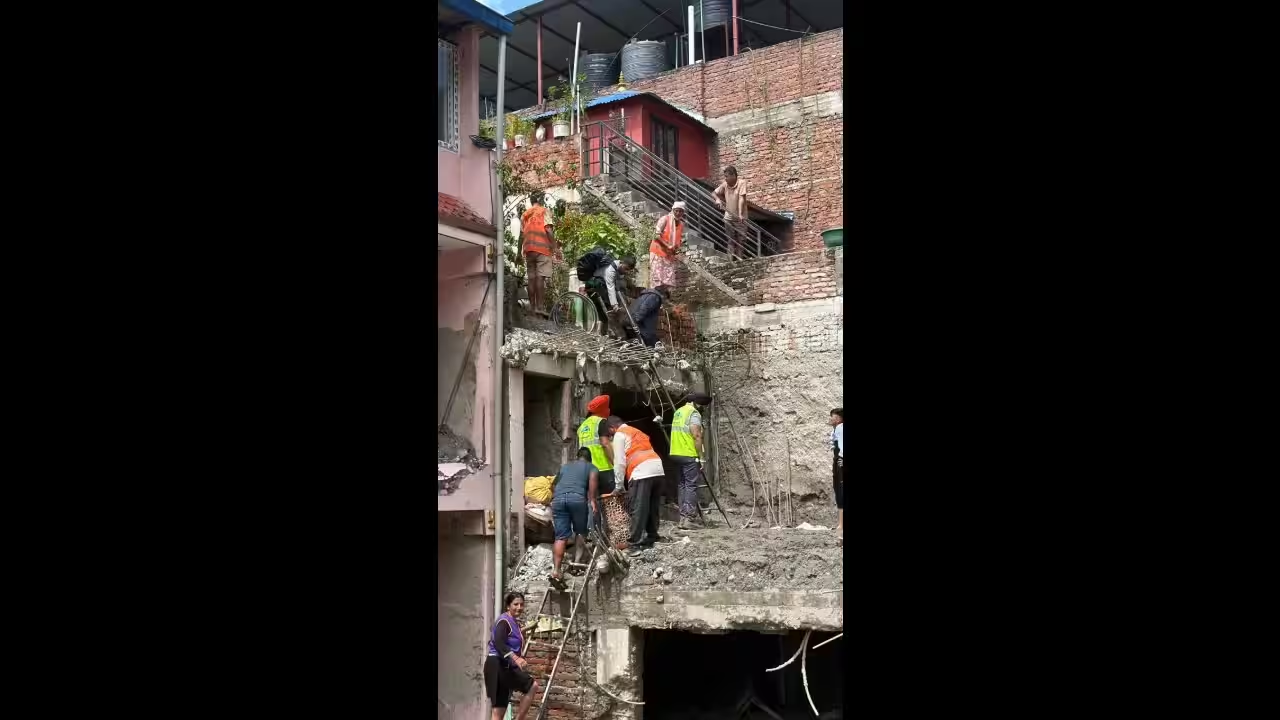
DEHRADUN: Several Indian and Nepalese NGOs are working on the ground to provide survivors with hot meals, medical care and other essential supplies. Those involved in relief operations, including veterans of many disasters, say that the “scale of devastation they are witnessing this time has shaken many of them”.Harteerath Singh of Gurgaon-based Hemkunt Foundation, who is currently in Rasuwa, said his organisation has worked in disasters across the globe since 2010, including the 2015 Nepal earthquake, Taal volcano eruption in the Philippines, Covid-19 pandemic and the recent floods in Punjab and Assam.“I’ve never seen such destruction in my life. The loss of life and property here is unparalleled. There have been instances here in Nepal where we reached an affected area with aid material but found nobody to hand it over,” Singh told TOI from Nepal on Thursday.He further informed that he along with 21 other volunteers of the organisation has been carrying out relief work in Rasuwa, Dhading and Nuwakot, which have been the worst-affected areas.“We are focusing on running community kitchens to provide fresh meals to the survivors, dry ration and medicines. We’ve also made bedding sets comprising a mattress, pillow, mosquito net and bed-sheet, which will be airdropped from helicopters in the affected areas that are inaccessible by road,” said Singh, adding that connectivity issues are hampering their effort.He also claimed that he and other volunteers are carrying out the task of cleaning of recovered bodies for the rituals before cremation. “We are dedicated to doing sewa...”Kanchan Jha of Nepal-based NGO Sano Paila (Little Step) echoed similar sentiments. His organisation has worked in the aftermath of the civil war, the 2015 earthquake, floods in Madhesh province and the Covid-19 pandemic.“Bhotekoshi flood was markedly different from previous disasters, particularly the 2015 earthquake, because of its impact on survivors’ mental state. In the 2015 quake, people had confidence in finding their loved ones and rising up again. This time, the survivors seem to have no hope. They don’t know where to go to seek help or where to find their missing ones,” Jha said.He also claimed that another major difference this time is the lack of presence of local administration in the affected areas unlike during the earthquake.“Because, the local administration officials are themselves the survivors now. Such was the destruction caused by the floods,” said Jha who added that a team of around eight volunteers of his NGO, are running community kitchens in Rasuwa to provide much-needed hot meals to the survivors.Saurav Rimal of another Nepal-based NGO, Karmayog Foundation, meanwhile flagged risk of spreading of airborne diseases among the survivors due the stench of decomposing bodies in the affected areas.“Not just survivors, but social workers, too, are at risk of getting seriously ill due to the stench of dead bodies. Also, witnessing the suffering and sorrow of survivors is taking a toll on our mental state. There are orphaned children, crying in front of us, which breaks our hearts. We are determined not to leave them and other survivors alone despite several challenges in the relief works,” said Rimal.Catch the latest World News and Live updates. Download the TOI app.
Topics in this story
Gathered from external sources. Rights to this text belong to whoever originally published it.