In 1971, a surfer cut a piece of foam with an electric carving knife; 55 years later, his invention is a household name
US News: A leftover piece of foam, an electric carving knife, and a surfer were all Tom Morey needed to create what would become one of surfing’s most recognis.
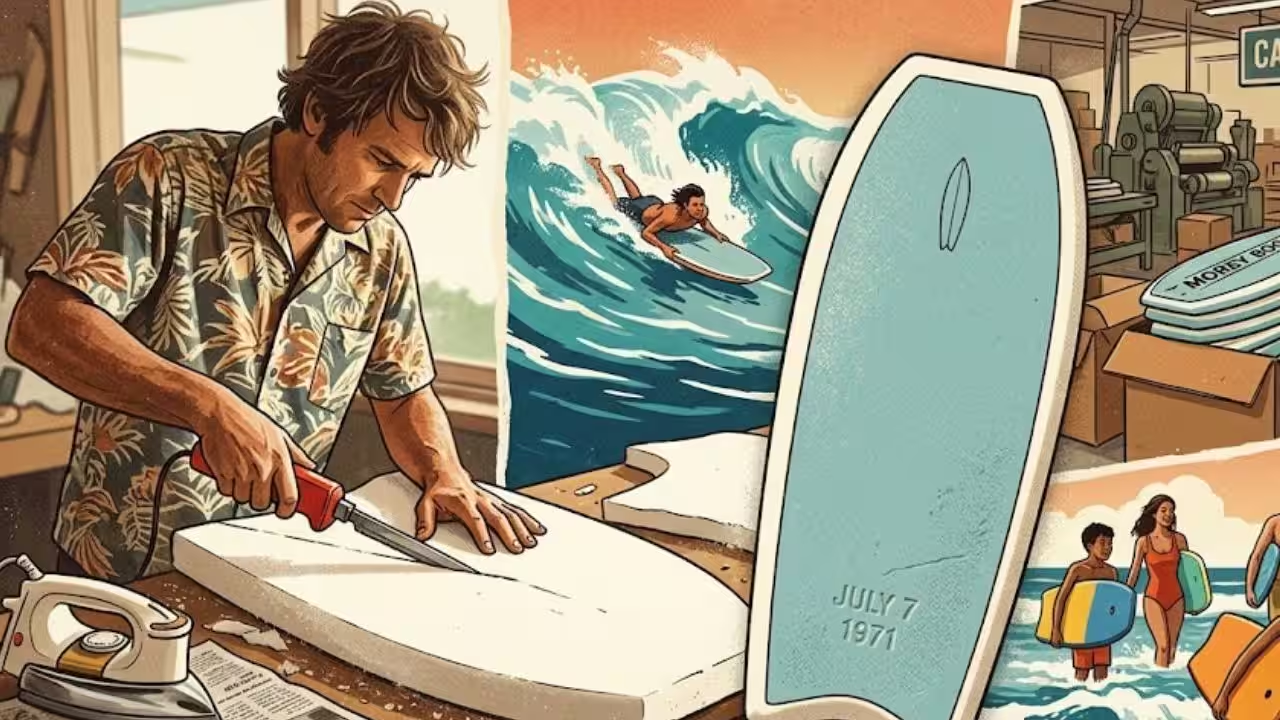
A leftover piece of foam, an electric carving knife, and a surfer were all Tom Morey needed to create what would become one of surfing’s most recognisable inventions. In 1971, Morey was living in Kona, Hawaii, where he was experimenting with the idea of a small and lightweight craft that could offer a different way to ride waves. He was already an accomplished stand-up surfer, but he kept looking for new possibilities.According to the California Surf Museum, Morey took a piece of polyethylene foam from his garage and cut it into shape with an electric carving knife. He then used his wife’s iron to seal the foam. A copy of the Honolulu Advertiser newspaper left its imprint on the board, giving Morey a way to remember the date: July 7, 1971. That simple experiment would go on to become the Morey Boogie and help shape the modern bodyboard.How Tom Morey created the first modern bodyboardMorey’s creation was different from the hard surfboards he knew. The modern bodyboard was a soft and flexible piece of foam designed to be ridden while lying on the belly. Morey found that the board allowed him to feel the movement of the wave in a way that a conventional surfboard did not. He saw several advantages in his new creation. It could turn, was durable and lightweight, and could be produced cheaply. Morey also believed it was safe. The idea was simple enough to turn into a do-it-yourself kit that people could assemble at home.The first kits came with two pieces of foam that had to be glued together along with skins for the top and bottom. Morey placed an advertisement in Surfer magazine, and orders soon began arriving.From a garage experiment to the Morey BoogieMorey initially considered calling his invention SNAKE (Side, Navel, Arm, Knee, and Elbow). The name was an acronym for the parts of the body used while riding it. But the idea was rejected, and he eventually chose the name Morey Boogie.The name came from Morey’s love of jazz and a style of swing music which was popular before the Second World War. He felt that ‘Boogie’ captured the movement of the new craft.The first production of the Morey Boogie reached the market in 1975. By 1977, the Carlsbad-based company was producing about 80,000 boards a year. In 1979, toy company Kransco purchased Morey Boogie, and the boards began appearing in major department stores across the United States.Why the Boogie Board name still lives onMorey’s invention helped establish modern bodyboarding as a sport. By the 1980s, bodyboarding had become the fastest-growing watersport in the world, according to the California Surf Museum.Today, many companies make their own versions of the bodyboard. Yet the name Morey has proved that it is difficult to replace. The museum notes that people still commonly call bodyboards ‘Boogie boards', much as brand names such as Band-Aid, Coke, Kleenex and Vaseline have become part of everyday language.Catch the latest World News and Live updates. Download the TOI app.
Topics in this story
Gathered from external sources. Rights to this text belong to whoever originally published it.