Nvidia CEO Jensen Huang names three countries that are leading the world in technology and manufacturing; and tells why he did not include US on the list
Nvidia CEO Jensen Huang has identified three nations currently leading the globe in manufacturing and technology while also explaining why the US did not
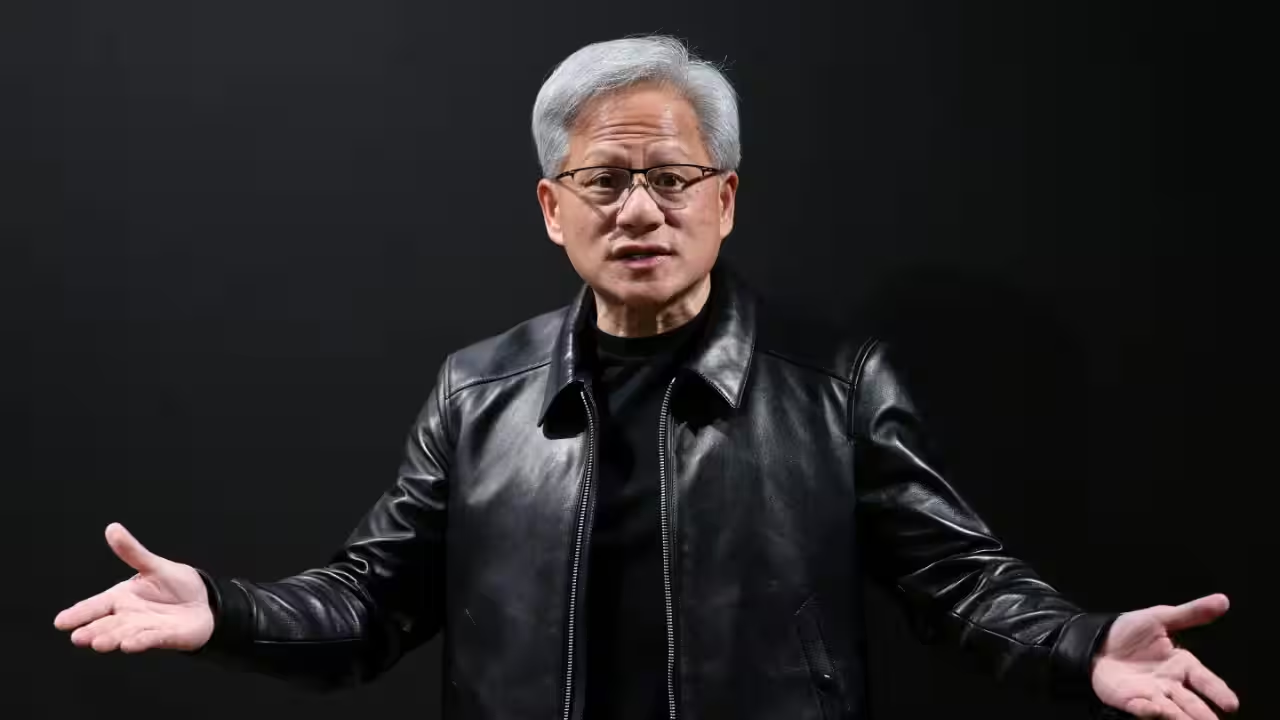
Nvidia CEO Jensen Huang has identified three nations currently leading the globe in manufacturing and technology while also explaining why the US did not make his list, during a recent discussion with German Chancellor Friedrich Merz. Addressing China's industrial strengths, Huang pointed out that Beijing holds a unique competitive edge because its modern economic transformation directly coincided with the rise of the digital era. According to Huang, the global powers in production and advanced technology has revolved around three specific countries: Germany, Japan and China.“For the last 50 years, because of the current Industrial Revolution, which is computing and digital technology, the United States has largely exported its heavy manufacturing, its building, and its craft to China. So now the world has three (leaders) again. It’s Germany, Japan and China,” Huang said.Why China did not make it to Huang’s listHuang highlighted that China’s advantage stems from critical timing. Since its industrial surge unfolded alongside the rise of computing, its manufacturing base developed with digital infrastructure integrated from the start, leaving the country heavily computerised.“The advantage that China has is that they came into their industrial revolution, if you will, their economic transformation happened during precisely the time of the computer industry. They are quite computerized. China is probably the only nation today that is deep in manufacturing and deep in computer science. And very comfortable in both,” he highlighted.US restrictions pushed China’s progressSpeaking to CNBC on the sidelines of Nvidia's GTC Berlin conference, the Nvidia CEO said that export curbs and trade restrictions imposed by the US have pushed China to speed up its own domestic chip manufacturing and strive for technological self-reliance.Current US trade rules prohibit the export of advanced processors to China, including Nvidia's high-end artificial intelligence (AI) GPUs. Reports have claimed that several Chinese entities have managed to access that computing power through third-party data centers based in Southeast Asia.“We’ve definitely accelerated China’s initiatives, its nationalization of semiconductor manufacturing capabilities, and all of the industrial support that has been put into that sector, and so there’s no question we’ve accelerated that,” Huang said.Huang, however, said that despite intensified competition and China’s accelerated domestic initiatives, American tech firms remain well-prepared to take on competitive pressure “from anybody.”You use AI every day. Now get your AI Quotient. Take the AIQ test.
Topics in this story
Gathered from external sources. Rights to this text belong to whoever originally published it.