In 1962, Hawaii released Kalij pheasants for hunting; they spread across forests and may have helped disperse seeds of invasive plants such as banana poka
An exploration of how the introduction of Kalij pheasants in Hawaii has contributed to the spread of invasive plants, including banana poka, and its impact on native ecosystems. Discover the ecological implications of this game bird's proliferation through Hawaiian forests.
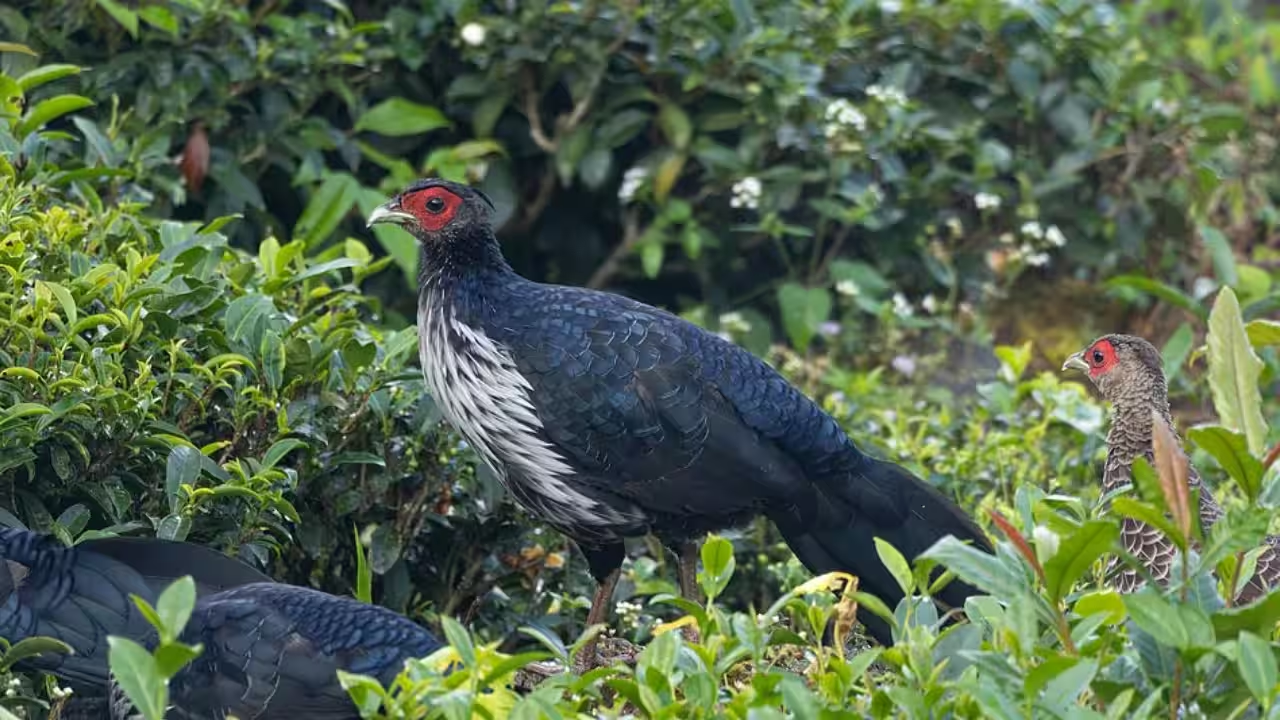
Hawaiian forests evolved in isolation, with their own native plants and birds. They evolved without most of the animals that now share them. In the last hundred years, landowners and wildlife managers have released several birds into Hawaiian forests, mostly to provide hunting opportunities. Some of these released species found favourable conditions in Hawaiian forests and dispersed widely from their initial release areas. Fruit-eating birds may transport seeds long distances through their feces and this is important in forests that are already overgrown with introduced plants. A game bird released for hunting purposes may also have helped spread invasive plants unintentionally. The case of the Kalij pheasant on Hawaii Island illustrates this point.A release of 67 pheasants at Puʻu Waʻawaʻa Ranch in 1962According to Victor and Geraldine Lewin’s 1984 paper in The Wilson Bulletin, kalij pheasants were introduced in 1962 at Puʻu Waʻawaʻa Ranch on Hawaiʻi Island. This introduction was done through an elaborate exotic game bird liberation program conducted by the ranch owners. The Lewins trace the island’s Kalij pheasant population to a single release of 67 birds in 1962, sourced from game farms in Michigan and Texas. The birds remained within the confines of a small silk oak plantation above the release point for about five years.Spread of about 8 km a year across a third of the islandUsing 360 records, the Lewins reconstructed how the species spread across the island. By 1966, the pheasants had moved south around both sides of Mount Hualalai. In 1971, they were already established in the upper Kona Coast above Kailua and in 1972, in the Hilo Forest. The Lewins report an average spread of about 8 km a year, with the birds colonising most of the island’s mid-elevation forest areas within 14 years. By 1984, Kalij pheasants had become widely distributed across various forest types on the island of Hawaii, from sea level to elevations of 2,450 m. Kalij pheasants had already been classified as a legal game species in 1977, seven years before the Lewins documented this wide distribution.Banana poka seeds and fruit in 82% of the 44 pheasants collected in 1981Between January 29 and June 25, 1981, 44 pheasants were caught and dissected for their gizzards and crops. Banana poka seeds and fleshy fruits made up 82% of what the birds ate and the Lewins called it the pheasant’s principal food. Thimbleberry, which is yet another exotic pest plant, showed up in 36%. One gizzard held more than 100 banana poka seeds and more than 3,000 thimbleberry seeds and 63% of the plant foods recorded were exotic. The conservation organisation American Forests notes that banana poka was introduced to Hawaiʻi in the 1920s as an ornamental plant and subsequently spread through forests and fields.What the seed evidence does and does not showThe above study showed many unharmed banana poka and Thimbleberry seeds in the large intestine and feces. In a germination test of 400 thimbleberry seeds kept moist on filter paper, only one seed germinated, a rate of about 0.25%. Because the droppings contained many seeds, the Lewins suggested that the birds may disperse some viable exotic plant material, although the very low germination rate suggests few of those seeds survive. The Lewins also found that pheasants hold banana poka seeds in their gizzards as grit, which wears away the seeds’ hard outer layer, so it is unclear how many of those seeds stay viable.The Lewins conclude that kalij pheasants may be spreading the pest plants and that their presence signals a degraded ecosystem. They warned against moving the pheasants around and recommended that any new stock be free of banana poka.The National Park Service’s account of invasive plant spread in the parkKalij pheasants are commonly seen throughout Hawaiʻi Volcanoes National Park, according to the National Park Service. The agency’s page adds that the birds were released in 1962 and that, because they disperse seeds, their spread has contributed to the spread of invasive plants such as banana poka, thimbleberry and guava. Hawaiʻi Public Radio reports that kalij eat the fruits of banana poka, strawberry guava and clidemia, dispersing the seeds of these plants within native forests.Kalij pheasants implicated as seedling predators in two kipukaA second area of impact is native plants. Technical Report HCSU- 015, released by the University of Hawaii at Hilo in May 2010, was titled Limiting factors of five rare plant species in mesic forests of Hawai'i Volcanoes National Park. According to the U.S. Geological Survey’s summary, scientists studied five rare or endangered native species in Kīpuka Puaulu and Kīpuka Kī over two years. Seed production, rat consumption of the seed and of seedlings, among other factors, was taken into consideration. The report identified kalij pheasants and some unidentified insect species as predators and herbivores of seedlings.You use AI every day. Now get your AI Quotient. Take the AIQ test.
Topics in this story
Gathered from external sources. Rights to this text belong to whoever originally published it.