A 14-year-old collected discarded school supplies; 2 years later her nonprofit has 200 branches across 52 countries and 1,000 teen volunteers
US News: When Grace Millard was 14, discarded pencils, half-used notebooks and unwanted art supplies were an everyday sight in the halls of her Connecticut hig.
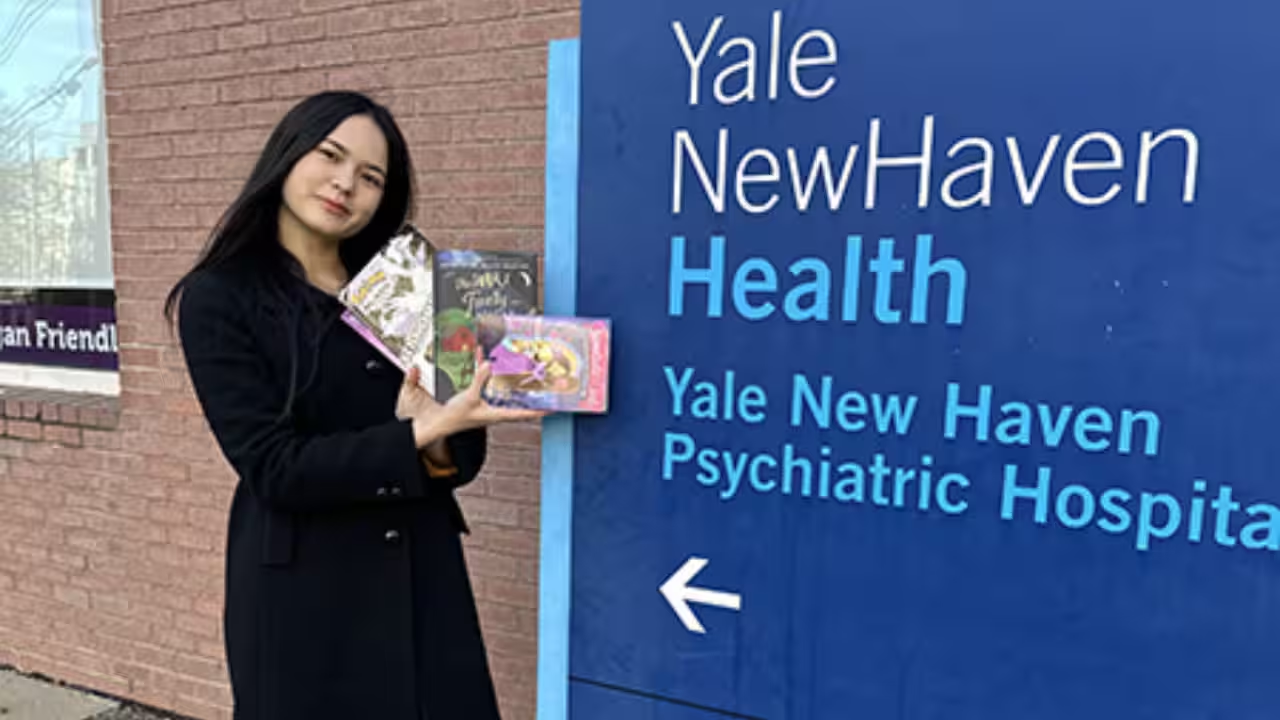
When Grace Millard was 14, discarded pencils, half-used notebooks and unwanted art supplies were an everyday sight in the halls of her Connecticut high school. What caught her attention was not simply the waste, but the contrast surrounding it. Schools and community centres in nearby communities were looking for basic supplies that families could not always afford, while perfectly usable materials were being thrown away. That realisation led Millard and her classmate Jordan Chen to create Restoring Rainbows in 2023, a youth-led nonprofit built around collecting, restoring and redistributing school supplies. Just two years later, Millard, now 16, is co-CEO of an organisation with more than 200 branches across 52 countries and around 1,000 teen volunteers. The initiative has already kept tens of thousands of supplies from landfills while getting them into the hands of children who need them.How discarded school supplies inspired a 14-year-oldMillard's idea began with a simple observation inside her own school. As a 14-year-old freshman, she noticed pencils, notebooks and art materials being abandoned in classrooms and cafeterias, even though other schools and community centres were seeking donations of similar supplies. The contradiction became the starting point for a project that connected sustainability with educational access. Millard and Chen shared an interest in art, climate change and sustainability, and began researching what it would take to establish a nonprofit. They launched Restoring Rainbows in 2023, initially keeping the operation close to home. Their first step was practical, asking local institutions whether they could host collection boxes. According to Points of Light, the pair sent around 30 cold emails to museums, schools, libraries and art galleries before their project began gaining momentum.How Restoring Rainbows gives school supplies a second lifeThe organisation does more than collect unwanted materials. Donated pencils, books, notebooks and art supplies are cleaned, repaired and prepared before being redistributed to schools, after-school programmes and community centres. Millard and Chen initially handled much of the restoration themselves, developing a process that could turn materials destined for rubbish bins into usable resources once again. Books have become one of Millard's favourite items to restore because they often carry traces of their previous owners, from familiar characters to handwritten notes and doodles. Before redistribution, personal information is removed to protect privacy. The model creates a direct link between reducing waste and supporting children who may lack access to school or creative materials. For Millard, the goal is therefore not simply to save supplies from landfills, but to make sure those resources continue to have value in another child's hands.How a 14-year-old turned a school project into 200 branchesThe transformation from a small Connecticut initiative into an international nonprofit accelerated after Millard and Chen began sharing their work online. About six months after starting, they began posting about Restoring Rainbows on social media, where teenagers from different parts of the world started asking how they could participate. Instead of asking everyone to operate directly from Connecticut, the founders developed a branch programme that allowed young people to recreate the model in their own communities. Digital guides, workbooks and video tutorials gave volunteers a framework for collecting and restoring supplies locally. Two years after its creation, Restoring Rainbows had grown to more than 200 branches spanning 52 countries, supported by about 1,000 teen volunteers. The network has kept tens of thousands of restored supplies out of landfills and distributed them to children and communities that need them.Why discarded school supplies became a global youth movementMillard's experience has turned discarded school supplies into a wider lesson about sustainability, creativity and youth-led action. Restoring Rainbows now has volunteers sharing its work from countries including El Salvador and India, showing how a local waste problem can become a global community effort. Millard believes education about sustainability matters alongside the number of supplies donated, and the organisation is working towards distributing 100,000 school supplies. Its wider mission also reflects her belief that art can connect children across differences in language and culture while encouraging confidence, empathy and creativity. Despite running the nonprofit alongside high school, Millard plans to remain involved through college and beyond, with structures in place for younger leaders to eventually continue the mission. Her message is straightforward, young people do not have to wait until they are older or feel completely prepared before acting on an idea that matters to them.Catch the latest World News and Live updates. Download the TOI app.
Topics in this story
Gathered from external sources. Rights to this text belong to whoever originally published it.