Trump’s been lobbing insults at Canada’s leader for more than a year. Now Carney is hitting back
More than a year into Carney’s tenure, with trade talks once-again stalled and a flashy new alliance blooming with the European Union, the Canadian leader appears to be done taking the high road.
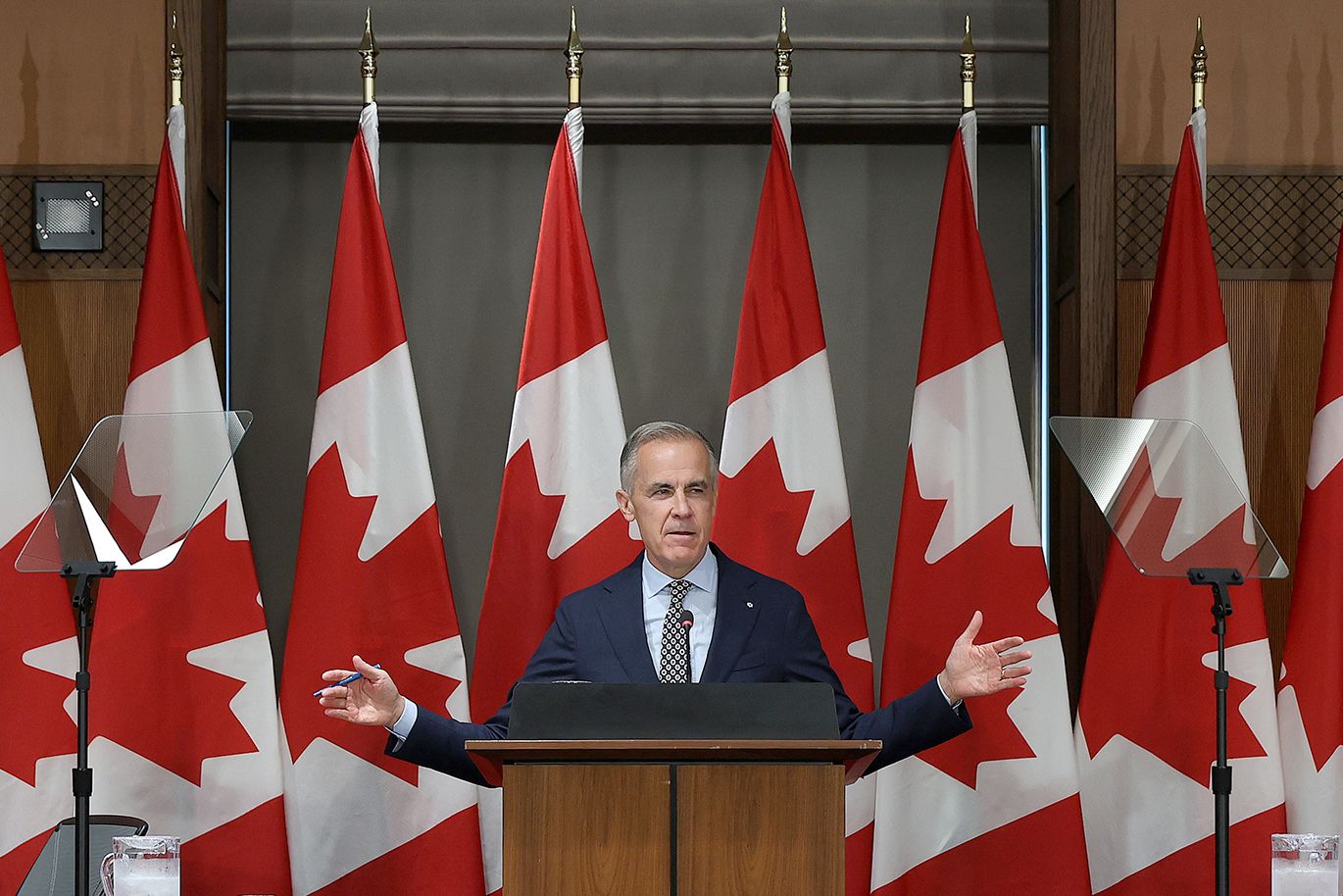
In May 2025, when President Donald Trump raised his well-worn threat of making Canada the 51st state to the country’s then-newly elected leader, Prime Minister Mark Carney replied calmly with a smile. “As you know from real estate, there are some places that are never for sale,” he said, prompting a laugh from Trump, as the two leaders addressed reporters in the Oval Office. The conciliatory tone Carney exhibited during that first meeting at the White House has largely defined his approach to dealing with Trump, even as the trade war between the long-time allies has deepened and the US leader’s attacks on Canada have intensified. While Trump has lobbed insult after insult at the man he often calls “governor,” Carney has maintained a good-natured posture toward his US counterpart while advocating for Canada in trade negotiations and on the world stage. But 18 months into Carney’s tenure, with trade talks once-again stalled and a flashy new alliance blooming with the European Union, the Canadian leader appears to be done taking the high road. In a now-viral moment, Carney mocked Trump’s signature “accordion-style” hand gestures during a speech Friday to members of his Liberal Party in Ottawa. Speaking about a major new clean energy deal, which Carney said was the “functional equivalent of 18 Hoover Dams,” he outstretched his hands, mimicking the Trump-style gesture. “18 Hoover Dams,” Carney repeated with a knowing smile, prompting roucous laughter from the room. The speech is a stark example of a broader tone shift by Carney, who in recent months appears to have become more comfortable poking fun at the US leader. The change in tack, which comes as Canada has introduced retaliatory tariffs on the US following the collapse of trade talks in August, is a sign Carney may be moving away from a strategy of diplomacy and, at times, appeasement, which has not paid off. “Carney has taken his fair share of insults from the President of the United States, and he’s now swapping his central banker caution for increasingly subtle but pointed shots at Trump,” said Fen Hampson, chancellor’s professor and co-chair of the Expert Group on Canada-US Relations at Ottawa’s Carleton University. “I wouldn’t say the gloves are exactly off, but he’s loosening them.” Carney, a career technocrat who was first elected to public office in 2025, is “developing a bit of a taste for the political punchline,” Hampson added. From placating the president to poking fun Carney first came to power with the goal of smoothing over the relationship with Washington, which had become fractious under his predecessor Justin Trudeau as Trump began threatening to annex Canada early into his second term. Carney maintained this approach even as US-Canada relations deteriorated and the economic rift between the neighbors grew. During a meeting in October 2025, Carney flattered Trump, calling him a “transformative president” and commending his efforts as a global peace broker, while Trump praised the prime minister as a tough negotiator and “world class leader.” In seeking tariff relief for Canada, Carney capitulated to Trump by boosting efforts to combat fentanyl trafficking to the US — despite Canada making up just 0.2% of US border seizures of the drug — and dropping a planned digital services tax that would target US tech companies. He apologized to Trump for an anti-tariff ad that angered the US leader so much he ended trade talks. Carney often appeared chummy with Trump, swapping seats with him at the G7 in France earlier this year when the president complained about having the “lowest chair.” He also publicly backed Trump on thorny foreign policy issues such as the US war in Iran. And in May, Carney continued to preach the benefits of cooperation with the US, adopting Trump’s own language when telling business leader in New York that a stronger Canada will “make America great again.” Meanwhile, Trump, known for lambasting his political opponents, intensified his attacks on Canada and its leader, repeatedly referring to Carney as “governor” or just “Mark”; calling him “nasty” and “ungrateful”; and even posting an AI-generated hockey meme of Trump standing over an injured-looking Carney on the ice yelling at him to “get up.” Carney has remained mostly tight-lipped through Trump’s personal attacks. But in recent months, he’s shown he can dish it back. He reacted sharply when Trump’s Secretary of Defense Pete Hegseth mocked members of Canada’s youth cadet program in a post to X, sparking backlash on both sides of the border. “Stop doing memes, stop throwing shade, stop trying to be tough,” Carney told reporters, in a message directed at the Trump administration. Carney exhibited this looser, blunter tone during his speech to European Parliament last week, after the trading bloc invited Canada to become its first “associate member,” prompting a fresh tariff threat from Trump. “I’m not proposing a third bloc in order to become a great power rival, only with better manners,” Carney said in Strasbourg, France. Carney made another thinly veiled jab at the president in August, when his teleprompter conked out during a news briefing, saying “unlike a certain world leader, I do not view this as a conspiracy.” (When Trump’s teleprompter failed at the United Nations General Assembly last year, he claimed it was “sabotage.”) Getting under Trump’s skin Eric Van Rythoven, a professor of political science at Carleton University, said Carney has introduced some “gentle mockery” into his diplomatic posture towards Trump. “He did all that conciliatory diplomatic work, and it didn’t get him anywhere. So that calls for a new strategy,” said Van Rythoven, who researches the role of mockery in international relations. “Trump is notoriously thin-skinned and extremely sensitive to any kind of disrespect,” said Van Rythoven — particularly from someone like Carney who is popular both at home and abroad. Beyond irking Trump, mocking the US leader plays well for Carney domestically, said Imran Bayoumi, a deputy director at the Atlantic Council’s Scowcroft Center for Strategy and Security. “The Canadian population is supportive of his approach to stand up for Canadian interests, even if that means breaking with the United States, its long-time partner and close neighbor,” he said. In a recent poll by Canadian analytics firm Leger, 41% of Canadians said they now consider the US an enemy country, up 15 points from June 2025. Most (64%) said their opinion would change if Trump was no longer in office. While it may get laughs, Carney’s new strategy toward Trump could signal an even icier era for relations, Van Rythoven said. “The fact that you have a sitting prime minister who is openly mocking the US president marks a dramatic low point in the relationship,” he said. Some analysts, however, say the words may not do lasting damage. As a “reality show figure,” Trump is no stranger to personal dustups, which could make it easier for him and Carney to make amends, said Asa McKercher, Hudson Chair in Canada-US Relations at St. Francis Xavier University in Canada’s Nova Scotia province. “He’s used to rough and tumble relations with other people,” McKercher said, citing how Trump has elevated people to his cabinet who once mocked him. “Bygones could be bygones, a deal could be struck, and things could be patched up.”
Topics in this story
Gathered from external sources. Rights to this text belong to whoever originally published it.