Meet Finley Holz, the Minnesota student who studied 10 years of wolf-tracking data and found deep snow can make wolves move less
US News: Holz combined wolf-tracking records with winter weather data, including temperature, snow depth and snowfall. Using ArcGIS Pro, he mapped wolf locatio.
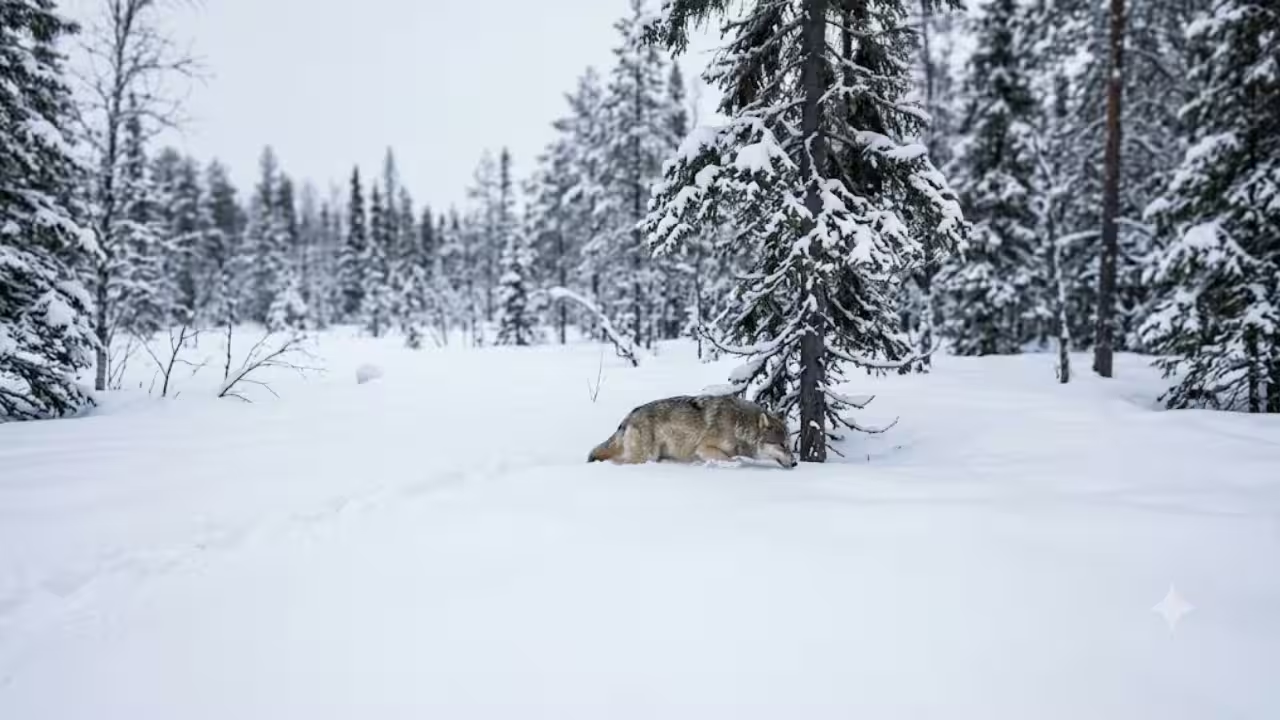
Holz combined wolf-tracking records with winter weather data, including temperature, snow depth and snowfall. Using ArcGIS Pro, he mapped wolf locations and converted them into movement data, while a Python programme helped compare movements with weather conditions. His research found that deeper snow was linked to reduced wolf movement. The study recorded a statistically significant negative correlation between snow depth and movement.However, cold snaps did not significantly affect how much the wolves moved. The research also produced an unexpected finding. Wolf movement decreased as a winter storm approached, while three days after a storm, movement was significantly below the average winter level. Holz's project was recognised in a Minnesota Story Map competition, where he placed second.How Finley Holz used wolf-tracking and winter weather data to study wolf movementHolz combined wolf-tracking information with winter weather measurements, including high and low temperatures, snow depth and snowfall events.The project used ArcGIS Pro to organise shapefiles and create maps showing wolf locations. The resulting location points were then converted into movement data. Holz also wrote a Python programme to align the wolf movements with the different winter weather conditions.The data came from wolf collar information provided by the Fond du Lac Resource Management Division. Pine Knot News, a Minnesota-based publication, reports that wildlife programme manager Michael Schrage provided wolf collar data and guidance to the students. Holz and other students also had the opportunity to collar Otter Creek wolf pups on the Fond du Lac Reservation on 5 May.Deep snow was linked to reduced wolf movement in MinnesotaOne of the clearest findings from Holz's research was the relationship between snow depth and wolf movement. According to the project published in Fairfolio, titled âThe Effect of Winter Weather Events on Wolf (Canis lupus) Movement on the Fond du Lac Reservationâ, Holz's second hypothesis was supported: wolves moved less as snow depth increased. The study found a statistically significant negative correlation between snow depth and wolf movement. In simple terms, the data showed that as the snow became deeper, the distance wolves travelled per movement decreased.The finding in similar terms, stating that Holz "found that winter cold snaps have no effect on wolf movement" but that there was "a negative correlation between snow depth and wolf movement: the deeper the snow, the less the wolves moved." Holz had also expected extreme cold to affect wolf movement. His third hypothesis predicted that wolves would move the least during a cold snap. However, the results did not support this idea. The Fairfolio project says there was no difference in wolf movement during a cold snap compared with normal winter movement. That meant that extremely cold periods, at least within the conditions examined in the study, did not produce the reduction in movement Holz had expected.Finley Holz found wolf movement decreased as winter storms approachedAnother unexpected finding came from the relationship between wolf movement and winter storms. Holz originally hypothesised that wolves would travel the furthest immediately after a storm. Instead, the data showed that their movement declined around the time of a storm.According to the project abstract, "Three days after the storm had passed, the wolves moved significantly less than the average winter movement (pFinley Holzâs wolf research earns second place in Minnesota Story Map competitionHolz's wolf research also became part of a successful Minnesota Story Map competition. Two Cloquet High School students and a Hermantown student with Cloquet connections won the top three places in the competition. Hermantown freshman Gabriel Bradley came first, while Cloquet sophomores Finley Holz and Melanie Buhs placed second and third.The Minnesota Alliance for Geographic Education competition challenges students to conduct research and present their findings through an ArcGIS Online story map.Holz's project focused on the effect of winter weather events on wolf movement, while Bradley's project examined factors affecting wolf pack den relocation.Minnesota studentâs decade-long wolf research reveals effects of snow and stormsHolz's project provides a detailed look at how winter conditions can influence wolf movement in northeastern Minnesota. Rather than finding that every form of severe winter weather caused wolves to travel less, the research showed a more specific pattern. Increasing snow depth was associated with reduced wolf movement, while cold snaps alone did not significantly change movement.The study also raised a new question about how wolves respond to approaching storms. The observation that movement decreased before a storm arrived suggests that further research could investigate whether wolves respond to changes in atmospheric or environmental conditions before severe weather reaches the area.For a high-school research project, Holz's work combined a decade of wildlife-tracking information with geographic mapping, weather data and computer analysis to examine the behaviour of an important northern predator.Catch the latest World News and Live updates. Download the TOI app.
Topics in this story
- Fond du Lac Resource Management Division
- Minnesota Alliance for Geographic Education
- Minnesota Story Map competition
- impact of snow on wolf movement
- wolf behavior winter weather
- Finley Holz wolf research
- wolf tracking data Minnesota
- cold snaps wolf movement
- minnesota story
- effects of winter storms on wolves
- World news
- World news today
Gathered from external sources. Rights to this text belong to whoever originally published it.