Psychology says people who make their bed every morning, even when staying in a hotel or someone else's home, may find comfort in familiar routines, a sense of order and the feeling of starting the day with one small task completed
Some people cannot leave their bed unmade, even when they are staying in a hotel, in a holiday apartment for just one night.
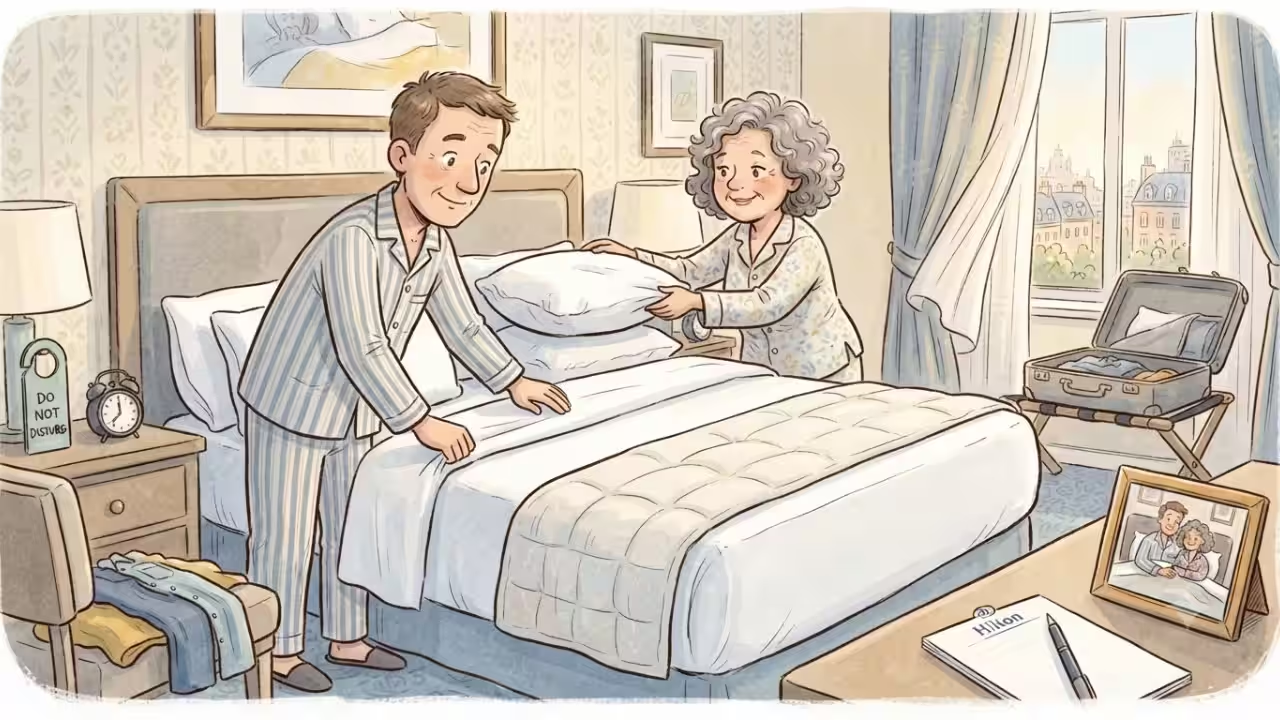
Some people cannot leave their bed unmade, even when they are staying in a hotel, in a holiday apartment for just one night. They wake up, fold the duvet, straighten the pillows and make sure everything looks neat before heading out.For them, making the bed is part of getting the day started. And the habit often travels with them. Whether they are staying in a relative's home, a holiday apartment or a hotel room, they still feel the urge to straighten the bedding before leaving.It may look like a small domestic habit, but there are interesting psychological reasons why some people stick to it.Does making the bed give people a sense of achievement?There is also the satisfaction of finishing something. Making a bed is a small, visible task with a clear result. The sheets are straight, the pillows are arranged and the room looks a little tidier than it did a few minutes ago.This connects with the psychological idea of task completion. Finishing even a minor activity can give people a sense of progress, particularly at the beginning of the day.In a hotel, this behaviour is perhaps more interesting because the person has no real responsibility to do it. The room belongs to someone else, and housekeeping is likely to take care of it. Yet they still make the effort.For some, the reward is not praise or recognition. It is simply the satisfaction of seeing the task done. They may feel more comfortable leaving a room that looks organised, even if they are going to return only in the evening.Is it linked to a need for order?People have different preferences when it comes to their surroundings. Some are perfectly comfortable with an unmade bed, clothes on a chair and a few belongings scattered around. Others find a messy room distracting.For the latter group, making the bed may be one way of creating visual order. A neatly arranged bed can change how an entire room looks, even when the rest of the space remains untouched.Research has examined how people respond to their physical surroundings and how environmental order, clutter and visual distractions can influence mood and attention.Why does the habit continue even when nobody is watching?This is perhaps the most revealing part of the behaviour. When people make their beds at home, they may do it because they share the room with someone else or want the house to look presentable. But in a hotel room, there is usually no such expectation.Behavioural psychology explains that repeated actions in familiar situations can gradually become habits. Once a person gets out of bed, straightening the sheets may happen almost without conscious decision-making.There may also be a personal standard involved. Some people like to leave a space as they found it, or even a little better. Others simply dislike the thought of returning to an untidy room after a long day of sightseeing, meetings or travel.And not everyone who does this attaches a deeper meaning to the action. Sometimes, a habit is just a habit.Does making your bed say something about your personality?It can offer a small glimpse into someone's preferences, but it cannot tell us everything about their personality.It would be wrong to assume that they are more productive, disciplined or successful than someone who leaves their bed untouched. There is no established psychological rule that links this one habit to overall personality or achievement.Perhaps the simplest explanation is also the most relatable. Travel changes the surroundings, the schedule and the usual comforts of home. But making the bed is one small thing that remains familiar.And for someone who likes starting the day with a tidy room, it takes only a minute to bring a little bit of home into a hotel room.You use AI every day. Now get your AI Quotient. Take the AIQ testGet the latest Lifestyle News and more. Download the TOI app.
Topics in this story
Gathered from external sources. Rights to this text belong to whoever originally published it.