Iran vows to end U.S. naval blockade by "all available means"
Iran vows to force the U.S. to lift its blockade as Trump acknowledges the regime's increasing attacks, but says they've "done no damage."
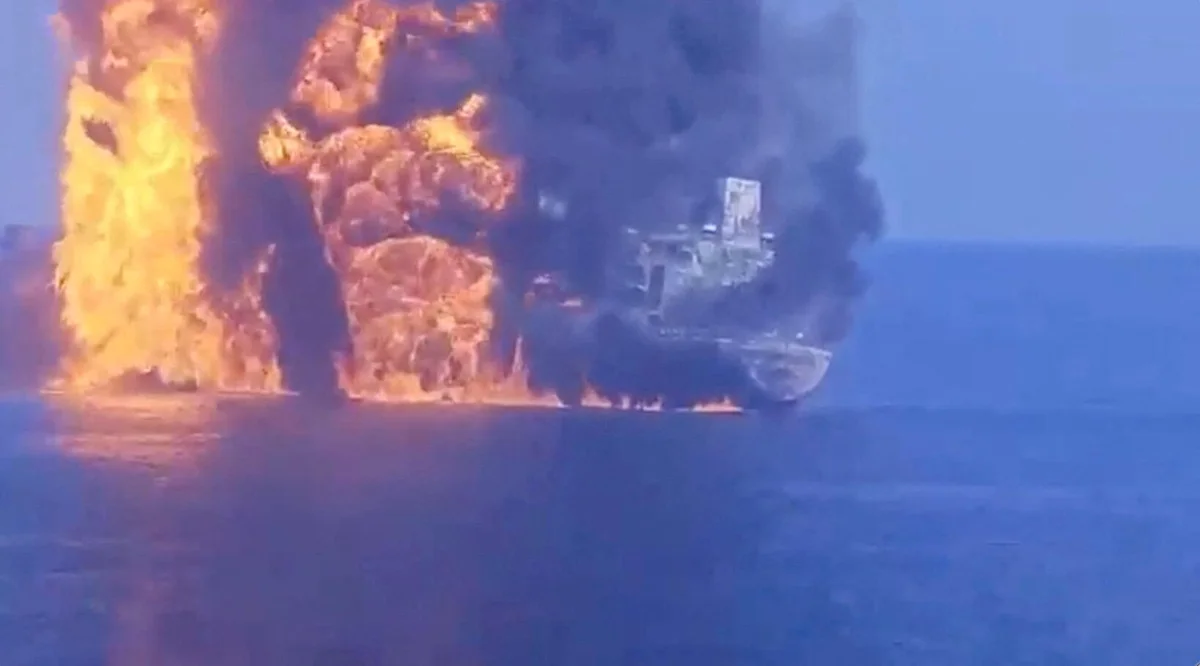
Iran said Monday it would use "all available means" to counter the U.S. naval blockade of the country's ports, which a foreign ministry official described as "an act of military aggression" against the country.President Trump said in a social media post on Sunday that Iran had "launched more drones and missiles in the last week than at any time" during the nearly-nine-month war , but that the increasing attacks had "done no damage." A media outlet linked to Iran's Houthi allies said Monday that a Saudi attack on Yemen's port city of Hodeida killed four people and wounded 18, as fighting between the Saudi-led coalition and the Houthis continues to intensify.
Netanyahu foe trying to form new Israeli government says no "immediate threat" requiring action against Iran
Gadi Eisenkot, the Israeli politician trying to form a new government to oust current Prime Minister Benjamin Netanyahu in the wake of national elections, has said he sees no "immediate threat" from Iran requiring military action.
Speaking at a meeting of his party, Yashar, Monday, he said: "I see no direct and immediate threat from Iran today that would require Israel to act before a new government is formed."
He added that "the gravest threat Iran poses" comes from its stockpile on enriched uranium: "That is where we need to focus."
Netanyahu has appeared keen to go on the offensive against Iran again. Sources familiar with the matter told CBS News last week that Israel and the U.S. were considering a new assault on the country .
Eisenkot recently said Netanyahu should not make any big national security decisions in the transition period following Israel's election, in which Netanyahu's bloc lost its majority, and that the now-caretaker prime minister should avoid "dangerous steps that can wait for the swearing in of a new government."
Iran seeks $290 billion in damages against the U.S.
Iran is due $290 billion from the United States to cover damages inflicted both during, and long before the war launched jointly by the U.S. and Israel almost nine months ago, Iran's judiciary authorities say.
Iranian courts have demanded the U.S. pay the sum, a judiciary official said Monday.
"We have secured court rulings in domestic courts awarding $290 billion in damages against the Americans," said Hassan Abdolianpour, head of the judiciary's center for lawyers, according to state television.
He also said several lawsuits had been filed against Persian Gulf Arab nations for "allowing their territory to be used by America to launch attacks against Iran."
According to state TV, the damages cover U.S. actions going back decades.
On Monday, state broadcaster IRIB said several U.S.-linked commercial ships had been seized and that part of the compensation owed to Iran would be settled through the seizures, without giving further details.
Lebanon denounces Israeli military official's visit to school in south
Lebanese officials have denounced a visit by an Israeli military spokesperson to a school in an Israeli-occupied area of southern Lebanon.
As Lebanon marked its independence day on Sunday, the Israeli military's Arabic-language spokesperson Ella Waweya shared a video on social media showing her outside a school in Debl, a Christian village, and then standing in front of a classroom full of children.
The village is located inside a wide swath of southern Lebanon that Israel has occupied and declared a "security zone" after the latest war erupted with Hezbollah in March. The zone covers a strip of southern Lebanon along the border and stretches about six miles into Lebanese territory.
Debl is among a number of Christian-majority villages near the border where many residents have refused to leave despite Israeli military orders to evacuate. Cut off from the rest of Lebanon, they are largely dependent on humanitarian aid.
"During my last visit to south Lebanon, I was amazed by the beauty of the land and the villages which have paid a heavy price due to their exploitation ... by a terrorist organization," Waweya said, referring to the Iran-backed Hezbollah militant group.
Lebanese Prime Minister Nawaf Salam denounced Israel for "dragging students into a military and propaganda display."
"An occupying power has no right to exploit our children to embellish the image of its occupation or impose its dominance over our people in the south," he added.
Hezbollah drew Lebanon into the Middle East war in March with rocket fire at Israel, which responded with massive airstrikes and a ground invasion. Lebanon says Israeli attacks since then have killed more than 4,300 people.
Iran says will use "all available means" to counter U.S. blockade
Iran said Monday it would use all means at its disposal to counter a U.S. naval blockade imposed in retaliation for its own push to block the Strait of Hormuz.
"We will certainly not tolerate these actions and will use all available means to counter U.S. aggression," foreign ministry spokesman Esmaeil Baqaei said in his weekly press briefing.
Soon after the war broke out, the Strait of Hormuz became the focus of the conflict, with Iran continuing in its efforts to blockade the waterway, vital to global energy supplies.
In response, the U.S. imposed its own counterblockade of Iranian ports. It later announced a raft of economic sanctions, and launched a task force to disrupt land routes into Iran.
"You should bear in mind that what the Americans have described as economic sanctions, an economic blockade and a naval blockade undoubtedly constitutes an act of military aggression against Iran," said Baqaei. "Under these circumstances, Iran is entitled, pursuant to Article 51 of the U.N. Charter, to use any means at its disposal to defend itself."
Iran has said Hormuz could be open within two days but only if Washington agreed to its list of demands , which include the lifting of the blockade.
Houthi media say 4 dead in Saudi attack on key port city
Houthi media said Monday that a Saudi attack killed four people and wounded 18 in Yemen's key port city of Hodeida.
The Iran-backed fighters, who control large swathes of Yemen including Hodeida, are battling a Saudi-led coalition that backs Yemen's internationally recognized government.
The strike targeted a building belonging to Yemen's Public Telecommunications Corporation, the Houthis' Almasirah television channel wrote on X.
Riyadh didn't immediately comment on the report.
It came a day after the Saudi-led coalition said it had intercepted a ballistic missile launched toward the kingdom's western Red Sea coast.
That region is home to major oil installations that Houthi fighters have attacked in recent weeks, along with strikes on airports and military sites.
Yemen, which has been embroiled in more than a decade of civil war, was sucked into the U.S.-Iran conflict in July when a truce between the Houthis and the Saudi-backed government unraveled.
Since then, hostilities have left more than 1,600 people dead and more than 300,000 displaced in the country, the poorest on the Arabian Peninsula, according to the latest U.N. data.
Houthis say Saudi strike on Yemen capital wounds 6
Houthi rebels in Yemen reported an airstrike early Sunday in the capital, Sanaa.
A spokesperson for the Houthi-run Health Ministry, Anees al-Asbahi, said the strike hit a fuel station operated by the state-run oil company and wounded six workers.
The strike also damaged the company's building, al-Asbahi said.
The Red Sea port city of Mokha also came under fire on Sunday, Houthi-run television reported, as did the Haifan district in the southwestern province of Taiza.
The Houthis blamed Saudi Arabia for the airstrikes but didn't report any casualties from them.
Trump says Iran launched more drones and missiles in past week "than at any time for over a year"
President Trump on Sunday acknowledged that Iran "has launched more drones and missiles in the last week than at any time for over a year," but he added: "Don't worry, they've all been knocked down, and done no damage."
In a post on Truth Social, the president linked the midterm elections — in which Democrats won majorities in both chambers of Congress — to the escalation in the war with Iran.
"As everyone remembers, I predicted two things concerning the November 3rd Midterm Elections. One, that if the Democrats win, the Stock Markets would go down, substantially, which they have, and two, that the Islamic Republic of Iran, which has killed 81,000 protestors as of today, will grow more aggressive in their attacks, which has also occurred," Mr. Trump said.
Higher fuel prices triggered by the war caused economic concerns for Americans, and top Republicans, including Vice President JD Vance, have partly attributed GOP election defeats to the war with Iran.
Mr. Trump on Sunday said voters "didn't understand" what their votes meant and called the election "very 'strange.'"
"Iranian leaders consider the Democrats weak, ineffective, and Country destroying, but I won't let that happen! Both the Dems and Iran fought like hell to keep the Oil price up as long as possible and, since the Election, the Oil price has dropped by a record level," he said. "Too bad the Voters didn't understand this before they pulled the trigger, but the whole Election was very 'strange.'"
Athlete swims Strait of Hormuz to raise awareness of Iran war's toll on wildlife
British endurance swimmer Lewis Pugh has swum in the North Pole and Antarctica to draw attention to environmental causes. But battling freezing waters and extreme conditions hasn't prepared him for his latest challenge: swimming the Strait of Hormuz while tankers are attacked and blown up nearby.
Pugh, who is a United Nations Patron of the Oceans, spent three days this week swimming parts of the dangerous waterway to highlight how the war with Iran threatens the area's habitat and wildlife.
Wearing only swimming trunks, goggles and a cap bearing the U.N. logo, the athlete started from the Musandam Peninsula, on the southern tip of the strait, and ended by rounding the Cape of Hormuz, completing about 9.3 miles in total. Pugh is believed to be the first person to undertake a long-distance swim there since the war started.
The swimmer said that minutes after he entered the water on Monday, he heard two loud explosions that rocked the sea.
Iranian deputy foreign minister Kazem Gharibabadi said on Saturday that a Qatari delegation visited Tehran the previous evening and "held two hours of talks," without providing details.
Negotiations between the U.S. and Iran to end the war have stalled in recent months.
Iran's Foreign Minister Abbas Araghchi said, however, that ongoing talks in the region must be "given a chance" and that the ongoing U.S. blockade of the Strait of Hormuz "must be lifted rationally."
"Our position is clear: as long as Iran's demands are not met, the discussion on the Strait of Hormuz and its opening is pointless," he said, quoted by state television.
"At the same time, we have always affirmed our readiness for dialogue, just as we are ready to defend ourselves."
Iran's conditions have included ending the war on all fronts, unfreezing Iranian assets, lifting oil sanctions and ending the U.S. counter-blockade of Iranian ports.
Trump says he wants to make "permanent" deal with Iranian regime
President Trump said Saturday that he wants to make a "permanent" deal with Iran that will prevent the country from gaining a nuclear weapon in the future.
"What I'm doing is I'm going to make it so that if we have an incompetent president in four years or 15 years or 20 years, I'm going to make a deal that is going to be permanent," Mr. Trump told Fox News in a phone interview on Saturday. "I'm not going to let somebody allow them to have a nuclear weapon."
Mr. Trump said he's never "cared too much about the regime" leading Iran, and that he has "taken out two regimes already," though he declined to specify further. Former Supreme Leader Ali Khamenei was killed in the initial strikes on Iran that began the war in February 2026. His son Mojtaba Khamenei has held the title ever since.
Mr. Trump said Iranian officials have been "very, very difficult" to make a deal with.
"I mean, we make a deal and then they break the deal the next day," Mr. Trump said.
Topics in this story
Gathered from external sources. Rights to this text belong to whoever originally published it.