In 1912, a young homesteader walked deep into British Columbia’s mountains and spent 54 years at an isolated lake; his family helped save its trumpeter swans, and the homestead eventually joined a provincial park
US News: Explore the remarkable story of Ralph Edwards, who spent over five decades at Lonesome Lake, helping to save trumpeter swans and contributing to conservation efforts that led to the land becoming part of Tweedsmuir Provincial Park.
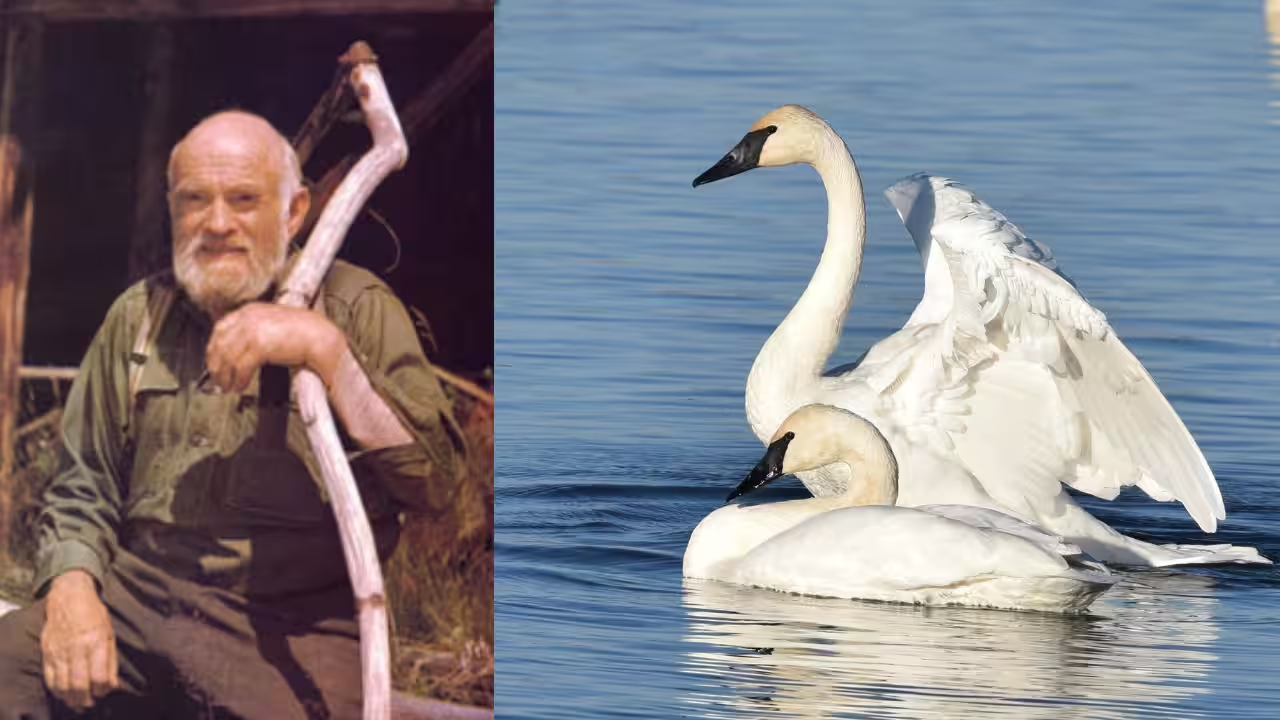
Ralph Edwards was looking for a place where he could build a homestead that was surrounded by mountains, and first reached Lonesome Lake in British Columbia in the winter of 1912. The nearest settlement was roughly 40 miles away, and Edwards spent his first years there largely on his own. He eventually built a home, established a farm and married Ethel Hober, who joined him in the wilderness. Their three children grew up at Lonesome Lake, where the family also became closely involved with the survival of the trumpeter swan. Edwards remained at Lonesome Lake until 1966, which gave him more than five decades there. The place that began as his remote homestead is now part of the landscape of Tweedsmuir Provincial Park.The lake became a refuge for swansTrumpeter swans were under severe pressure from hunting upon Edwards’ arrival. The species had been heavily hunted for its feathers and meat, and only about 100 birds were estimated to remain in North America in the early 20th century. Lonesome Lake was one of the places where a small wintering flock survived, and a 2021 account of the conservation effort published by Post Alley says that roughly 30 trumpeter swans wintered there when the Edwards family became involved. The family began feeding the birds during difficult winters, and eventually worked with the Canadian Wildlife Service.The wintering flock at Lonesome Lake had grown to about 600 birds by the 1960s, according to Post Alley. The feeding was not a casual task, as corn had to be transported into the remote valley, often by packhorse. Members of the Edwards family took turns to maintain the supply through winter, when natural food could become scarce. The Edwards family became known for their work with the species, and Ralph Edwards was later portrayed in Leland Stowe's book Crusoe of Lonesome Lake.Edwards built a life far from the nearest settlementThe BC Parks Foundation says that Edwards received a 153-acre tract at Lonesome Lake in 1913 through a homesteading program, about a year after he first reached the lake. He spent the next decade clearing land and building a home and rarely left the property. He returned after serving in the First World War, married Ethel and raised their three children there.Lonesome Lake lies in the Atnarko-Kliniklini trench system in the Coast Mountains, southeast of Bella Coola, and the BC Parks Foundation describes the property as being about 69 kilometres southeast of Bella Coola and surrounded by the wilderness of Tweedsmuir Provincial Park. British Columbia's official geographical names database says that Edwards named the lake Lonesome Lake after arriving there in the winter of 1912 and finding no other living creatures in sight. The same record credits Ralph and Ethel Edwards with doing more to protect trumpeter swans from extinction than anyone else.The homestead eventually became a conservation projectEdwards left Lonesome Lake in 1966, and the property remained in the family. But the original homestead buildings did not survive, when a forest fire destroyed the Edwards family's farm buildings in 2004. A later account of the property noted that the land was gradually reverting to wilderness, even as the family's role in the recovery of trumpeter swans remained attached to the site.The old homestead was a privately owned parcel surrounded by provincial parkland, and was effectively an inholding inside Tweedsmuir Provincial Park. The BC Parks Foundation launched a campaign to acquire it rather than allow it to be sold for private development. The organization described the land as an important piece of both conservation history and the wider wilderness of Tweedsmuir.In 2021, the campaign reached its target, when a postscript that was added to the Post Alley account reported that the foundation had raised C$700,000 and purchased the Lonesome Lake homestead from Edwards' descendants, with the intention of making it part of the park. The BC Parks Foundation now lists the protected property at 62 hectares, or about 153 acres. It says the MapleCross Fund helped the foundation protect the former Edwards homestead in 2020 and describes the property as a private inholding that was brought into public park ownership. The original house is gone, but the lake and the conservation history that was associated with the Edwards family remain within Tweedsmuir's protected landscape.Catch the latest World News and Live updates. Download the TOI app.
Topics in this story
Gathered from external sources. Rights to this text belong to whoever originally published it.