Star Trek actor Walter Koenig, who played Pavel Chekov, dies aged 90
He played the eager Russian crewman in the original Star Trek series and later appeared in Babylon 5.
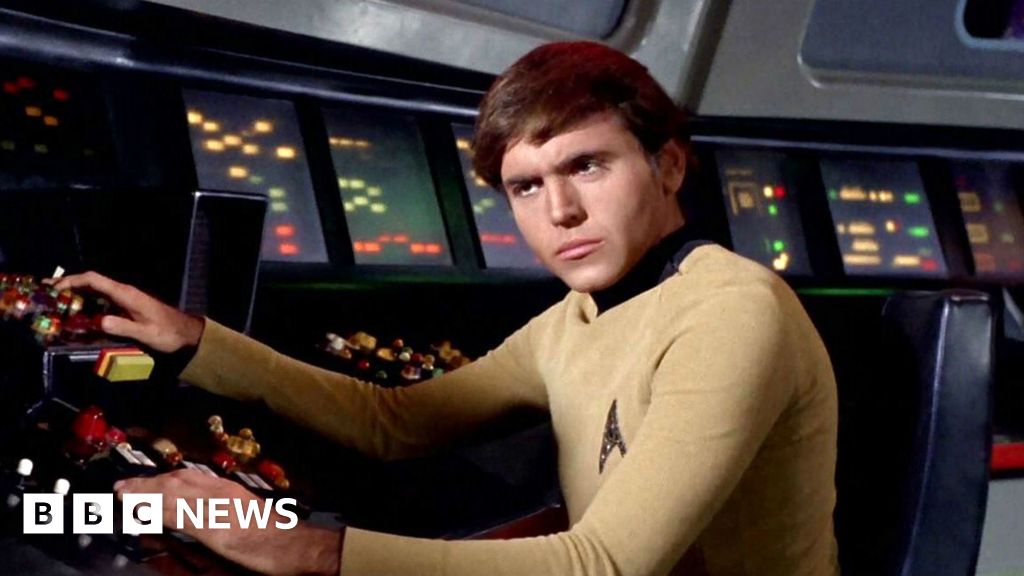
Walter Koenig, who played the spirited Russian crewman Pavel Chekov in the original Star Trek TV series, has died aged 90.
The US actor was a mainstay on the show as the eager and earnest navigator of the Starship Enterprise from season two in 1967 until it ended in 1969, later reprising his role in the six original cast movies from 1979 through to 1991.
In the mid-late 1990s, Koenig portrayed a very different character, the ruthless Psi Corps telepath Alfred Bester, in another sci-fi space series, Babylon 5.
His Star Trek co-star George Takei led the tributes on social media on Monday, writing: "Walter was more than Chekov. He was a writer, a teacher, a thoughtful man, and a loyal friend."
Koenig's Chekov added heart and humour to the adventures of the crew, led by William Shatner as Captain James T. Kirk.
Takei, who played Hikaru Sulu, added: "Rest well, my dear friend. Keep navigating a steady course."
Representatives for Koenig said in a statement given to the BBC: "Today we mourn the passing of Walter Koenig, whose talent, warmth, and unforgettable performances left a lasting mark on generations of fans around the world."
They confirmed he had died "of old age at home in North Hollywood" on Sunday night, "surrounded by his daughter and niece".
Born in Chicago and raised in Manhattan, Koenig was the son of Soviet Jewish immigrants whose family had lived in Lithuania.
He studied at the famous Neighborhood Playhouse School of the Theatre in New York, alongside the likes of James Caan, Christopher Lloyd and Dabney Coleman.
His big break came as the capable young Chekov, who would often joke that everything was invented in Russia.
The character was introduced to appeal to younger audiences, with his Beatles/Monkees-style mop-top haircut.
But Star Trek creator Gene Roddenberry's studio also publicised the role as a response to criticism in Pravda, the main newspaper of the Soviet Communist Party, about the lack of a Russian character. This was a claim Koenig later denied.
The American show, which aired during the Cold War and Space Race between the US and Soviet Union, imagined a future in which nations worked together to explore the galaxy, and Chekov's Russian heritage fitted that ideal.
Koenig once said that the character's purpose on the NBC show was to "set out the bones of the plot and let McCoy, Spock and Kirk fill it in", according to the Hollywood Reporter.
He was arguably more integral to the plot of the movies, being nominated by the Academy of Science Fiction, Fantasy & Horror for his work on The Wrath of Khan (1982) and The Voyage Home (1986).
His seventh Star Trek film appearance was a brief one in Generations (1994) - mainly a next generation film - and he later voiced President Anton Chekov in Star Trek: Picard in 2023.
He also wrote an episode for the original show's animated spin-off.
A published author, Koenig's other on-screen credits included Columbo and Futurama.
Earlier this year, his performance in the short film Mr Fleischmann saw him collect the Platinum Award for best actor at the 2026 Independent Shorts Awards, in recognition of his craft and career.
He married Judy Levitt, who appeared with him in three Star Trek movies and Michael Straczynski's futuristic space opera Babylon 5, in 1965. And they were together until her death in 2022.
The family suffered a personal tragedy in 2010, when their son Andrew, who played Richard "Boner" Stabone on the ABC sitcom Growing Pains, died by suicide aged 41.
Koenig is survived by their daughter, the actress and screenwriter Danielle Koenig, who worked on the animated series Star vs. the Forces of Evil.
Topics in this story
Gathered from external sources. Rights to this text belong to whoever originally published it.