Inside the ‘Americanization’ of French dining
The arrival of elements of North American dining culture in France is being met with a mix of curiosity, reluctance — and resistance.
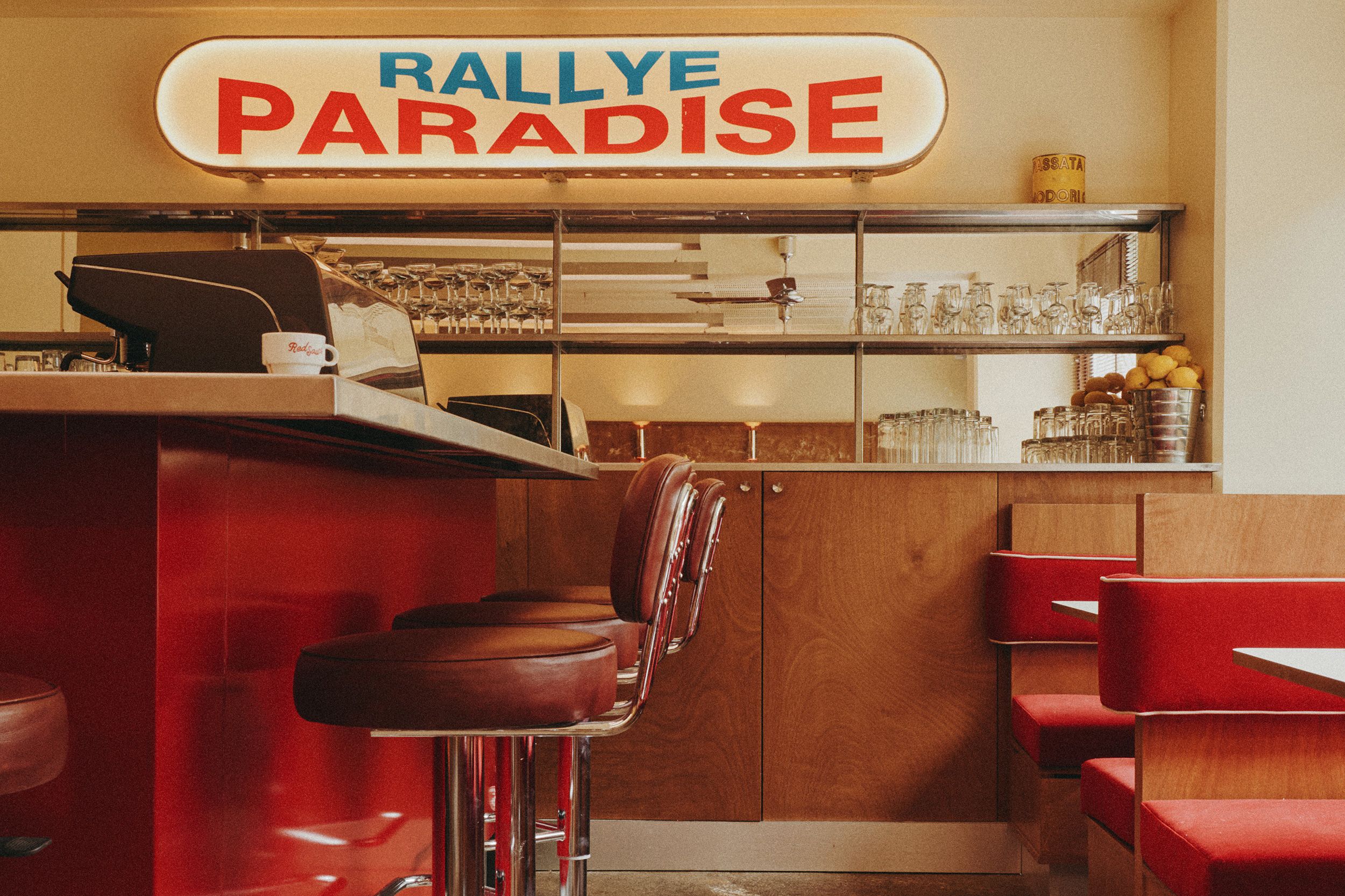
Over the past year, an all-American-style diner serving Italian-American dishes became one of the most viral dining destinations in Paris. Inside Red Sauce, red velvet banquettes, neon signs, rotating ceiling fans, Formica tables topped with vintage salt and pepper shakers and bottles of Tabasco sauce recreate the look and feel of a diner that would fit right in on “The Sopranos.” Racks of Detroit-style pepperoni pizza topped with jalapeños and hot honey, and plates groaning with giant meatballs and eggplant parmigiana are passed out by young servers with faint Italian accents to tables of chattering French diners. Red Sauce is one of dozens of American-inspired dining experiences that have popped up around the French capital in recent years. Alongside New York-style pizzas sold by the slice, smash burgers and donuts, Parisians have also been introduced to regional American cuisines like Texas barbecue, Southern-style fried chicken and waffles and seafood boils, complete with plastic gloves and paper bibs. But while American specialties have found legitimacy in France through the power of social media and savvy marketing, the cross-Atlantic arrival of other elements of North American dining culture is being met with a mix of curiosity, reluctance — and resistance. There’s the earlier dinner hour, which aligns with North American (and also Asian and Scandinavian) culture, a trend that has French newspaper Le Figaro wondering if it’s just “a passing fad or the start of a shift in habits?” There’s also the shortened, takeout lunch break replacing leisurely, multi-course restaurant lunches, as glamorized by the Netflix series “Emily in Paris.” Perhaps most controversial and, some say, the most insidious of all, is the growing adoption of digital tipping and tipping culture in general across France. It’s a shift that some deplore as the “Americanization” of French restaurant culture, which has become the subject of mainstream news and talk shows in recent years. “It’s a form of Americanization of French society,” said philosopher Jean-Loup Bonnamy, on a 2024 episode of the French talk show “Les Grandes Gueules” (“Big Mouths”) dedicated to the topic. “It’s the culture of ‘tipping’ and it’s a servile and misunderstood form of Americanization.” The rise of tipping prompts Unlike the US, tipping in France has never been considered an obligation, as servers are paid minimum wage. A 15% service charge, or service compris, is added to restaurant bills, which is used to pay staff salaries. If diners are feeling generous or had a particularly good experience, they may round up the bill and leave the change for their coffee, or a few euros at a cafe or bistro. As Elisabeth Debourse, editor-in-chief of the influential restaurant guide Le Fooding for France and Belgium, points out, the French word for a tip, pourboire, is a compound word and literally means “to drink.” “In France, tip is traditionally the change you have in your pocket and that you leave on the table for staff to buy themselves a drink later,” she says. But since the arrival of digital tipping options on card machines and QR codes over the last few years, tipping culture has shifted in France. Tipping prompts are now everywhere. Along with tip jars placed beside cash registers, customers are prompted to leave a 5% to 20% gratuity on their restaurant bills, but also on their fast-food takeout and coffees to-go when paying via card machines. In a recent column for Radio France, French journalist Frédéric Martel describes digital tipping as abusive, misleading and even “theft,” given that service is already included. He also called for a 5% cap on French tipping. “In the age of digital payments, it is high time to regulate abusive restaurant practices to reassure customers and remain faithful to the French spirit of service being included,” Martel writes. On social media and online forums, some French users call the emergence of digital tipping a scam that benefits restaurants and commission-earning payment platforms more than servers. Some resent the feeling of being pressured into tipping while servers hover over them with the payment machines. “When I get the tipping system on the digital app, I systematically refuse it because I’m afraid that it will lead back to the same system as in the US,” Rose Camara, a French woman in Lyon who dines out regularly, tells CNN. For Camara, it’s a matter of principle: servers should be paid a fair wage by their employer and the burden shouldn’t fall to customers, she said. The English teacher has no qualms about tipping for good service, but said she resents the digital tipping system because it feels forced, with tips dictated by a machine with predetermined percentages. Likewise, tipping can make settling up uncomfortable when dining out with friends. “It’s a heavy toll for some people,” she said. “I know some of my friends have to be really careful about how much they spend so asking them to give 10 or even 5% extra can be a lot for them and they don’t feel at ease.” ‘Tipping is supposed to be at the customer’s discretion’ Christophe Souques is a restaurateur with seven cafes and pubs across the south of France in cities like Toulouse, Cannes and Nice, where he’s best known for Ma Nolan’s Irish pubs. He says he started to notice generous North American-style tipping in his restaurants in the 1990s, when an uptick in direct international flights brought planeloads of wealthy American and Canadian tourists to the French Riviera. “Anglophone culture brought tipping to France. That’s very clear,” Souques tells CNN. As Souques explains, digital gratuities on card readers were widely adopted after the French government announced that card-based tipping — which until then was taxed as part of a restaurant’s revenue — would become tax-exempt as of 2022. According to a June report from payment platform provider Lightspeed, the percentage of digital transactions that involved an added customer gratuity rose from 4% in 2023, to nearly 10% in 2025. For the report, Lightspeed looked at tipping trends across 1,500 restaurants in France that use the company’s payment platforms from June 2023 to August 2025. But it’s a trend that some restaurateurs, like Souques, can’t get behind. Though both digital and cash tips are tax-free until the end of 2028, Souques, who is also the president of the Union of Hospitality Trades and Industries for the local Nice-area chapter, worries that digitized gratuities will make it easier for a government tax grab in the future. Furthermore, it’s just plain tacky, he says. He has eliminated the option at all his restaurants. “Tipping is supposed to be at the customer’s discretion. But forcing customers to choose from amounts displayed on a card machine violates their privacy and their right to decide,” he says. “It feels aggressive. and it’s shocking … It breaks the rapport between the server and customer.” That’s because restaurant service culture in France is less transactional than in North America, where servers work mostly for tips, and where the average service style — personal introductions, frequent check-ins, product upsells — can be viewed as over-the-top for Europeans. Souques describes French service culture as efficient, professional and discreet. So when a rapport is established between servers and customers, the connection is genuine, he says. Throw in “rude” request for a gratuity, and the connection is shattered. “It stops being about friendliness or a human connection. It becomes purely about money and becomes a financial transaction between the server and the customer,” Souques says. By the same token, French-style discretion can be interpreted by American visitors as inattentive and rude. After having traveled to Canada, Camara found North American-style service “overwhelming” compared to the more reserved service culture she was used to in France. But after a recent dining experience in Paris with a particularly playful and bubbly server, she realized that’s changing too. “Ten to 15 years ago, waiters here were really discreet and wouldn’t engage. Now, we see younger servers coming, introducing themselves and engaging in small talk.” ‘I don’t think it’s elegant’ Priscilla Quang has the added perspective of a chef and restaurateur who lived in New York, San Francisco and Hong Kong before moving back to Paris, where she runs two acclaimed restaurants. In 2024, she opened Trâm 130, a French- and Asian-influenced neo-bistro, and in July, Trâmette, a smaller, casual “deli counter” space inspired by the delis she used to frequent while living in the US. (Trâm is Quang’s first name in Vietnamese and is pronounced Tiam). But while the design of Trâmette was inspired by an American concept, Quang hasn’t been fully converted to American-style tipping: she has banned it outright at Trâm 130, and reluctantly installed the payment option at Trâmette. “I flatly refused to implement that at my first restaurant. I don’t think it’s elegant to have a ‘tip’ button right under your nose when paying the bill, especially since the average check at that first place is a bit higher,” Quang says. At Trâmette, Quang decided to test out the gratuity payment option — but only for guests with whom the staff may have struck a particularly good rapport. Otherwise, two out of three times, waitstaff will manually pass over the tipping prompt themselves before presenting the card reader to guests, she said. Quang estimates that about 20% of her customers tip and mostly for dinner service. “It’s not an automatic reflex at all for the French,” she says. “And when they do tip, they leave usually €2 to €5 ($2.30 to $5.80). We still don’t have that ingrained habit of tipping at all.” Le Fooding editor Debourse, who lives in Belgium but works half the week in Paris and eats out on average three times a week, agrees and points out that the proliferation of card readers hasn’t translated into widespread tipping. This is especially true in the current economy where purchasing power has diminished. Early dinner, quick lunch But it’s not just tipping culture that is making its way across the Atlantic. Dinner hour, which traditionally starts around 7:30 p.m. and peaks around 8 p.m. in France, is also seeing a small shift in the French capital. A new generation of restaurants including both Trâm addresses, Red Sauce and Bittikesu, another critically acclaimed newcomer this year, are opening as early as 6:30 p.m., aligning more with North American dinner times. For Canadian chef Jules St-Cyr, who opened his gastronomic counter restaurant Bittikesu in April, offering a 6:30 p.m. seating was about logistics, as the 15-course tasting menu lasts about 2.5 hours. The second seating is at 9 p.m. and each seating has a maximum of 10 guests. But the move was also about striking a work-life balance. “I don’t want our staff and our team to finish very late. It’s not worth it in the long term.” The first time slot might be a mix of tourists who are used to earlier dinner times and a few French guests, St-Cyr says. But there’s still quite a few French people who balk at the idea of eating that early and “don’t even want to hear it,” he adds. The fabled French, wine-fueled, two-hour lunch is also looking more like the North American lunch hour, with the demands of modern life shortening breaks, and fast food replacing restaurant meals. It’s also a big reason Quang decided against opening her gastronomic restaurant for lunch: the French are drinking less at lunch (alcohol is the most profitable part of a restaurant business), and overall budgets are shrinking. “The business lunch is disappearing,” Quang says. As to whether the current geopolitical climate and anti-American sentiment could affect the French appetite for all things American, Debourse, whose 2023 book “American appétit” explores American food culture, says that the French are able to keep politics and American pop culture — including American food culture — separate. “For the French, there’s no connection between enjoying things that stem from … American soft power and current American politics.”
Topics in this story
Gathered from external sources. Rights to this text belong to whoever originally published it.