Oil crews tested a North Dakota wheat field with dynamite; Iverson's 1951 well yielded 585,000 barrels over 28 years, helping the farmer retire at 44
In 1951, the Clarence Iverson No.1 well became North Dakota's first commercial oil discovery, producing 585,000 barrels of oil, and transforming the local economy. This article explores the challenges, advancements, and pivotal moments leading up to this monumental find.
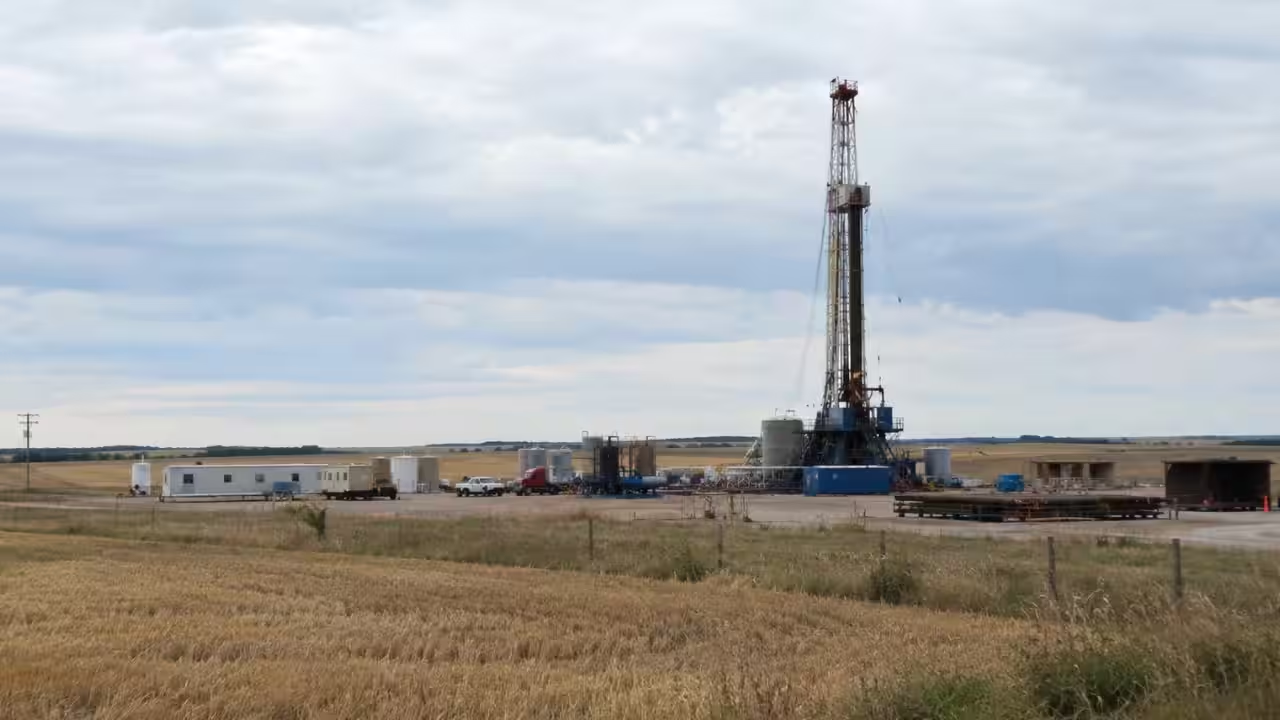
After unsuccessful attempts at drilling by Amerada Petroleum, the Clarence Iverson No.1 well began to produce oil on a farm near Tioga, North Dakota. The tipping point came on 4 April 1951, following months of unyielding results in extracting oil from the well. The selected site was the Nesson Anticline, and it would go on to bear the honour of hosting North Dakota’s first commercial oil discovery. According to the American Oil & Gas Historical Society’s account of the discovery, the well eventually produced 585,000 barrels of oil.The exploration began against a backdrop of uncertainty and scepticism, since companies had toiled away for years investigating North Dakota’s geology and never struck oil. Problems including granite and difficult formations hindered drilling operations until improvements in geological surveying and drilling equipment enhanced the depth and scope of exploration. On the Iverson family farm, explosives were part of the seismic exploration to investigate geological structures. The method was initially met with hesitation from a concerned Iverson, who worried about the dynamite detonation in his wheat fields. Subsequently, the discovery made the property a quintessential part of history in North Dakota’s petroleum industry.Years of exploration preceded the discoveryAccording to the American Oil & Gas Historical Society, North Dakota’s track record of oil drilling was a long list of unsuccessful attempts, having acquired the first permit for petroleum exploration in 1923. Subsequently, companies invested in leases, geological sites, and wells that failed to produce any glimmer of commercial production. However, their resolve remained strong, and they continued to advance with technological advancements like using explosives or acid and a more skilled workforce. These continued efforts led to the invention of an electrical resistivity well log, conceived by two Frenchmen, Conrad and Marcel Schlumberger.Geologist Thomas W. Leach, who was chief geologist of an Oklahoma oil company at the time, can be credited with playing a central role in persuading the companies to continue their search. Leach’s earlier efforts included a deep well for Standard Oil Company of California; it reached 10,281 feet without finding oil and ended up costing the company more money. After World War II, he served as a Captain in the U.S. Army artillery, and, unaffected by his earlier failures, Leach continued investigating North Dakota and securing leases until he identified the Nesson Anticline, approximately 50 miles northeast of Williston, as a promising location for further exploration.The drilling permit for the Clarence Iverson No. 1 was issued on 4 August 1950. Operations began at 6 pm on 3 September, according to the North Dakota Geological Survey. The crew worked through the winter, when severe weather interrupted access to the site. A blizzard in January 1951 halted operations, and the drilling team continued towards its target depth after work resumed.On 4 August 1950, the drilling permit for the Clarence Iverson No. 1 was secured and operations began imminently. However, the operation was met with bumps along the way; such hindrance occurred in January 1951, when a snow blizzard halted the operation. By early February, the well had reached 11,744 feet, and yet it could not be established as a commercially productive zone. The absence of a successful result did not immediately end the operation. Instead, the crew pursued another method of opening the rock surrounding the well, using a technique that had already been employed in the petroleum industry for decades.Oil was finally produced through perforationWhat the operation needed was to drill deeper, and to achieve that, the crew used a Lane-Wells Company Koneshot perforating device. At selected depths, the device would create openings in the well, but the first attempt between 11,706 and 11,729 feet turned out to be a miss. To aggravate things further, the work was interrupted again in March owing to severe weather and was delayed until the repairs were completed.Subsequently, the crew tried again and perforated another interval, between 11,630 and 11,640 feet and made four holes per foot. As per the North Dakota Geological Survey, the day of success came on 4 April 1951 when oil flowed from the well at a rate of approximately 240 barrels a day.However, there were consequences to be dealt with that extended beyond the farm because the discovery had altered the economy of the entire region. The American Oil & Gas Historical Society records show that within two months, approximately 30 million acres had been leased for oil exploration. As a result, companies had moved to the Williston area in order to establish their foothold, and Standard Oil of Indiana was building a refinery designed to process 30,000 barrels daily by 1952.You use AI every day. Now get your AI Quotient. Take the AIQ test.
Topics in this story
Gathered from external sources. Rights to this text belong to whoever originally published it.