In 2015, Terri Irwin added more than 33,000 acres to Queensland’s Mourachan reserve, where released emus now breed and reptiles of conservation concern are protected
In 2015, Terri Irwin expanded Queensland's Mourachan reserve by 33,000 acres to protect emus, woma pythons, and yakka skinks, continuing Steve Irwin's legacy in wildlife conservation.
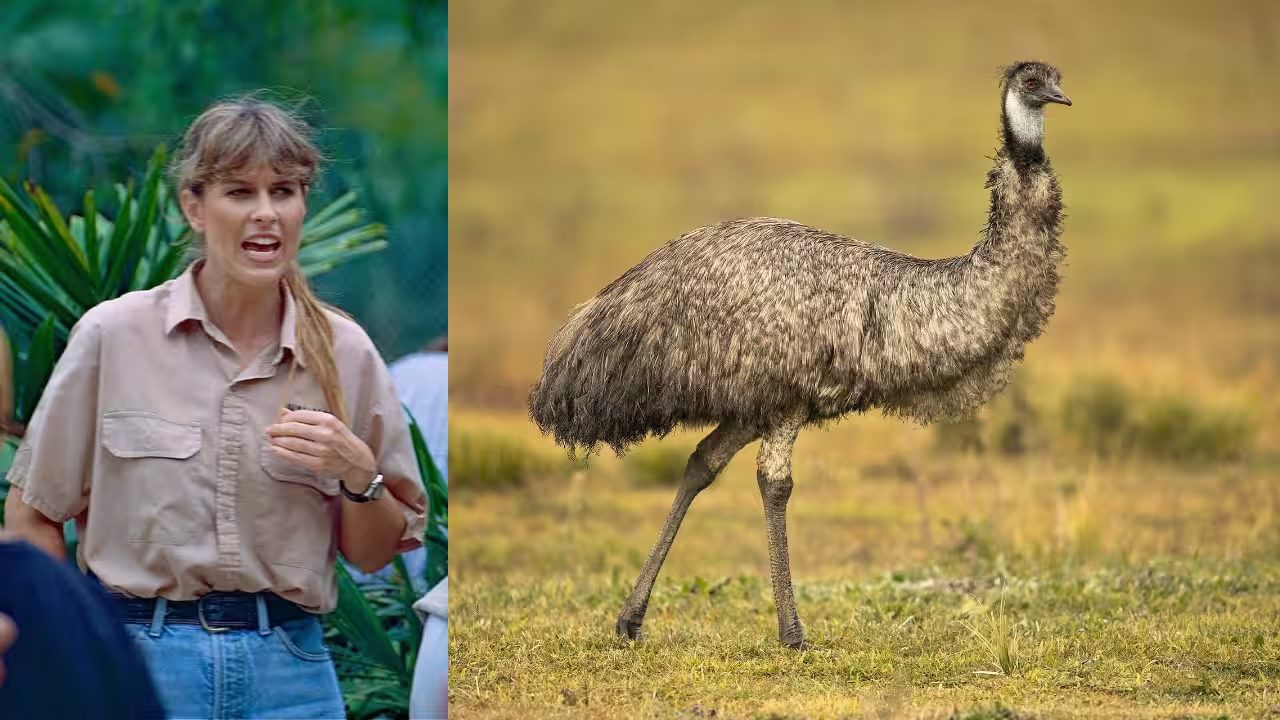
Terri Irwin expanded the Mourachan conservation property in Queensland, Australia, in 2015 by purchasing more than 33,000 acres of adjoining land, with the expansion increasing the protected area and continuing a conservation project that was established by her late husband, wildlife conservationist Steve Irwin. The property is located in Queensland's Brigalow Belt, and protects semi-arid habitats that have been affected by agricultural clearing, and Australia Zoo says that the reserve supports several species of conservation concern, which include the yakka skink and woma python. Rescued emus that were released on the property have also established a breeding population, and some of the original birds now return to the site's stockmen's quarters with their chicks. The reserve's expansion was part of a larger effort to protect native wildlife and allow vegetation and animal populations to recover.Why the Brigalow Belt matters to wildlifeThe Brigalow Belt stretches across parts of Queensland and contains a variety of vegetation communities, such as brigalow woodlands, grasslands and semi-arid habitats, with its ecosystems supporting native birds, mammals, reptiles and invertebrates, but extensive land clearing has reduced a large part of the original vegetation. The Queensland government's biodiversity assessment identifies the region as an important area for conservation, and several vegetation communities that have been associated with brigalow are classified as endangered ecological communities under Australia's national environmental legislation.Animals may lose feeding grounds, shelter and breeding sites because of habitat loss, and remaining habitat can also become fragmented, which would leave populations that are separated by cleared agricultural land. Queensland's environmental guidance identifies habitat retention as a central part of wildlife conservation, since native animals often need sufficient connected areas of suitable vegetation to find food, shelter and breeding locations.Emus have established a breeding populationMourachan's emu programme began before the 2015 land purchase, and Australia Zoo says that rescued emus have been hand-raised and released on the property since 2007. The birds established a breeding population subsequently, and adults from the original releases have been seen returning with chicks. Emus are Australia's largest native birds, and inhabit a range of environments, including open woodland, grassland and semi-arid country, with survival depending on access to food, water and suitable areas for nesting and raising young.A breeding population indicates that at least some released birds have survived and reproduced on the property, however, Australia Zoo's account does not provide a population estimate or a detailed long-term survival rate for the released emus. The reserve also supports wildlife that receives less public attention than Australia's larger mammals and birds, and according to Australia Zoo, surveys have recorded 52 reptile species on the property, alongside 102 bird species, 26 mammals and 17 amphibians.Three reptiles receive protection on the propertyThe yakka skink, common death adder and woma python are among the reptiles that were recorded at Mourachan, and Australia Zoo's property information identifies all three as species of conservation concern under the Queensland classifications. The yakka skink is a large, burrowing lizard that is classified as vulnerable in Queensland, and researchers have studied its distribution and natural history at Mourachan because important details about its ecology and habitat requirements have been limited historically.The woma python is a non-venomous snake native to Australia, and research that is associated with the reserve has examined the species' movements and habitat use, with Australia Zoo veterinarians fitting radio transmitters to a group of pythons so researchers could track them in the field. The work is important for conservation management because protecting a species requires information about the habitats it uses and the conditions it needs to survive.The reserve remains a long-term conservation projectMourachan was established by Steve Irwin after he suspected that the property contained woma python, and Australia Zoo says that the site was an important refuge for the snakes and other native species. Terri Irwin's 2015 purchase added more than 33,000 acres to the property, and the current conservation-property listing gives Mourachan's area as approximately 117,174 acres, which is a figure that is different from the historical acreage figures that was used in its account of the expansion.The organisation has also identified the northern hairy-nosed wombat as a possible future reintroduction species; the critically endangered marsupial once occurred across a wider part of Queensland but now survives in a very restricted range. Any reintroduction would require appropriate habitat and careful conservation planning, but for now, Mourachan's documented work includes habitat protection, wildlife surveys, research into native reptiles and the breeding population of released emus.You use AI every day. Now get your AI Quotient. Take the AIQ test.
Topics in this story
Gathered from external sources. Rights to this text belong to whoever originally published it.