5 years after withdrawal, a grave picture for Afghans inside and outside the US
The fifth anniversary of the U.S. withdrawal from Afghanistan falls as the nation’s citizens face a starkly different picture than when they first arrived in America, with the Trump administration employing numerous tactics to deport Afghans and halt the arrival of new refugees. Since President Trump returned to office, he has drastically curtailed the pathways…
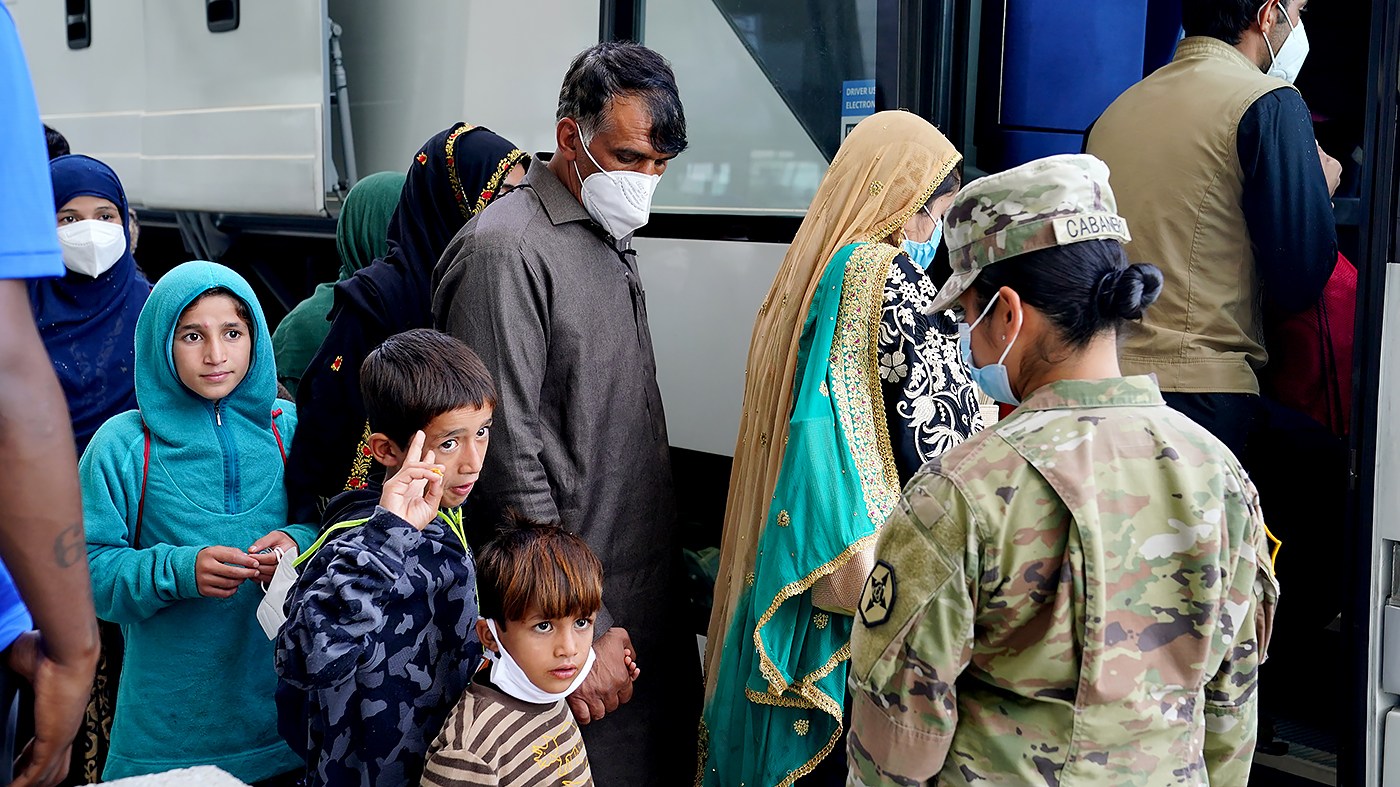
The fifth anniversary of the U.S. withdrawal from Afghanistan falls as the nation’s citizens face a starkly different picture than when they first arrived in America, with the Trump administration employing numerous tactics to deport Afghans and halt the arrival of new refugees.
Since President Trump returned to office, he has drastically curtailed the pathways for Afghans to arrive in the U.S., even curbing immigration processing for several countries following a fatal attack on National Guardsmen carried out by an Afghan national.
Under the second Trump administration, the Department of Homeland Security (DHS) has moved to strip temporary protected status (TPS) for Afghans, ending protections that kept more than 8,000 people from being deported. The administration has also begun the process of reviewing and revoking some special immigrant visas (SIVs) given to Afghans who worked alongside the U.S. in military and government efforts as interpreters, special operations partners and local embassy staff.
And the White House as one of its earliest moves also suspended refugee processing except for white South Africans, cutting off hopes of many Afghans of reaching the U.S.
“As we take stock of whether the U.S. has lived up to its obligations and promises to the Afghans who worked and served alongside American military personnel and partners, often at great personal risk, the answer is a resounding no,” Sharif Aly, president of the International Refugee Assistance Project said on a recent call with reporters.
“The Trump administration has closed virtually all pathways for Afghans to receive visas or enter the U.S., even as there are over 5 million Afghans currently displaced all over the world.”
For Afghans and their advocates — a group that includes many veterans who served in the country — things have gone from bad to worse.
Twenty years of U.S. involvement in the county came to an end over two weeks of chaos at Hamid Karzai International Airport, with throngs of people crowded outside in the hopes of being boarded onto a limited number of flights slated to take allies to safety. More than 80,000 were evacuated through Operation Allies Welcome.
Despite the two decades of nation-building, the Taliban now control the country, and women — who had been free to attend school and pursue careers — are now shut off from most aspects of public life.
And Afghans who did make it to the U.S. live in a precarious state. Even those who gained an SIV or who have a green card have received letters warning them the basis for that status has been revoked .
“Five years ago, this was a crisis. Everything was on fire, nobody had a plan, and the failures were failures of capacity. That is not what this is anymore,” Shawn VanDiver, president and founder of #AfghanEvac, told reporters.
“Today it is not a crisis. It is a deliberate choice, grounded in policy this government has not had the courage to verbalize or brief.”
The Trump administration has shut off virtually every possible pathway for Afghans to reach the U.S. while taking a number of steps to enable deportations of those currently here.
Afghanistan is among the countries on Trump’s travel ban, which bars citizens from a number of countries from getting tourist visas. A second expanded travel ban stripped the narrow exceptions that had allowed for processing of Afghan SIVs, effectively ending the program.
Afghanistan was also on the list of 75 countries for which Trump suspended immigration visas, also cutting off routes for those seeking to join family in the U.S. While a judge last weekend vacated the policy , the State Department on Tuesday paused immigrant visa appointments worldwide to carry out “in-depth training” for consular officers, arguing they need to screen out foreign applicants at risk of taking advantage of U.S. public assistance.
And for those within the U.S., their standing is shakier than ever.
Getting an SIV is a lengthy process, one that requires “chief of mission” approval, in which high-ranking State Department officials sign off on an applicant’s proof of employment. But the Trump administration has been reviewing the basis for those SIVs — a process that began under former President Biden, but which NPR found has been escalating under Trump .
Many who came to the U.S. on the evacuation flights also may not qualify for an SIV, which required two years of qualifying work. Some who were evacuated did not meet that threshold, forcing them to apply for asylum, a lengthy process with no certain outcome.
For all those with tenuous statuses, TPS was the protection blocking them from being deported. The Trump administration has ended TPS for 13 out of 17 total countries, with the remaining four set to expire shortly.
“People who went through the steps to secure it really felt like it was a backstop for them,” Joseph Azam, board chair of the Afghan-American Foundation, told The Hill.
“And so, with that being gone, I think people feel like they’re walking a tightrope without a net, and that’s really scary.”
Laila Ayub, co-founder of the Afghan Network for Advocacy and Resources, said she and other immigration attorneys donating their time frequently have to deliver bad news.
“We find ourselves facing difficult conversations every day, explaining to our clients and our friends and family that there is little that we can do as attorneys,” she said on a call with reporters.
Ayub said while some lawsuits have paused or limited some Trump administration plans, that hasn’t really made a difference on the ground.
“There’s little that we can do when they’re facing, for example, delays with their green cards or asylum, and even less that we can do to help them reunite with their families without action from Congress and others,” she added.
“Every time that there’s a bit of good news — which we’re so grateful for the lawyers who are challenging many of these policies — we end up having a conversation where people in our community think this means that there’s now a pathway back open for their family to come here, and the reality is that that’s still not the case.”
Some Afghans are already being deported.
VanDiver this week highlighted the case of one man, a 24-year-old known in court documents as K.Y., applying for asylum where an immigration judge granted them a withholding of removal to Afghanistan, determining he would be likely to face persecution there.
While in the past, such a determination meant someone would not be deported, the Trump administration has taken to removing migrants to third countries. This man is now facing removal to the Central African Republic, where the State Department warns that armed groups control much of the country and conflict breaks out regularly.
Inside Afghanistan, Azam said, people are losing hope, both of fleeing to the U.S. or adjusting to the new reality of life under the Taliban.
“The people who I hear from that are most distressed and most kind of lacking in hope are still Afghan women,” Azam said, “especially when you know a lot of the public narrative in support of them is waning.”
He called it “a generational setback” as “the path Afghanistan’s on because of this policy is very different than what it was on five years ago where half its population now is erased from public life, erased from education, erased from certain careers, and also erased from the political discourse.”
There are also still many Afghans stuck in limbo across the globe — those who were able to flee to the country but unable to reach the U.S.
Some were ferried out on official flights or other privately arranged charters, while others escaped on their own.
“There are still about 260,000 Afghans stuck in roughly 90 countries — Afghanistan, Pakistan, Qatar and so many more, waiting on a promise the United States made to them,” VanDiver said.
“And many Afghans who did make it here, including the ones our own government put on planes and flew to this country, are being harassed by ICE,” VanDiver continued, referring to the U.S. Immigration and Customs Enforcement (ICE). “That’s the story. Both halves of it. Stuck out there and hunted in here.”
Numerous legislative efforts to aid Afghans in the U.S. and abroad have stalled over the years, including a sweeping effort — the Afghan Adjustment Act — that would provide a pathway to citizenship for all Afghans who arrived under the Biden administration, triggering a fresh round of vetting. It would also smooth processing of Afghans who would qualify as refugees.
Under the Trump administration, the legislative vehicles have narrowed, focusing instead on seeking to protect TPS for Afghans, as well as shore up the SIV program.
Rep. Don Bacon (R-Neb.), a veteran who served in Afghanistan, is one of the co-sponsors of a bill that would protect TPS for Afghans through 2029.
“We had a good inflow of refugees from Afghanistan, and then this current administration pretty much shut it off. I think it’s wrong. We have a moral obligation to those we served with in Afghanistan, who served by our side, helping us out. We had a promise, and a promise made should be promises kept, absolutely,” Bacon said on a call with reporters.
He said he believed the bill could advance under a discharge petition to force a vote given that there is some GOP support, but he said that TPS should be a “fallback plan” until Congress could gain support for a bill to give that same population a pathway to citizenship.
“I think that the appropriate, the humanitarian, the merciful, the right policy is to find a pathway towards permanent status and citizenship down the road for people in this category — particularly Afghan TPS — is what we should be trying to do,” he said.
But action to do so seems further away than ever.
“All the work we did, like sleeping on the Capitol steps, all this energy and momentum, and all these different ways we tried to crack this nut for almost five years,” Azam said, “it wasn’t enough then, and it’s really not enough now.”
Topics in this story
Gathered from external sources. Rights to this text belong to whoever originally published it.