A small ceramic jug in Russia held 2,600 silver coins for nearly 600 years; its owner’s fate remains a mystery
Rest of World News: A remarkable hoard of 2,600 silver coins has been discovered inside a small ceramic jug in Kolomna, offering a rare glimpse into medieval Russian weal.
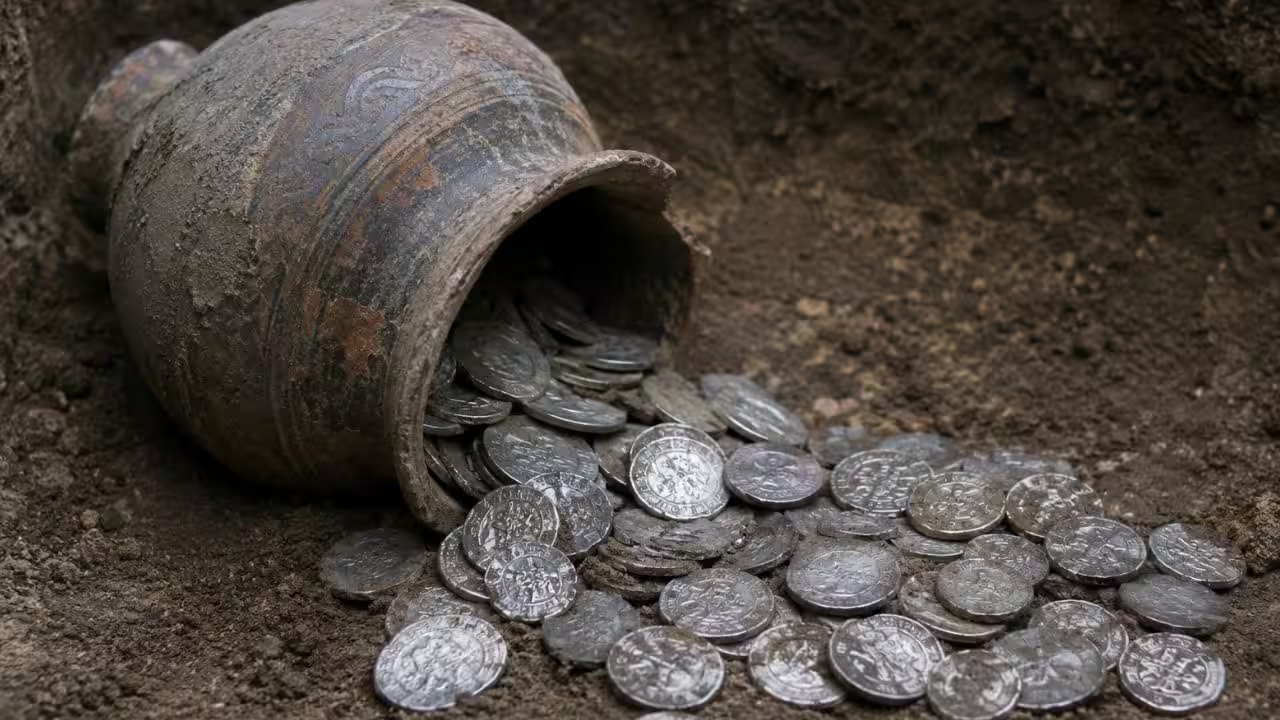
A remarkable hoard of 2,600 silver coins has been discovered inside a small ceramic jug in Kolomna, offering a rare glimpse into medieval Russian wealth. Archaeologists from the Institute of Archaeology of the Russian Academy of Sciences found the hoard during rescue excavations in the historic centre of the city, near the Kremlin. The coins date mainly to the reigns of Grand Princes Vasily I Dmitrievich and Vasily II Vasilyevich the Dark, with the newest pieces dating to the second half of the 1420s. Researchers say the hoard may also have been concealed during an epidemic that swept through cities of Rus' between 1425 and 1427. The discovery is the largest complete collection of coins from the first half of the 15th century available to researchers. Its contents could help researchers understand wealth, trade and how money was used in medieval Kolomna.2,600 silver coins were discovered inside a medieval ceramic jugThe hoard was found in Kolomna's historic centre during rescue excavations by the Moscow Region expedition of the Institute of Archaeology of the Russian Academy of Sciences. Archaeologists discovered a ceramic jug painted with engobe inside a shallow natural pit on the city's posad(town), close to the Kremlin. There were more than 2,600 silver dengi, the main denomination represented in the collection. The find is considered the largest complete coin hoard from the first half of the 15th century available for study. The quantity and remarkable variety of the coins make the hoard especially valuable for understanding how money circulated locally.What makes the Kolomna hoard different from othersMost of the coins were issued under Grand Princes Vasily I Dmitrievich and Vasily II Vasilyevich the Dark. Very few came from appanage princes. Archaeologists say this pattern reflects Kolomna's own monetary circulation. During the 14th and 15th centuries, the city was a grand princely domain and ranked as the second most important city in the principality after Moscow. The hoard contains a notable group of coins made in Kolomna during the final years of Vasily I's reign. Many carry a flying bird, a design unusually rare in hoards from other regions. Some examples are so uncommon that they were absent from the numismatic collections of the country's largest museums. The discovery adds important material to medieval Russian coinage history.What do the 350 newly identified coin varieties reveal about medieval KolomnaInitial examination has identified more than 350 previously unknown varieties of Kolomna coins. The coins were made using dozens of pairs of dies, with small differences in their designs. By studying these variations, researchers can trace how different types of coins were produced over time. The evidence could help researchers trace minting activity in Kolomna over at least 15 years. It could also help identify the final bird-design coins made there during the last years of Vasily I's reign. With so many locally minted coins in one hoard, the discovery offers a rare picture of the money that circulated in medieval Kolomna.Why was the 2,600-coin fortune never recoveredThe size of the hoard suggests that its owner was wealthy and probably belonged to the upper levels of society. Archaeologists say the person could have been a senior official serving the Grand Duke, an administrator with authority, or a successful merchant. The newest coins were issued by Vasily II in the second half of the 1420s, placing the burial around that period. This date offers a possible explanation for why the money was never recovered. Researchers suggest its owner may have died during one of the epidemic waves that swept through cities of Rus' from 1425 to 1427. The evidence does not establish that the owner was a plague victim, but the timing makes an epidemic a plausible possibility.Catch the latest World News and Live updates. Download the TOI app.
Topics in this story
Gathered from external sources. Rights to this text belong to whoever originally published it.