In 1928, Al Capone bought a Miami Beach estate and spent about $200,000 fortifying it; after the mansion was demolished in 2023, its vacant site sold for $21 million
Real Estate News: In 1928, at the height of his reign as Chicago’s most notorious gangster, Al Capone purchased a sprawling estate on Miami Beach’s Palm Island, seeking.
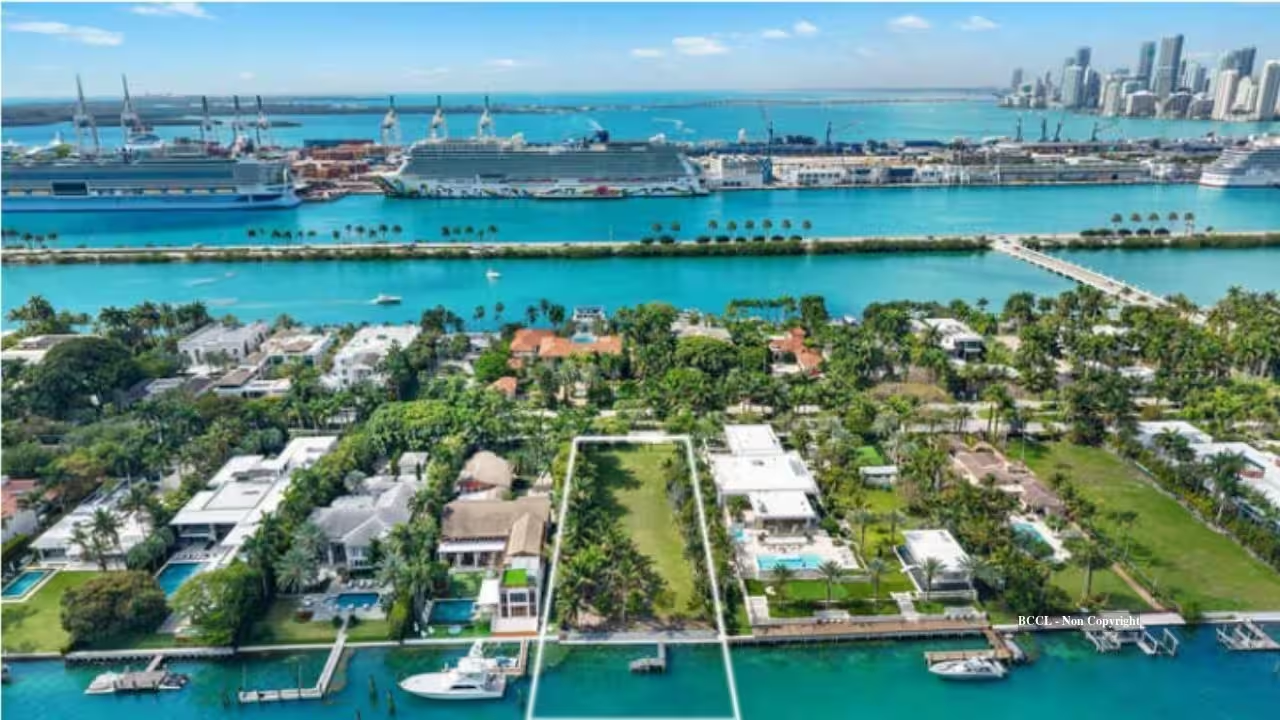
In 1928, at the height of his reign as Chicago’s most notorious gangster, Al Capone purchased a sprawling estate on Miami Beach’s Palm Island, seeking a warm-weather retreat from the cold and his foes. He is reported to have spent some $200,000 bolstering the property with bulletproof walls, steel shutters and other security measures befitting a man who lived under threat of attack at every turn. Nearly a century later, the mansion that once was home to “Scarface” is no more, demolished in 2023 after years of deterioration and fruitless attempts at preservation. Now, the vacant waterfront lot where the infamous home once stood has sold for $21 million, a stark reminder of how land values in Miami Beach have outpaced even the most notorious chapters of local history, according to a report by Profile Miami Real Estate.Capone’s Miami escapeAl Capone first visited Miami in the mid-1920s, drawn by the warm climate, booming real estate market and the city’s reputation as a playground for the wealthy and the criminal. In 1928, he bought a large estate on Palm Island, a man-made, exclusive enclave in Biscayne Bay that was already attracting millionaires, celebrities and politicians. The house itself was a substantial Mediterranean Revival mansion, with multiple bedrooms, grand entertaining spaces and sweeping views of the bay. But Capone was not just looking for luxury. According to local histories and real estate accounts, he invested heavily in security, installing reinforced concrete walls, steel shutters and other fortifications designed to withstand an attack. For a man who had survived numerous assassination attempts and was constantly pursued by law enforcement and rival gangs, the Miami estate was meant to be a fortress as much as a home.From gangster hideout to local landmarkCapone used the Palm Island house as a winter retreat throughout the late 1920s and early 1930s, hosting parties and conducting business while ostensibly “on vacation.” He was eventually convicted of tax evasion in 1931 and sent to prison, after which his grip on the property loosened. The house changed hands several times over the decades, serving at various points as a private residence, a boarding house and, in some accounts, a short-term rental property. As Miami Beach evolved from a sleepy resort town to a global real estate hot spot, the Capone estate became a curious footnote: a piece of criminal history sitting on increasingly valuable land. By the end of the 20th century the mansion was in desperate need of repair with water damage, structural issues and years of neglect taking their toll.Years of decay and failed preservationDespite its notorious provenance, the Capone house never received formal historic designation that would have protected it from demolition. Over the years, various owners and developers floated plans to restore or repurpose the structure but none came to fruition. The cost of bringing the rundown mansion up to modern codes, combined with the enormous underlying land value made preservation a financial non-starter. By the 2010s the property was commonly referred to as a “teardown” in real estate circles, with the house seen as more a hindrance than a help.Reactions from neighbors and local historians were split. Some lamented the disappearance of a physical link to Miami’s vibrant history, while others considered the dilapidated building an eyesore on an otherwise immaculate island. Demolition in 2023 Following years of legal and logistical hurdles, the Capone mansion was ultimately razed in 2023. Workers knocked down the decaying walls, carted away rubble and vacated the site, transforming it into a vacant, waterfront lot where the mobster once roamed. The demolition marked the end of nearly a century of physical presence for one of Miami Beach’s most infamous addresses.With the house gone, the site’s value was now purely about location: a large, buildable lot on Palm Island with direct bay frontage, privacy and proximity to Miami Beach’s amenities. In today’s market, that combination is extraordinarily rare—and extraordinarily expensive.A $21 million vacant lotIn August 2026, the former Capone estate site sold for $21 million, according to local real estate reporting. The buyer is reported to be a private purchaser or entity planning to build a new, ultra-luxury home on the parcel, though specific details were not immediately disclosed.At $21 million, the sale price reflects several realities of the current Miami Beach market. This includes: severe scarcity of large, waterfront lots on exclusive islands like Palm Island; strong demand from domestic and international buyers seeking privacy, security and prestige; and a broader trend in which land values in top neighbourhoods have far outpaced the value of older structures sitting on them.For context, Capone originally bought the estate in 1928 for a fraction of that amount, even adjusted for inflation. The $200,000 he reportedly spent on fortifications would also be a small fraction of today’s sale price, underscoring how dramatically the economics of Miami Beach real estate have shifted over nearly a century.What might rise in Capone’s placeWhile no official plans have been announced, the most likely outcome for the site is a brand-new, custom-built mansion designed for a high-net-worth buyer. Palm Island is known for its large, contemporary estates, many with private docks, pools and extensive security systems—amenities that would appeal to the same kind of buyer who might appreciate the Capone name, even if the original house is gone. Some local observers have speculated that a developer could choose to reference the property’s history in subtle ways, through naming, design motifs or marketing, though any new structure will inevitably reflect 21st-century tastes and technology rather than 1920s glamour.A symbol of Miami’s changing landscapeThe sale of the former Capone estate site for $21 million is more than a real estate transaction; it’s a symbol of how Miami Beach has transformed since the gangster era. What was once a hideout for a notorious criminal is now a ultra-high-value parcel in one of the most exclusive neighbourhoods in South Florida. For historians and preservationists, the demolition and sale highlight the challenges of saving older buildings in a market where land is often worth far more than the structures on it. For developers and buyers, the site represents a rare opportunity to build a legacy home on a plot with a story that no amount of new construction can fully replicate.The legacy that remainsThough the mansion is gone, the story of Al Capone’s Miami estate endures in local lore, tour guides and real estate anecdotes. The image of a bulletproof gangster fortress on a tranquil island continues to capture the imagination, even as the physical evidence disappears.In the end, the $21 million sale price is less about Capone and more about Miami Beach itself: a place where history, hype and hard numbers collide, and where even a vacant lot can carry the weight of a legend.Ready to Make a Smarter Property Decision? Build Your Legacy with TOI Homes.
Topics in this story
Gathered from external sources. Rights to this text belong to whoever originally published it.