A Florida family listed its 42.57-acre Clearwater Beach estate for $37.5 million; the state now wants about 28 undeveloped acres to expand Caladesi Island State Park
US News: On one of the last large, undeveloped stretches of land near Clearwater Beach, a 42.57-acre family estate has sat on the market for $37.5 million, dra.
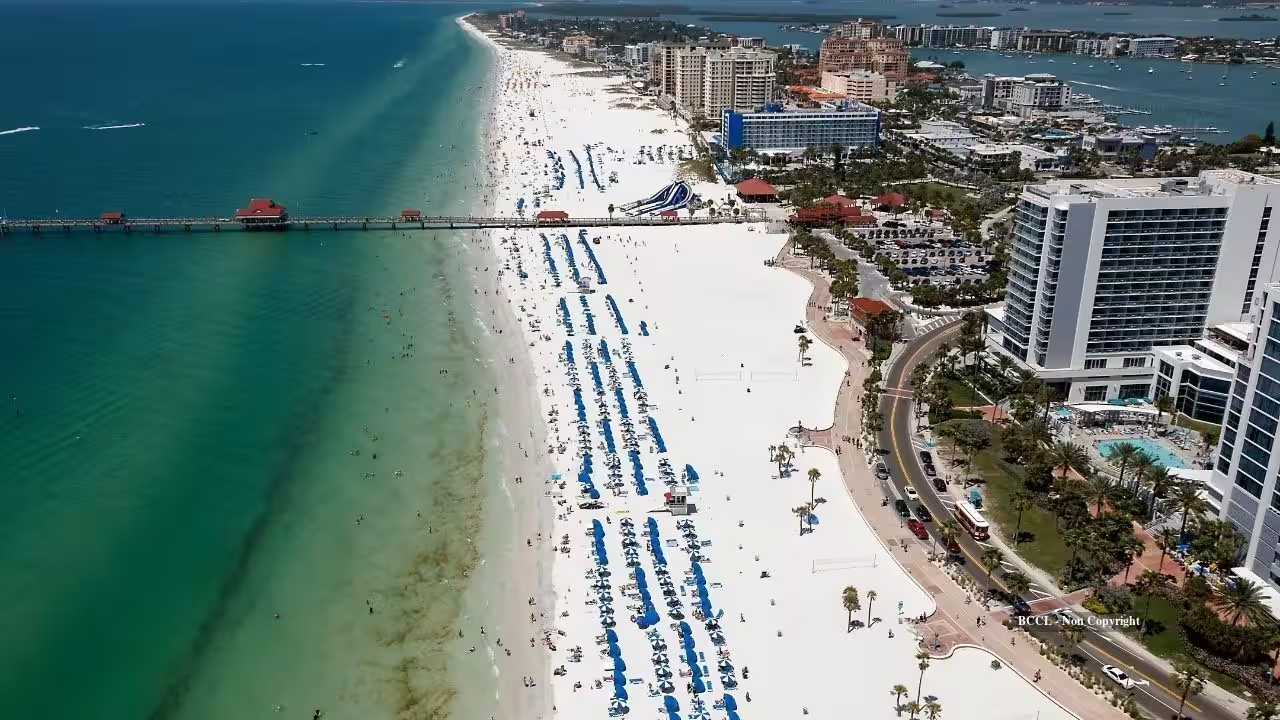
On one of the last large, undeveloped stretches of land near Clearwater Beach, a 42.57-acre family estate has sat on the market for $37.5 million, drawing attention from luxury buyers and conservationists alike. Now, the state of Florida has entered the picture, expressing interest in acquiring roughly 28 acres of the property to expand Caladesi Island State Park and protect critical coastal habitat. As reported by AOL and in preliminary evaluations by the Florida Natural Areas Inventory, the potential deal would preserve mangroves, tidal creeks and wildlife corridors while limiting future development on a key parcel along the Intracoastal Waterway. Read on to know more here:A rare large holding near Clearwater BeachThe estate, owned by a local family for decades, occupies a sprawling 42.57-acre site on the Clearwater Beach side of the Intracoastal, just south of the causeway that connects the barrier island to the mainland. In a region where most parcels have long been subdivided into condos, hotels and single-family homes, a holding of this size is exceptionally rare.The property includes a mix of developed and undeveloped land: a private residence, docks and outbuildings on a portion of the site, with the majority remaining as natural coastal habitat—mangrove forests, tidal wetlands, pine flatwoods and open meadows. That combination of location and natural character is what makes it both valuable to developers and attractive to conservationists.The $37.5 million listingThe family listed the estate for $37.5 million, positioning it as a once-in-a-lifetime opportunity for a buyer seeking privacy, water access and a large land bank in one of Florida’s most desirable coastal markets. At that price, the property is among the most expensive residential listings in the Clearwater area, reflecting not just the land’s size but also its waterfront position and development potential.For years, the owners have resisted pressure to sell or subdivide, preferring to keep the land intact. But as the family’s circumstances changed and the property’s maintenance costs grew, they decided to test the market, knowing that any sale would likely reshape this corner of Clearwater Beach.The state’s conservation interestAlmost as soon as the listing became widely known, state officials and conservation groups began looking at the property through a different lens. Caladesi Island State Park, which lies just across the Intracoastal from the estate, is one of the few remaining largely undeveloped barrier islands in the Tampa Bay region. The park protects beaches, dunes, mangroves and important nesting habitat for shorebirds and sea turtles.According to preliminary evaluations by the Florida Natural Areas Inventory (FNAI), the undeveloped portion of the Clearwater Beach estate, roughly 28 acres, contains high-quality natural communities that would significantly enhance the park if added to its boundaries. These include: mangrove forests and tidal creeks that serve as nurseries for fish and shellfish; coastal hammocks and pine flatwoods that provide habitat for native birds and small mammals; and buffer zones that help protect the park and neighbouring properties from storm surge and erosion.State agencies, including the Florida Department of Environmental Protection and Florida Forest Service, have begun exploring whether Florida Forever or other conservation funding programs could be used to acquire the land.Why this parcel matters for Caladesi Island State ParkCaladesi Island State Park is already a critical piece of the region’s conservation network, but it is surrounded by development on multiple sides. Adding the 28 acres from the Clearwater Beach estate would: expand the park’s footprint along the Intracoastal, creating a larger contiguous protected area; strengthen wildlife corridors that allow animals to move between habitats without crossing busy roads or developed zones; improve water quality by preserving mangroves and wetlands that filter runoff before it reaches the bay; and provide additional buffer against sea-level rise and stronger storms, which are increasingly threatening low-lying coastal parks.For conservation planners, the opportunity to add such a large, ecologically valuable parcel so close to an existing park is rare, especially in a heavily developed county like Pinellas.The family’s position and community reactionThe owning family has not publicly committed to selling to the state, but representatives have indicated they are open to discussions that respect both their financial interests and the land’s conservation value. Any deal would need to balance the $37.5 million listing price against what the state can realistically pay using available conservation funds, which are often limited and competitive.Local reaction has been mixed. Some residents and business owners worry that a state acquisition could limit future economic development or reduce the tax base. Others, including environmental groups and many neighbours, see the potential park expansion as a once-in-a-generation chance to lock in open space and protect wildlife in an area that has seen intense development pressure.Funding and the path forwardIf the state moves forward, the purchase would likely be structured through Florida Forever, the state’s landmark conservation program that uses bond funding to acquire high-priority lands for parks, greenways and wildlife corridors. The FNAI preliminary evaluation, which rates properties based on their ecological significance and urgency, is often a key step in determining which lands qualify for such funding.Even if the state cannot acquire the entire 28-acre conservation target immediately, there are other possible arrangements, such as: purchasing the land in phases as funding becomes available; using conservation easements to protect the habitat while allowing limited private use on certain portions; and partnering with nonprofit land trusts to bridge funding gaps and manage the property.What’s at stakeAt its core, this situation is about more than one family’s estate or one park’s boundary. It’s about how Florida chooses to manage its remaining coastal wildlands in the face of rising property values, population growth and climate change.If the state succeeds in acquiring the 28 acres, Caladesi Island State Park will gain a significant expansion that could protect critical habitat for decades to come. If the land is sold for private development instead, the area will likely see new homes, docks and landscaping that fragment the habitat and reduce the ecological connectivity that conservationists value.For now, the 42.57-acre Clearwater Beach estate remains on the market, a large, green swath on maps that are otherwise crowded with rooftops and roads. Whether it becomes part of a state park or a new luxury enclave will depend on negotiations, funding and the choices made by a family that has guarded this land for generations.Catch the latest World News and Live updates. Download the TOI app.
Topics in this story
Gathered from external sources. Rights to this text belong to whoever originally published it.