After roughly $2.8 million in federal, county and state funding backed a conservation easement, a 58-acre Utah ranch where 70 cattle still graze was permanently protected from development while remaining working land
A 58-acre family ranch in Utah's Heber Valley has been permanently protected from urban development following a funding package backed by federal, state
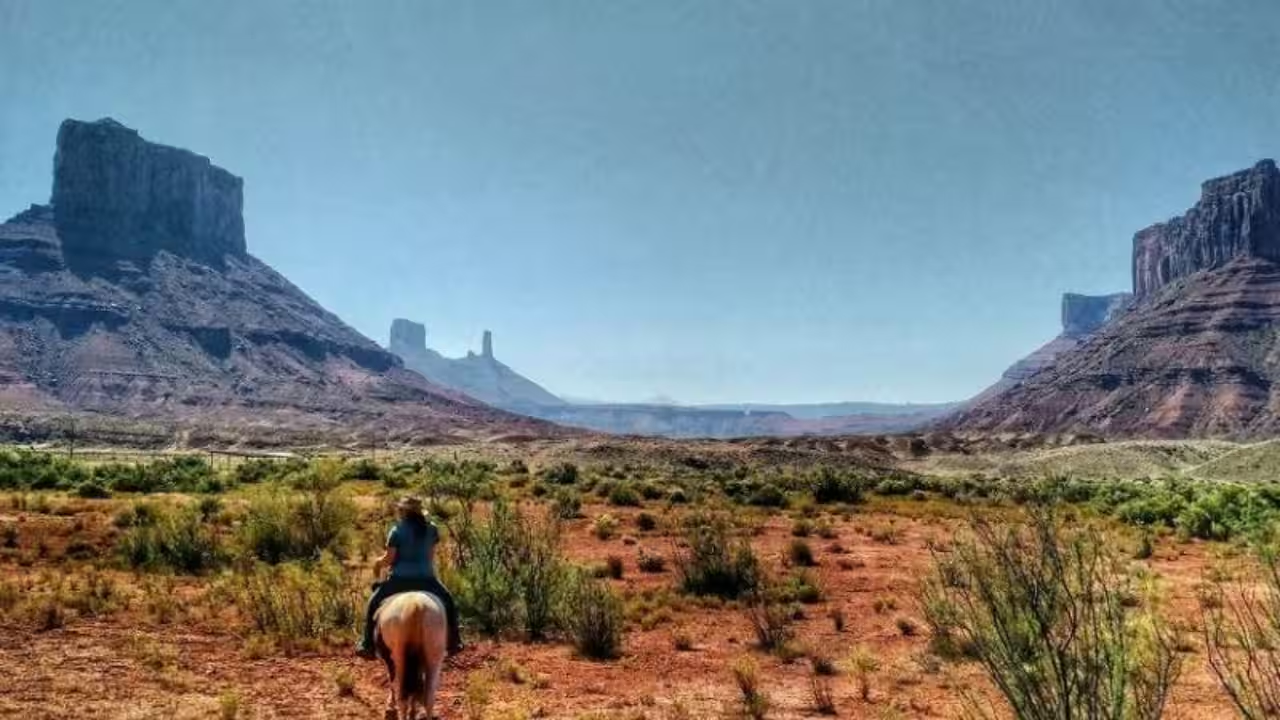
A 58-acre family ranch in Utah's Heber Valley has been permanently protected from urban development following a funding package backed by federal, state and local authorities. The Flying A Ranch Preserve, located in the historic North Fields area of Wasatch County, will remain an active agricultural property where 70 cattle continue to graze. The permanent conservation easement ensures the land cannot be subdivided into housing developments or commercial sites, preserving critical open space and water recharge systems in the rapidly growing region. According to updates released by the United States Department of Agriculture Natural Resources Conservation Service and non-profit land trust Utah Open Lands, the protection effort required nearly $2.8 million in total public funding. The financial agreement secures the working land while keeping ownership in private hands with the Giles family, who have farmed the area for generations.Funding structure and conservation termsThe protection of the 58-acre parcel relied on a combination of federal agricultural grants and regional open space preservation funds. Official records published by the Natural Resources Conservation Service indicate that the federal Agricultural Conservation Easement Program contributed significant funding toward purchasing the development rights. Additional funding was secured through Wasatch County open space bond revenues and state conservation grants administered by Utah authorities. Under the terms of the legally binding easement held by Utah Open Lands, the land will remain available for agricultural use, including livestock grazing, hay production and irrigation management. The deed restrictions attach permanently to the property title, preventing future owners from selling the land for residential subdivisions or commercial projects regardless of local zoning changes. Regional agricultural officials noted that preserving working farms helps maintain the local economy while protecting vital environmental systems in the Heber Valley.Protecting water systems and agricultural heritageThe Flying A Ranch sits within the North Fields, a scenic expanse of flood-irrigated farmland positioned beneath the Wasatch Mountains. Beyond livestock production, local environmental data highlighted by Utah Open Lands shows the agricultural acreage serves as an essential natural recharge zone for regional groundwater aquifers. Surface irrigation on unpaved fields allows water to seep slowly into the ground, replenishing underground aquifers that feed drinking wells throughout Wasatch County. Soil scientists and local agricultural groups noted that replacing these fields with asphalt and concrete would eliminate the natural filtration and aquifer storage capacity that the valley relies on. The property also provides winter habitat and migration corridors for local wildlife, including elk, mule deer and resident bird species moving through the Provo River watershed. Landowner Chadd Giles expressed relief that the long project had reached completion, preserving his family's working history on the land. "Dad's real glad this is done," said Chadd Giles in a statement published by Utah Open Lands regarding his father, Alan Giles. "He's sleeping better now that it is protected." With the conservation easement fully recorded, the Giles family retains full operational control of the ranch and can continue running their cattle herd without risk of forced sell-offs driven by rising property tax valuations and regional development pressures.Development pressures in the Heber ValleyThe preservation of the Flying A Ranch comes amid growing concerns over rapid population expansion and commercial development across Wasatch County. Reports published by Utah Open Lands and local news outlet TownLift detail how proximity to Salt Lake City and Park City has driven up real estate values throughout the Heber Valley, placing intense financial pressure on farming families to sell land to housing developers. The North Fields area has also been the subject of ongoing regional transportation discussions. The Utah Department of Transportation has conducted environmental impact studies to evaluate potential bypass routes designed to relieve traffic congestion along main thoroughfares in Heber City. Local conservation groups and residents have advocated for agricultural easements to ensure key agricultural corridors remain intact while state planners assess road design options. The designation of agricultural conservation easements in the valley provides formal federal recognition of the area's agricultural significance, opening up further funding streams for nearby landowners seeking similar protections. Utah Open Lands confirmed that the Flying A Ranch project forms part of a larger regional conservation effort known as the Heartland of the Heber Valley initiative. The program aims to safeguard more than 300 additional acres of contiguous farmland across multiple properties in Wasatch County, using public grant matches and private philanthropic donations to keep local agriculture viable for future generations.You use AI every day. Now get your AI Quotient. Take the AIQ test.
Topics in this story
Gathered from external sources. Rights to this text belong to whoever originally published it.