In 2015, volunteers removing litter from an Irish beach spotted an unknown prehistoric shell midden, adding a newly recorded archaeological site to Sligo’s coastline
In a remarkable find during a beach clean in County Sligo, Ireland, volunteers uncovered a prehistoric shell midden, adding to the region's archaeological significance. This discovery highlights the risks posed by coastal erosion to ancient sites.
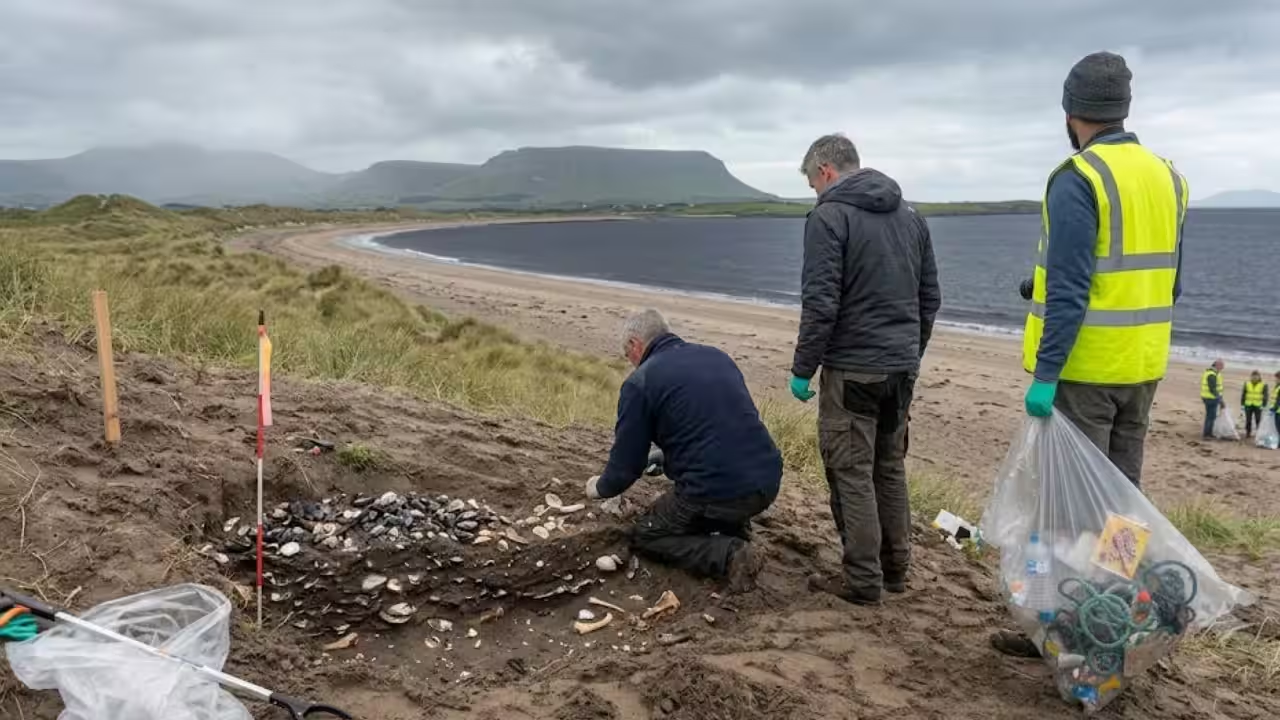
A routine beach clean is usually measured in bags of plastic, bottles and other debris removed from the sand. But in May 2015, a group of volunteers on Ireland’s County Sligo coast came across something far older. While clearing litter at Rosses Point, Martina Butler noticed a thin, unusual layer of oyster shells exposed along the edge of a dune.According to the MASC Project, the discovery initially appeared out of place among the modern rubbish. The shells were later identified as a possible prehistoric midden, a refuse deposit left by people who gathered and ate shellfish. The find mattered not only for its archaeological value, but also because a member of the public spotted it without formal archaeological training.A shell layer hidden beneath the dunesButler was participating in a beach clean-up organised by the North West Sea Kayaking Association under the 'Clean Coasts' initiative. It was on 15 May 2015 that Butler observed this distinctive shell layer along with burnt material in the darker sediment layer underneath. She had previously seen middens elsewhere on the Sligo coast, so she suspected this feature could also be archaeological. She took photographs of the site and then notified the Monitoring the Archaeology of Sligo’s Coastline, or MASC, project the next day. This mattered because shell deposits on beaches are not always archaeological in origin. Waves have been known to gather the shells at the high-tide mark, while fires on the beach create artificial charcoal and stones.A member of MASC visited the site, recorded its GPS coordinates and photographed the visible remains. The dense collection of oyster and periwinkle shells, along with charcoal in the deposit, strengthened the case that people had used the site. The Archaeological Survey of Ireland also checked it out. Eleven days after the discovery by Butler, it was registered as an archaeological monument under RMP No. SL008-203.What the midden revealedThe newly uncovered midden is small. Its deposit is about 6.5 metres long and 1.2 metres in width, while its depth varies from just a few millimetres to about 10 centimetres. It is composed mainly of oysters, along with some periwinkles, stones and charcoal. For archaeologists, such waste can provide information about how the coast was used in the past. Middens are food waste deposits that can reveal what people collected and ate. Shell types, charcoal, and other waste can be used by scientists to study the ways the coast was utilised and whether there was repeated or brief settlement.Research on shell middens has shown how these deposits can preserve evidence of long-term relationships between coastal communities and marine resources. Work published in the Journal of Archaeological Science has demonstrated the value of analysing shell assemblages and their surrounding deposits to reconstruct past human use of coastal environments. The Sligo find could not be dated precisely. According to the researchers at MASC, middens in Ireland can range from the Mesolithic Era, circa 8,000-4,500 BC, all the way up until later periods. However, the thin layer of material at the Rosses Point site may indicate a brief, possibly seasonal occupation.When erosion uncovers the pastHowever, the discovery also came with a risk. The erosion of the dunes that uncovered the site was also putting it at risk. The deposit lay beneath dune sand on a harder stone surface. Tides and storms in 2014 and 2015 eroded the dune and exposed the archaeology. For example, the MASC Project was created because erosion and storms kept revealing archaeological sites along the Sligo coast. In 2015, it was reported that there were 148 sites at risk of archaeological monuments located only 10 meters away from the coast, where five new monuments not previously identified were discovered through citizen science.The findings of later archaeology in Sligo have further confirmed the fragility of such coastal deposits. Shell middens have been recorded as being exposed in eroding cliffs and dunes, with some sites containing shell, faunal bone, charcoal, and fire-cracked rocks. The researchers have warned that any future storms could remove archaeological evidence before it is recorded. Butler’s discovery was not only an unusual beach-cleaning find; it also showed how people using the coastline can act as extra eyes for archaeologists.You use AI every day. Now get your AI Quotient. Take the AIQ test.
Topics in this story
Gathered from external sources. Rights to this text belong to whoever originally published it.