In 2025, experts linked Mark Sell’s nine-inch-deep Norfolk find to Bishop Hugh de Northwold; the medieval ring sold for about $24,000 after centuries underground
A rare medieval ring belonging to Bishop Hugh de Northwold, discovered in Norfolk by Mark Sell, sold for about $24,000 at auction, highlighting the value of historical artifacts.
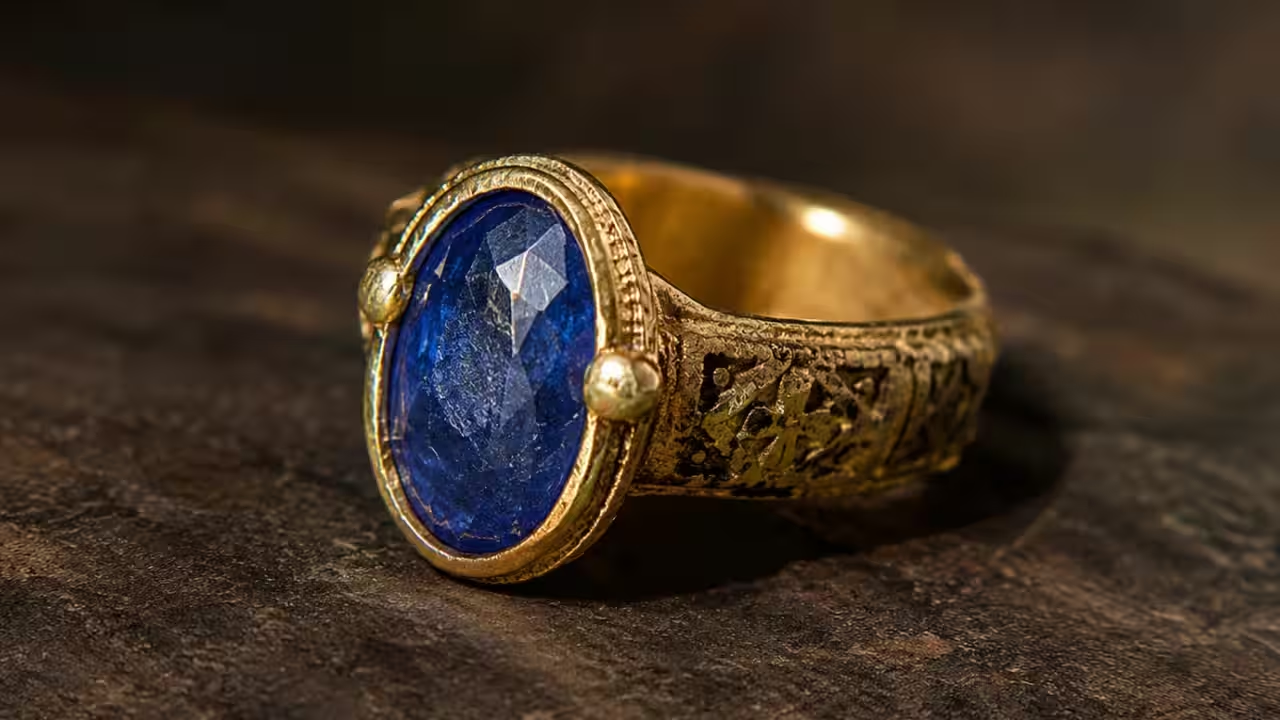
Shipdham is a village in Norfolk, England, set among farmland west of Norwich. King Row is a lane within the village. Metal detectorists in England search farmland with the landowner’s permission and must report certain finds. National Jeweler published its story on the find on March 12, 2025. The auctioneer Noonans Mayfair stated in a press release that Mark Sell found the ring on a cold, sunny day when the light was fading. He had gone out for a walk with his friend Richard Girling and was carrying an XP Deus metal detector, which he had used only a few times before.Sell, a retired firefighter, got a faint signal and decided to dig, NPR reports. The ring lay about nine inches below the surface, according to Smithsonian magazine. Sell later said he first saw a thin line of gold in a cloud of mud, and as he wiped it away he recognized the bezel of a jewelled medieval ring. He added that it was complete, with every stone in place.The ring’s design and the case for Bishop Hugh de Northwold, who served from 1229 to 1254Smithsonian describes a gold ring with a hexagonal cabochon sapphire surrounded by two emeralds and two stones that could be either garnets or rubies, and NPR carries Sell’s own description of the setting. Smithsonian says the auction listing named a possible former owner of the piece: Hugh de Northwold, bishop from 1229 to 1254.Reporting the find through the Portable Antiquities Scheme and the Treasure Act processSell first shared the discovery with the landowner, NPR reports, and then reported it to his local finds liaison officer, who works for the Portable Antiquities Scheme. Under the Treasure Act 1996, finders must report potential treasure to the local coroner, the British Museum explains. A museum may then acquire the find. The Treasure Valuation Committee sets the likely market value of treasure, and the UK government’s page on the committee calls a 50:50 division of rewards between finder and landowner normal practice unless the two agree otherwise. Norwich Castle Museum expressed interest in acquiring the ring, but it was ultimately sold at auction.The March 26, 2025 Noonans Mayfair sale and the £19,000 hammer priceThe Irish News reported a pre-sale estimate of £15,000 to £18,000. Noonans auctioned off the ring in lot 88 on March 26, 2025, in its Jewellery, Silver and Objects of Vertu sale in London. Noonans lists the hammer price as £19,000, above the top of that estimate. Professional Jeweller notes that someone in the trade bought it. Smithsonian gives the price realized as approximately $24,000 (US dollars).Sell, who is 63 and lives in Swaffham, told the Thetford and Brandon Times that he would spend his share of the proceeds on a special holiday. The Press Association reports that the proceeds were to be divided between Sell and the landowner. According to Noonans, a posy ring Sell found near Thetford in 2024 sold for £11,000, bringing the two-ring total to £30,000.You use AI every day. Now get your AI Quotient. Take the AIQ test.
Topics in this story
Gathered from external sources. Rights to this text belong to whoever originally published it.