In 1997, Ted Turner opened his New Mexico ranch to endangered Mexican wolves; the facility became a major breeding centre for animals released into the wild
US News: In 1997, Ted Turner’s Ladder Ranch in south-central New Mexico became part of an ambitious attempt to rescue the Mexican wolf from extinction. Rather .
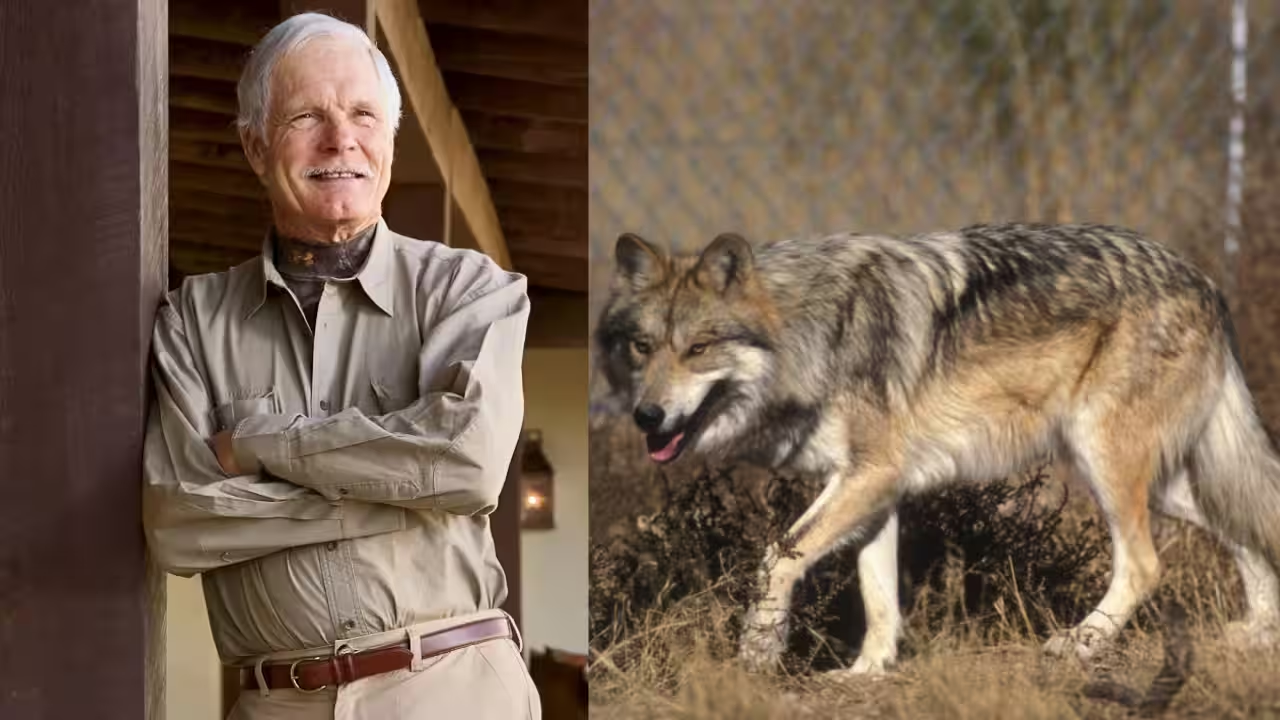
In 1997, Ted Turner’s Ladder Ranch in south-central New Mexico became part of an ambitious attempt to rescue the Mexican wolf from extinction. Rather than treating his vast ranchland simply as private property, Turner helped create a wolf management facility where endangered animals could be housed, bred and prepared for a return to the wild. The Mexican wolf, a distinct subspecies of grey wolf, had been driven from much of its former range by persecution and predator-control campaigns. The U.S. Fish and Wildlife Service says the last wild Mexican wolves were captured in the 1970s and used to establish a captive breeding programme. By 1998, wolves from that programme were being released in Arizona and New Mexico. Ladder Ranch became an important link in that process, providing a controlled setting where wolves could reproduce and acclimatise while retaining natural behaviour. Decades later, the facility remains closely tied to efforts to rebuild wild Mexican wolf populations across the Southwest today.How Turner’s private ranch became a conservation facilityThe Ladder Ranch Wolf Management Facility was established in 1997, the same year Turner and his family helped create the Turner Endangered Species Fund. According to TESF, it is one of three primary captive pre-release facilities in the Mexican wolf recovery programme. Animals can be housed, selectively bred and prepared for release, while wolves removed from the wild can temporarily return to managed care. TESF describes the facility as a “halfway house” between traditional captive facilities and the wild. Because Mexican wolves descended from a very small founding population, population growth and genetic management are central to recovery. Ladder Ranch became part of the conservation infrastructure needed to give wolf reintroduction a realistic chance for the recovery programme and reintroduction.The Mexican wolf had come dangerously close to extinctionThe Mexican wolf, Canis lupus baileyi, once ranged across parts of the southwestern United States and Mexico. Decades of persecution and government-sponsored predator-control programmes nearly erased it from the wild. The U.S. Fish and Wildlife Service says wildlife biologists captured the last five remaining wild wolves to establish a captive breeding programme. The programme began with seven founding wolves. That history explains why every animal matters. Recovery requires increasing numbers without losing genetic diversity or behaviours needed for life in the wild. The Service says captive facilities manage reproduction so wolves selected for release retain genetic diversity crucial to success. Ladder Ranch gave conservationists another carefully managed place to breed, hold and prepare wolves for reintroduction across the Southwest.A long-term experiment in bringing a predator backThe work at Ladder Ranch has extended well beyond its original 1997 breeding role. According to AP News, the sprawling property spanning more than 243 square miles in southern New Mexico has worked with the U.S. Fish and Wildlife Service for years, hosting not only Mexican wolves but a wider range of endangered-species projects run through the Turner Endangered Species Fund, from Bolson tortoises to black-footed ferrets and aplomado falcons. As reported by AP News, in 2021 the ranch took a further step by agreeing to host a translocated pack of wild Mexican wolves a mated pair and their pups moved from a wildlife refuge in central New Mexico to help boost the genetic diversity of the wild population. Federal officials told AP News the ranch's Seco Creek area, with its grasslands, pine forest and large resident elk herd, was chosen partly because of its distance from active livestock grazing allotments on the Gila National Forest.A partnership that has weathered controversyThat partnership has not been without friction. The ranch's role in the recovery programme has, at times, run into local political resistance. In 2015, New Mexico wildlife regulators declined to renew a permit in place for 17 years that had allowed the ranch to continue supporting the federal wolf programme. The U.S. Fish and Wildlife Service said at the time that Ladder Ranch had been "an excellent partner in the recovery of Mexican wolves" and called itself "disappointed" in the commission's decision; the permit was later reinstated. Even so, the ranch has continued to serve as a site where wolves can be released into the wild or temporarily withdrawn from it, underscoring how a private ranching operation became, in AP News' account, an unusually durable piece of infrastructure in one of the country's most contested endangered-species recovery efforts.Catch the latest World News and Live updates. Download the TOI app.
Topics in this story
- Ted Turner Ladder Ranch
- Mexican wolf recovery programme
- Ladder Ranch Wolf Management Facility
- Turner Endangered Species Fund
- Mexican wolf reintroduction New Mexico
- Ted Turner wildlife conservation
- Canis lupus baileyi recovery
- endangered Mexican wolf breeding
- Ladder Ranch New Mexico
- US Fish and Wildlife Service wolf programme
- World news
- World news today
Gathered from external sources. Rights to this text belong to whoever originally published it.