US midterm election results 2026: Top 10 winners and losers
Trump asked America to pretend he was on the ballot. On Wednesday, voters delivered their verdict on his presidency anyway.
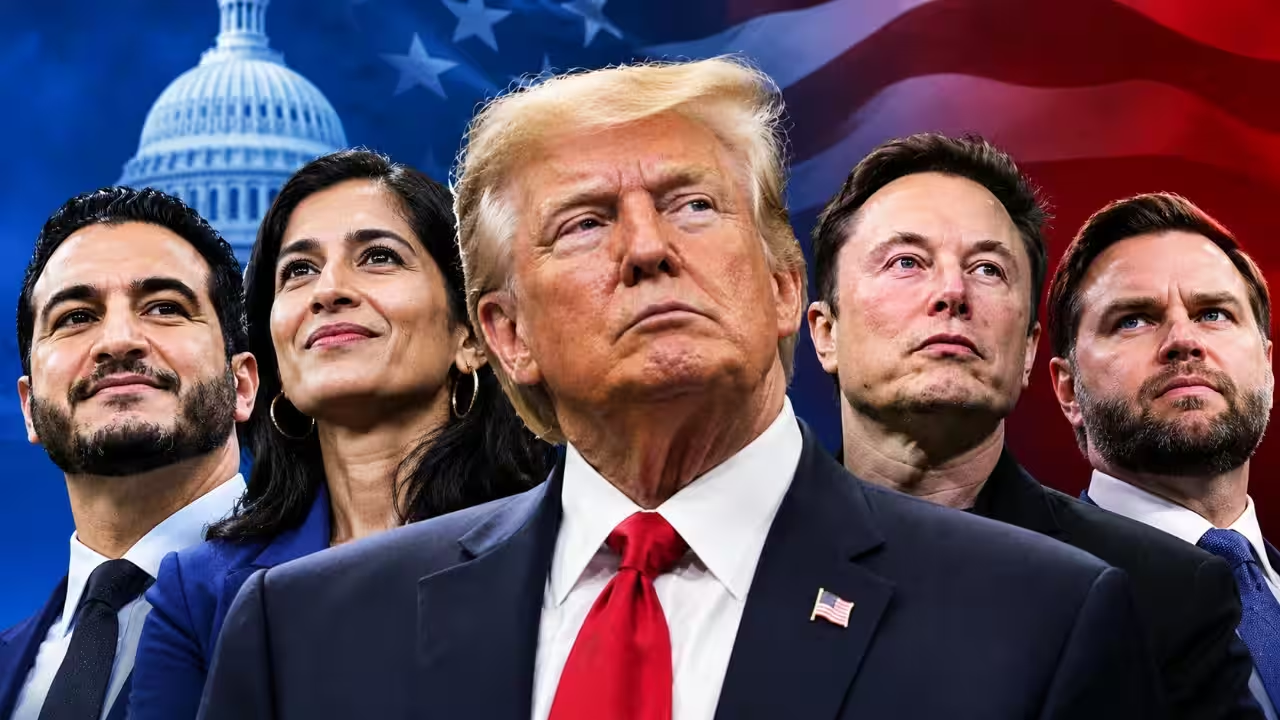
Trump asked America to pretend he was on the ballot. On Wednesday, voters delivered their verdict on his presidency anyway.A historic Democratic wave swept across the United States, handing the party control of both chambers of Congress and delivering a sweeping rebuke to President Donald Trump and his Republican allies. The results went well beyond the usual midterm setback for a ruling party as Democrats made breakthroughs in states and constituencies that had remained Republican strongholds for decades, signalling a dramatic shift in the political mood halfway through Trump's second presidency.The scale of the reversal was particularly striking in the Senate. Democrats captured seats in Kansas, Texas, South Carolina, Iowa, North Carolina and Ohio while also making significant gains in the House of Representatives. The party's resurgence extended to statehouses, where Democrats won governorships and dismantled Republican legislative advantages. In Texas, a state that had not elected a Democratic governor since the 1990s, Gina Hinojosa's victory was emblematic of the scale of the shift.Follow US midterm results 2026 live updatesThe results also exposed the limits of Trump's personal influence. He had urged supporters to treat the midterms as a referendum on his presidency and invested heavily in candidates who embraced his MAGA agenda. But several of his high-profile endorsements failed to translate into victories. Republican losses in traditionally conservative territory, alongside reversals among Latino and rural voters, suggest that the electoral coalition that powered Trump's return to the White House is facing fresh challenges.Here are top 10 winners and losers of US midterm elections 2026:WINNERS1. DemocratsWith a sweeping return to power in Washington and a resurgence across Middle America, the Democratic Party has achieved what appeared difficult just months ago. Its victories in Texas, Kansas, South Carolina and Iowa are particularly significant because these states had become increasingly difficult terrain for Democrats.The party also made inroads among Latino voters and in rural constituencies, reversing some of the gains Republicans had made during the Trump era. In the Rust Belt and Great Plains, Democrats have reclaimed ground in states such as Ohio, Michigan, Minnesota and Iowa.The victory gives Democrats control of congressional committees, investigative powers and the ability to obstruct Trump's legislative priorities. Just as importantly, the party now has a new generation of potential national leaders emerging from state-level victories. The challenge will be converting this anti-Trump wave into a sustainable political coalition ahead of 2028.2. Abdul El-SayedEl-Sayed's victory in Michigan is one of the most consequential individual outcomes of this election. The 42-year-old physician and former public health official defeated Republican Mike Rogers, making history as the first Muslim ever elected to the US Senate. His victory marks a significant milestone for Muslim representation in American politics, particularly at a time when debates over immigration, identity and America's role in the Middle East have become increasingly polarised.His victory is also significant for the Democratic Party's ideological debate. El-Sayed ran on a progressive platform centred on universal healthcare, working-class economics and restrictions on American military support for Israel.He had faced resistance from sections of the Democratic establishment, while outside groups spent heavily against him. His campaign's success demonstrates that progressive candidates can compete in electorally important states despite opposition from powerful political and financial interests. It could also strengthen the progressive wing's voice in debates over US policy in the Middle East.3. Indian-AmericansThe Indian-American community consolidated its presence in US electoral politics, with victories across congressional and state-level contests.Democrat Pia Dandiya won Florida's 22nd Congressional District, while incumbent Suhas Subramanyam secured re-election in Virginia. Maryland Lieutenant Governor Aruna Miller also won another term alongside Governor Wes Moore.4. IranIran has emerged as a most important beneficiary of the Democratic victory, particularly as Trump's handling of the conflict becomes a subject of greater congressional scrutiny.The administration's military actions against Iran have been politically contentious. With Democrats now controlling Congress, the White House faces a more difficult environment for securing legislative support, defending military expenditure and managing the domestic political consequences of an extended conflict.The change does not give Tehran a veto over American military action as Trump retains considerable authority as commander-in-chief, but the political calculations have changed. Congressional investigations, funding debates and demands for greater accountability could raise the domestic cost of escalation with Iran.5. IndiaFor New Delhi, the Democratic win could open up a fresh opportunity to recalibrate its trade negotiations with Washington. A politically weakened Trump may be keen to secure a quick trade deal with India to demonstrate economic and diplomatic success, particularly after facing setbacks involving Russia, China and Iran, according to Ajay Srivastava, founder of the Global Trade Research Initiative (GTRI).While the Democratic victory is unlikely to change the broader protectionist trade approach of the US, it could allow India to push for a more balanced agreement.LOSERS6. Donald TrumpThe midterm results handed out the biggest political setback to Trump and his second presidency. By losing both chambers, Republicans have surrendered the legislative advantage that allowed the president to pursue his agenda with relatively little resistance.Trump had personally invested himself in the election, urging Republicans to vote as though he were on the ballot. But his endorsements failed to save several prominent candidates, while Democrats made breakthroughs in traditionally Republican territory.The consequences could be substantial. Democratic-controlled committees can investigate the administration, scrutinise government contracts and spending, summon officials and demand documents. Trump's legislative priorities, including further tax and spending measures, will face a hostile Congress.He still retains executive powers, particularly in foreign policy and trade, but governing will become considerably more difficult. The results also raise a bigger question for Republicans: can Trump's political formula continue to deliver victories beyond his own presidential campaigns?7. Elon MuskTesla and SpaceX chief's massive political investment failed to deliver the Republican congressional victory he was seeking. The world's richest man spent around $366 million on the 2026 midterm election by October, making him one of the biggest political donors in the country.His America PAC backed Republican candidates in several competitive races, including Texas, Ohio and Michigan. The Texas Senate contest was particularly important as Musk's political operation supported Republican Ken Paxton against Democrat James Talarico.Paxton lost, while Democrats also made significant gains in other races where Musk-backed candidates were competing.The implications, however, may be far beyond the capital loss. Musk has benefited from his proximity to the Trump administration, particularly through his involvement in government efficiency initiatives and his business interests. A Democratic-controlled House could increase scrutiny of federal contracts, regulatory decisions and his previous government role.8. Vivek RamaswamyRamaswamy's defeat in Ohio is a setback for a politician who had emerged as one of the most prominent younger faces of the Trump-aligned Republican movement.Despite Trump's backing and his national profile, Ramaswamy could not convert his political visibility into a gubernatorial victory. Democrat Amy Acton defeated him, becoming the first woman elected governor of Ohio.Ramaswamy had positioned himself as a representative of a new generation of Republican leadership. His campaign also drew on themes that had become central to the MAGA movement, including opposition to progressive politics and an aggressive approach to government reform.His defeat therefore raises questions about whether the political appeal of the Trump movement can be successfully transferred to younger candidates.It also complicates Ramaswamy's own political ambitions and his national profile.9. JD VanceThe midterm results pose a direct challenge for JD Vance, who has been widely discussed as a potential successor to Trump in 2028.As vice-president, Vance was among the administration's most prominent campaigners, defending Trump's agenda and rallying Republican voters. But the results have exposed the vulnerabilities of the political coalition he may eventually seek to inherit.The losses in Ohio are especially relevant. Ramaswamy's gubernatorial defeat and Republican Jon Husted's Senate loss represent a setback in Vance's home state.The larger problem is the Republican succession battle. Vance's appeal has been closely associated with Trump's political movement, but the midterms raise questions about his influence.The vice president now faces a complicated political task - retain the loyalty of Trump's core supporters while developing an identity that can attract a wider electorate. The 2028 Republican race remains open, but the midterms have made the path to becoming the undisputed heir to MAGA less straightforward.10. Israel lobbyThe election has exposed growing resistance to the traditional pro-Israel consensus in American politics, particularly within the Democratic Party.The most prominent example is Michigan's Abdul El-Sayed, whose opposition to unconditional American military support for Israel became a defining feature of his campaign. His victory came despite substantial spending by pro-Israel political groups against him.According to campaign finance data compiled by VoteLog, the United Democracy Project, AIPAC's affiliated super PAC, spent more than $30 million in the Michigan Democratic Senate primary, including over $20 million opposing El-Sayed.His subsequent victory in the general election gives progressive Democrats a prominent example to cite in their argument that criticism of Israeli government policy and American military assistance need not be an electoral liability.The implications for AIPAC and other pro-Israel lobbying organisations could be significant. They will continue to have financial resources and access to lawmakers, but the political environment within the Democratic Party is changing. The question is whether their traditional influence over candidate selection and foreign-policy debates can withstand a more vocal progressive challenge.Bonus losers: Asim Munir and Shehbaz SharifPakistan's renewed engagement with Washington under Trump could face a more complicated political environment after the Democratic takeover of Congress.Islamabad has invested heavily in rebuilding its relationship with the Trump administration, with PM Shehbaz Sharif and army chief Asim Munir cultivating closer ties with the US president. Pakistan has also sought to position itself as an important interlocutor in the Iran conflict, while pursuing cooperation on trade, minerals and security.Much of this diplomatic momentum has been associated with Trump's personal engagement and the administration's regional priorities. A Democratic-controlled Congress could now subject aspects of that relationship to greater scrutiny.After the loss of Trump's party, Islamabad may find that personal access to the president is no longer sufficient.You use AI every day. Now get your AI Quotient. Take the AIQ test.
Topics in this story
Gathered from external sources. Rights to this text belong to whoever originally published it.