Meet Heléna Muirhead-Hunt, the student who discovered a new fossil species 551 million years old, linked to ancient comb-jellies
A Memorial palaeobiology graduate student has discovered a new fossil species in rocks from Newfoundland that are dated to 551 million years old.
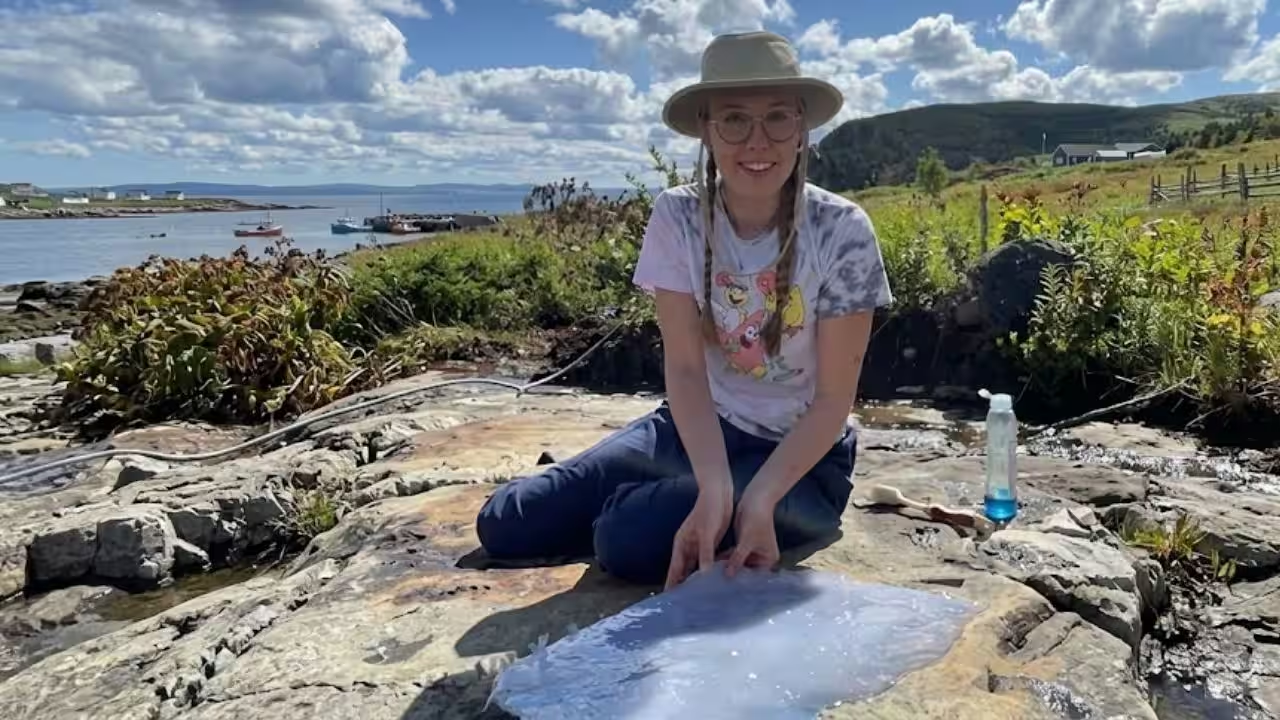
A Memorial palaeobiology graduate student has discovered a new fossil species in rocks from Newfoundland that are dated to 551 million years old. Heléna Muirhead-Hunt found the fossils at Inner Meadow in Upper Island Cove, a site known for preserving soft-bodied organisms without shells or bones. According to Memorial University’s Gazette, most fossils found there belong to the Ediacara biota, which includes proto-animals such as fractal-like rangeomorphs.She said, “But when we uncovered the first specimen of our new fossil, we knew that we were onto something really special.” Her supervisor, Dr Duncan McIlroy, suggested comparing it with ctenophores, also known as comb-jellies. The new species has been named Edrathina obditchia.How Heléna Muirhead-Hunt found a 551-million-year-old fossilHeléna Muirhead-Hunt found the new fossils at Inner Meadow in Upper Island Cove, Newfoundland. The site contains Ediacaran-aged rocks dated to 551 million years old and is known for the exceptional preservation of soft-bodied organisms without shells or bones. Most fossils at the site belong to the Ediacara biota of proto-animals, including the fractal-like rangeomorphs for which Newfoundland is known.When Muirhead-Hunt uncovered the first specimen of the new fossil, she showed it to her supervisor, Dr. Duncan McIlroy. He suggested that she compare it with ctenophores, an important group of organisms also known as comb-jellies. The oldest known ctenophores were 20 million years younger than the fossils Muirhead-Hunt had discovered at Inner Meadow.What makes the fossil different from modern comb-jelliesThe fossils were found to be closest to a group of stem-ctenophores known from the much younger Burgess Shale fossil site in British Columbia. Modern comb-jellies are centimetre-sized blobs of jelly with longitudinal comb-rows that shimmer in waves of rainbow colours when they swim. Their ancient relatives, known as stem-ctenophores, were sedentary.Ctenophores are important to biologists and palaeontologists because scientists have long studied their place in the history of animals. Scientists have puzzled over what might have been the earliest animal ancestor since Darwin’s time. Sponges were long considered the simplest animals. More recently, scientists have debated whether sponges or ctenophores came first in the history of animals, a question researchers have argued mostly on genetic evidence.Why Edrathina obditchia is important to the fossil recordThe new fossil species has been named Edrathina obditchia. Muirhead-Hunt said, “Since we know the Beothuk word for comb is “Edrathin” and “Obditch” is beast, combining them into the new name seemed like a fitting tribute to the culturally extinct Beothuk people of Newfoundland”. Muirhead-Hunt and McIlroy note that the fossils were closest to stem-ctenophores. Their finding is significant because the oldest known ctenophores were 20 million years younger, leaving a gap in the fossil record.The new fossil and the history of early animalsThe discovery provides new fossil evidence to the debate over the earliest animal ancestor. Sponges were once considered likely leading possibilities because modern sponges have a simple body plan without muscles or a nervous system. However, scientists found that sponges have inactive genetic coding for these animal characteristics, raising questions about how primitive they really are.Another hypothesis suggests that ctenophores may have branched from the animal tree of life before sponges evolved. Much of this debate has focused on genetic evidence. Until now, the lack of Ediacaran ctenophore fossils left an important gap in the fossil record. Muirhead-Hunt said the team believes the new fossil may help fill this 20-million-year gap in the history of ctenophores.You use AI every day. Now get your AI Quotient. Take the AIQ test.
Topics in this story
Gathered from external sources. Rights to this text belong to whoever originally published it.