Their side gig involves an NDA, a Manhattan high-rise and occasional pruning. Welcome to the weird world of polyworking.
Even though they make $85,000 as a mixologist for a liquor supplier company, this 37-year-old is supplementing their income with a side gig you can't find on...
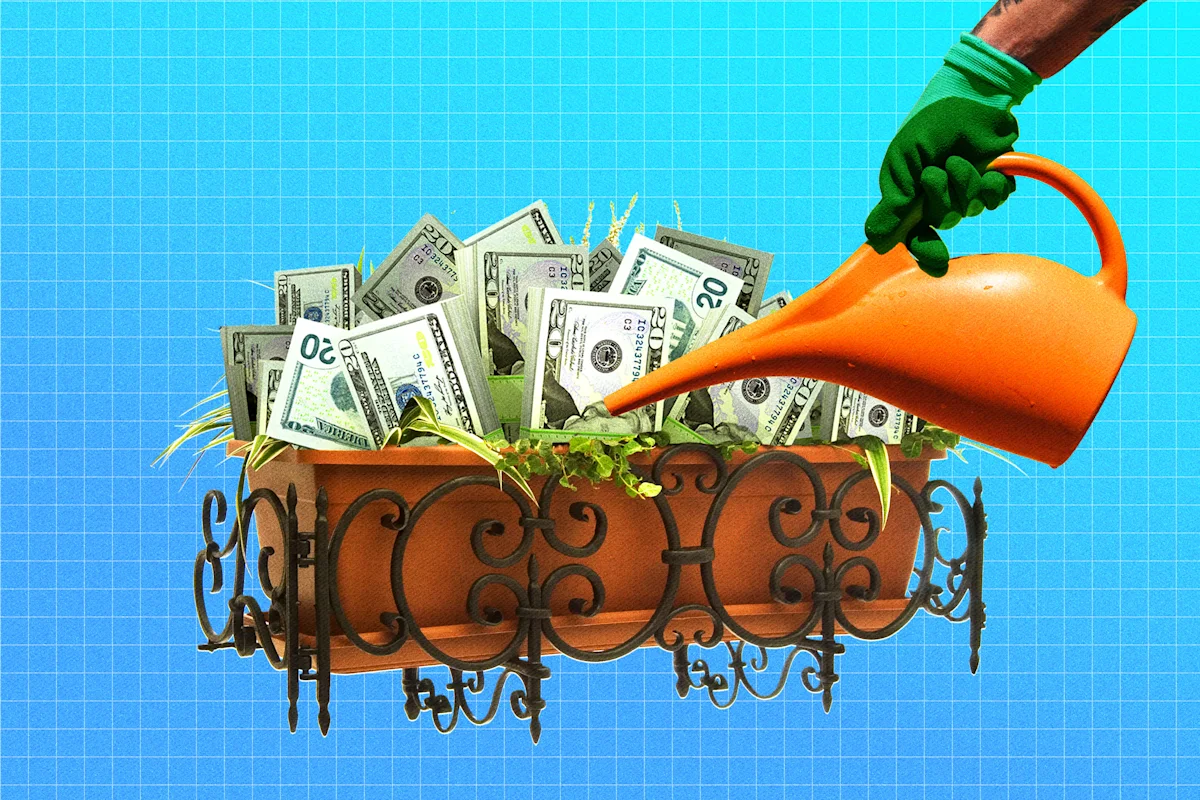
For many millennials and Gen Z-ers, the dream of lasting economic stability — being able to afford a house, raise a family and retire comfortably someday — can seem elusive. Survey data shows that younger workers are feeling far more pessimistic about the job market than older workers and jaded about their prospects , amid soaring housing costs, AI anxieties and the pressure to live a life that looks good enough for Instagram.
But Americans have always been enterprising, so enter: the weird side gig. Last year, the New York Times reported that the number of people in the U.S. with multiple full- or part-time jobs rose to over 8.9 million, the highest figure since the government began tracking the metric in 1994. Terms like " quiet cracking " and "polyworking" entered the cultural lexicon to describe young people who were becoming disillusioned with the corporate ladder and turning to multiple streams of income in order to keep up with their living expenses.
This isn't your average babysitting, dog-walking side gig. It's a big, online world, and the hustles are getting more inventive. Whether it's an accountant flipping Pokémon cards, a mixologist doing private gardening or a project manager moonlighting as a gift-wrapper, you'd be surprised at the infinitely strange ways people are making a bit of extra cash. In this recurring feature, I'll be speaking to some of the young people who are getting creative with how they earn their money.
Phil, 37, works at a spirits distributor full-time as a mixologist. It's a chill gig, they told me when we met up for coffee, with health insurance and a regular paycheck. They were hired for the job after their restaurant went underwater last year. It mostly involves working with businesses to develop drinks and pairings, and it pays them around $85,000 before bonuses or benefits. But life is expensive, and they have debt, which means they still have a side gig.
Phil's part-time hustle is certainly not something you'd spot on LinkedIn. They're a gardener at a private corporation in Manhattan, a firm so top-secret that even the part-time plant keeper needs to sign a nondisclosure agreement about the nature of the company's work (that's why Phil has asked to remain anonymous). But they shared some of the details with me in our furtive in-person meeting.
Gardening is perhaps an overstatement of what Phil says he actually does on the 28th floor of a Manhattan high-rise. "I am mostly just sort of like, caretaking. There's not much for me to add because it's challenging conditions," they said. "Lots of wind… We're mostly talking about juniper, cultivated wild grasses, just because that's what can take the conditions."
Phil is asked to tend to the balcony garden once or twice per week. They mostly have to prune and weed, because sometimes, weeds do sprout up on the 28th floor of a concrete box in the middle of the biggest city in the country.
"We recently had a patch of mushrooms come out of nowhere, and I was like, wow, life finds a way ," they laughed. "It's this private lounge, built by a consulting company. I don't even know how Googleable they are. In fact, I do know that they're not very [Googleable], because I did."
Phil first got connected to the company as a bartender. A former colleague had worked with the company as a private mixologist before, and when Phil mentioned that their business was closing, recommended Phil for the job.
"So I started there just doing some of their events, you know, just like a bartending thing," they said. "There were crazy guests right off the top, and I was just like, what is this place? I did that several times, and when spring was rolling around, I heard them talking about how their gardening company was wanting $1,000 a month to come and water. So I said I'd do it for my bartending rate, which is $100 per hour."
A spirits expert who's worked in the industry for over a decade, the gardening work is a change of pace for Phil. They had previously done some gardening for the restaurant, but had never been paid for this kind of work before.
Making an extra $800 a month from relatively easy work is helping Phil pay down credit card debt, which they took out when their business was in trouble. "It was just, like, the general decline of my finances as the restaurant was going under, when I was still like, 'this is how I'm gonna fix everything, instead of just making money elsewhere, I'm going to go into debt,'" they said. It's also helping give them some sense of financial security while working in an industry that feels like it's on the edge of a cliff.
The alcohol industry is facing unprecedented headwinds, as consumption in the U.S. has plummeted to a new low , driven by a new interest in sobriety and wellness. Several major distilleries and distributors have filed for bankruptcy in the past couple of years, and major recognizable drink brands like Heineken and White Claw are now rolling out sober products to capture younger consumers, who are also drinking less .
Phil still bartends sporadically, although stable bartending jobs are much harder to find these days. "If you can get a good bartending job, it's famously one of the things that will financially let you stay in New York City if you get one," they said. "It's definitely not like it used to be, where it's easy to find those gigs that'll let you work two or three nights a week, and I'm putting money away. That doesn't really exist anymore." Phil fondly remembers the days when people spent freely on their nights out — and tipped in cash.
For diminishing financial return, Phil felt like the hard nature of service work wasn't worth it anymore. "You're not living your own life, you're out often, the hours are insane," they said. "I only worked one day this week, but I didn't do anything until 4 p.m., because that's when I was gonna go in. And then I worked till 5 in the morning and woke up at 2 p.m., and then that day was gone, too. So it was like, yeah, you only worked one day, but kind of gave two days of your life to it."
Meanwhile, living expenses have also shot up for Phil, just like everyone else. Over the course of a decade, their rent has increased by a thousand dollars, while they struggle to keep up with the rising cost of everything from groceries to gas to the price of their own drinks.
"I am more grindset than I've ever been," they said. "I just think, get a bigger number . Go get another five grand a year doing this easy thing. A number of things change by having $5,000 more a year. Dollars don't mean as much anymore. If you had told me, I don't know, five years ago, that I could have a $100 an hour rate, I would have been like, oh my God, that's great. That's incredible . And now, that's enough to get me out of bed."
Phil's entire mindset toward money has changed entirely over the last few years, given the difficulties they've faced. Traditional paths to wealth feel less secure than ever, while new money seems to be exploding all around, with people making it big on social media or with alternative investments.
"Things just shifted so much in a short course of time," they said. "People don't really believe in a job that carries into retirement anymore. We have seen so many examples of someone becoming an influencer and doing sponcon, or someone nailing their Kalshi bet, or obviously, NFTs and crypto, so many millionaires got into it. Like, work's not translated to the dollar, and there's no clear relationship anymore."
Still, Phil is keeping their salaried job since it guarantees them some level of assurance. They said it's a complicated adjustment, switching from running their own business, where more customers and friendly chats directly equaled more money to a full-time job that's a 9 to 5 with a consistent paycheck, but the potential earning ceiling is far more concrete. They hold no illusions that they can safely climb the career ladder into financial security anymore.
"If I want more money, I have to go out and get it," they said.
Topics in this story
Gathered from external sources. Rights to this text belong to whoever originally published it.